:sales@zsjhsteelgroup.com WhatsApp:+86-15122582058





| Quantity: | |
|---|---|


ZSJH
Electric Fusion Welded Pipe for Process Piping and Industrial Projects
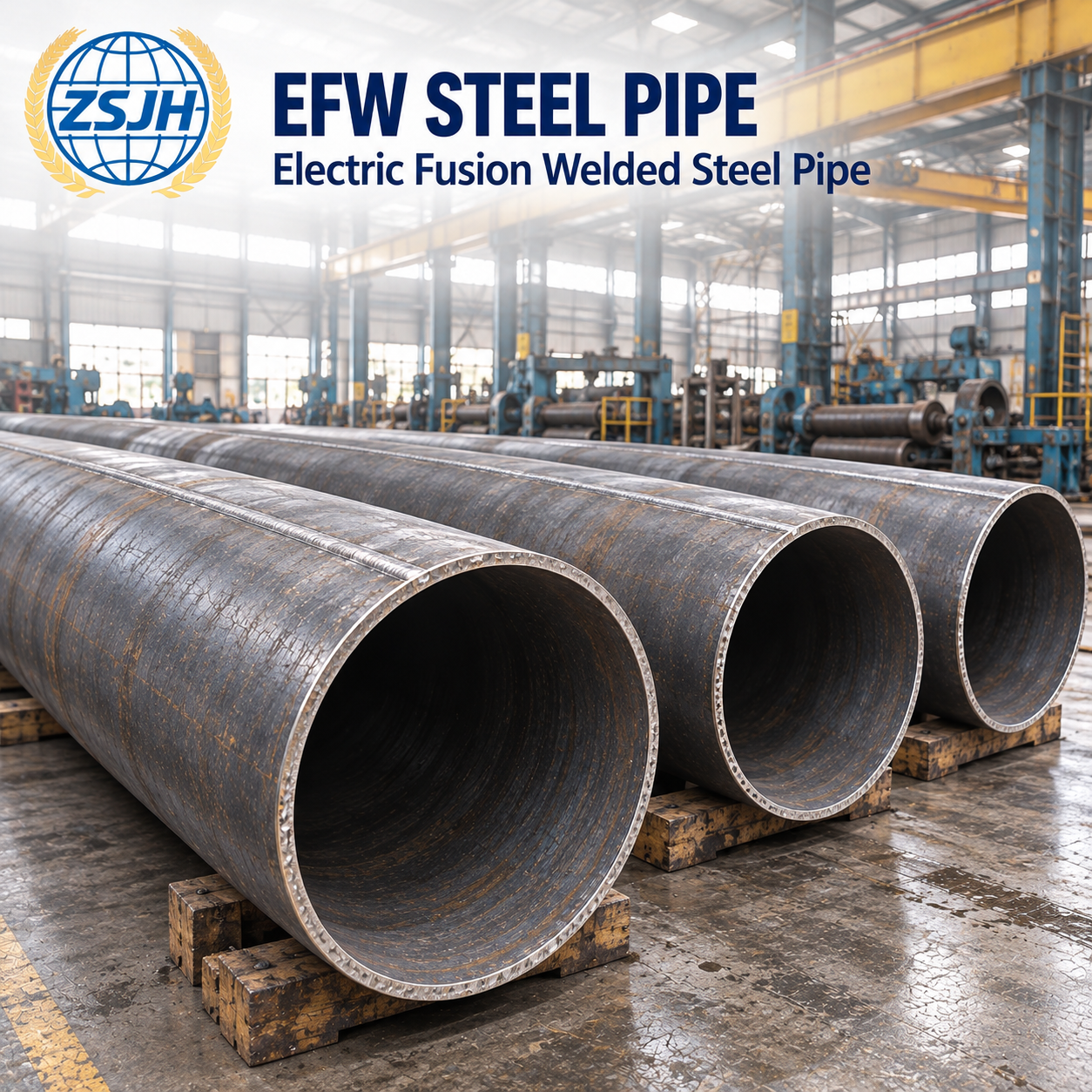
EFW Steel Pipe is manufactured by forming steel plate into a cylindrical section and joining the edges through electric fusion welding with filler metal. The material specification, welding procedure, heat treatment and inspection requirements are selected according to the intended service.
For process piping procurement, identifying a pipe as “EFW” is only the starting point. A complete purchase specification should define the product standard, material grade, class, dimensions, heat treatment and required examinations.
A typical manufacturing route includes plate verification, cutting and edge preparation, forming, seam welding, heat treatment where required, dimensional inspection, testing and pipe-end finishing.
Submerged arc welding is one commonly used fusion welding process for plate-fabricated pipe. The permitted process, weld configuration and examination requirements follow the applicable specification and qualified manufacturing procedures.
Key product features include:
Plate-based material selection: The starting plate is specified for the required chemical composition and mechanical properties.
Fusion-welded construction: Prepared edges are joined using a qualified welding procedure and suitable filler metal.
Project-specific dimensions: Diameter, wall thickness, length and tolerances are reviewed as a complete manufacturing requirement.
Defined thermal processing: Postweld or full-body heat treatment is specified where required.
Documented inspection: Material, welding, heat treatment and testing records can be defined in the purchase order.
EFW is a broad manufacturing description. A longitudinal submerged arc welded pipe may also be described as EFW, but the designation alone does not establish compliance with a particular product standard.
Carbon steel and alloy steel options should be selected according to design pressure, operating temperature, corrosion conditions and the applicable piping code.
Common procurement references include:
| Product Standard | General Application Focus | Key Details to Specify |
|---|---|---|
| ASTM A671/A671M | Electric-fusion-welded pipe for atmospheric and lower-temperature service | Grade, class, toughness requirements, heat treatment and examination |
| ASTM A672/A672M | Electric-fusion-welded pipe for high-pressure service at moderate temperatures | Grade, class, heat treatment, radiography and pressure testing requirements |
| ASTM A691/A691M | Electric-fusion-welded carbon and alloy steel pipe for high-pressure service at high temperatures | Grade, class, alloy requirements, heat treatment and examination |
These standards are not interchangeable. Their application descriptions do not replace an engineering assessment of the actual service conditions.
Specify the full standard designation, edition, grade and class. A standard number alone is insufficient to define the required product. Availability must be confirmed for the requested material, dimensions and manufacturing route.
Welding requirements should address both the manufacturing process and the evidence needed to verify it.
Relevant procurement details include:
Permitted welding process and seam arrangement
Welding Procedure Specification, or WPS
Procedure qualification records, where required
Welder or welding operator qualifications
Filler metal selection and control
Preheat and interpass temperature requirements
Weld repair procedures and examination
Weld profile and acceptance criteria
The welding procedure must suit the base material, thickness and specified heat treatment. Weld appearance alone does not demonstrate compliance or suitability for pressure service.
Heat treatment is a key specification item for EFW process pipe. Depending on the standard, grade and class, requirements may include postweld heat treatment, normalizing, normalizing and tempering, or other specified thermal processing.
The purchase specification should identify:
Required treatment and delivery condition
Whether treatment applies to the weld area or the complete pipe
Applicable temperature and holding requirements
Required heating and cooling controls
Heat treatment records and traceability
Timing of final testing and examination
Terms such as “stress relieved” or “heat treated” should be supported by a defined procedure and documented treatment condition. The appropriate treatment cannot be selected from the EFW designation alone.
Dimensional requirements should support installation, field welding and the applicable design calculations.
| Parameter | Information Required |
|---|---|
| Outside diameter | Specified diameter and permissible variation |
| Wall thickness | Nominal thickness, tolerance and any minimum-wall requirement |
| Length | Required length and cutting tolerance |
| Pipe geometry | Ovality, straightness and end squareness |
| Weld profile | Permitted reinforcement and any local dressing |
| End preparation | Plain or beveled ends, bevel angle and root face |
| Surface condition | Required finish, cleaning and protection |
For butt-welded piping systems, end geometry and dimensional consistency should be coordinated with the mating pipe or fittings. Special machining requirements should be submitted with drawings.
The inspection plan should clearly define test methods, coverage, acceptance criteria and required records.
Depending on the governing specification and purchase order, verification may include:
Material Verification
Plate certificates, chemical composition, mechanical properties and material identification.
Weld Examination
Radiographic or ultrasonic examination as specified, together with any required surface examination. One examination method should not be substituted for another without an approved basis.
Mechanical Testing
Tensile, bend, impact or other tests required by the selected standard, grade and service conditions.
Pressure Testing
Hydrostatic testing or another permitted test route in accordance with the applicable specification. Test pressure and acceptance criteria must be defined; test pressure is not the allowable operating pressure.
Final Inspection
Dimensions, pipe ends, surface condition, marking, traceability and packing.
Requested documentation may include material certificates, heat treatment charts, nondestructive examination reports, pressure test records and third-party inspection reports. The required certificate type and inspection scope should be agreed before production.
Process Piping
For industrial piping systems requiring defined materials, qualified welding procedures and documented inspection.
Petrochemical & Refinery Projects
For specified process and utility lines, subject to the fluid, temperature, pressure and corrosion requirements.
Power & Energy Facilities
For piping applications where the selected carbon or alloy steel grade and thermal processing meet the project design.
General Industrial Plants
For engineered piping systems with project-specific dimensions, connection details and documentation requirements.
Suitability for low-temperature, elevated-temperature, hydrogen or sour service requires a separate technical assessment. It should not be inferred from the product name or nominal material grade.
Surface preparation and protection should match storage, transport and service requirements. Options may include bare steel, temporary protective coatings or a specified project coating system, subject to confirmation.
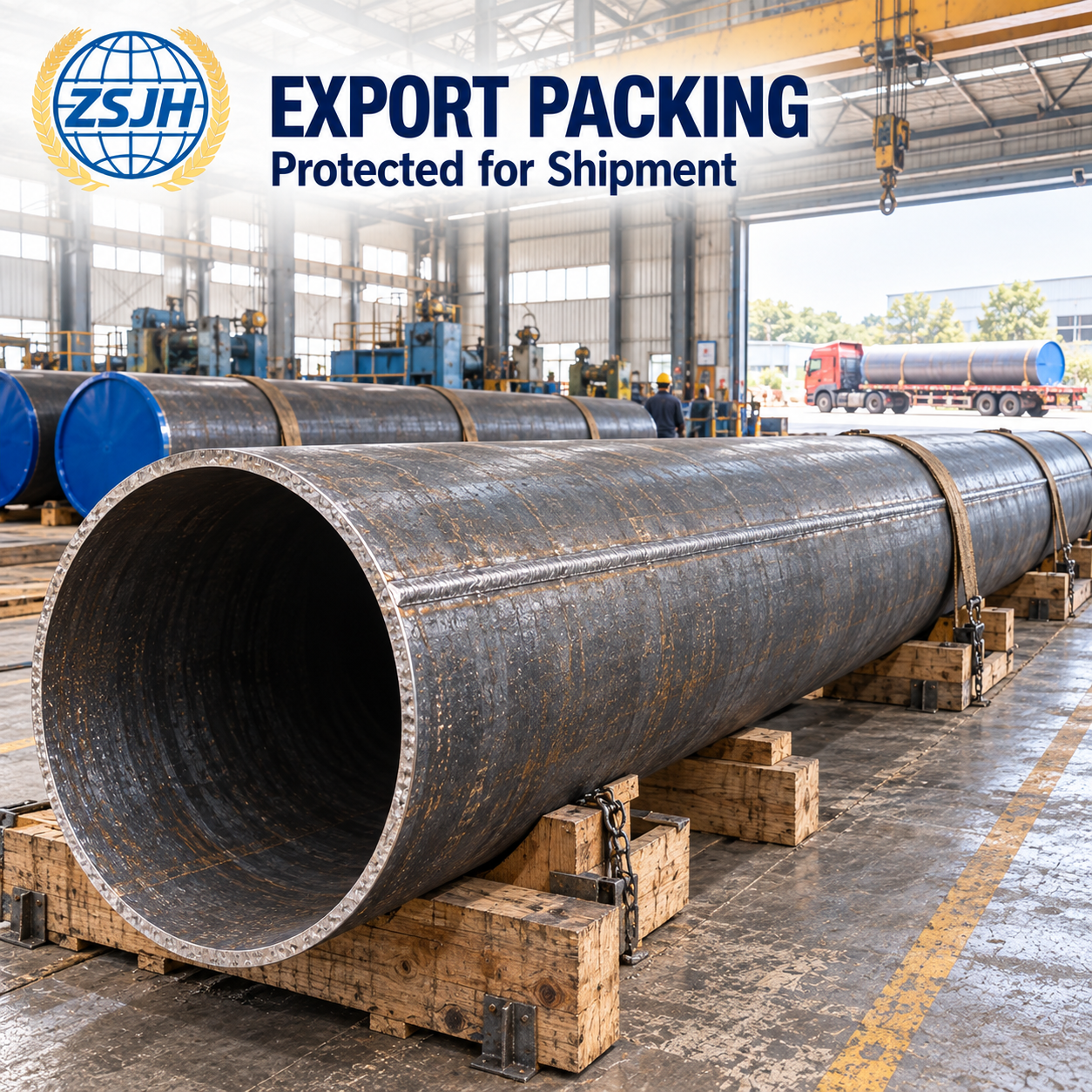
Pipe marking should retain the required material and production traceability. End protectors, timber supports, restraints and other packing measures should protect pipe geometry, bevels and finished surfaces during handling and shipment.
ZSJHSTEEL helps buyers coordinate EFW pipe sourcing around a clearly defined technical specification.
We review the required material, product standard, grade, class, welding route, heat treatment and inspection scope before confirming a supply proposal. This approach supports clearer quotations, consistent documentation and fewer specification mismatches during project procurement.
What is the difference between EFW and ERW pipe?
EFW uses fusion welding with filler metal. ERW typically joins formed strip edges through resistance heating and pressure without added filler metal. Product suitability depends on the governing specification and qualified manufacturing route.
Can EFW and LSAW describe the same pipe?
Yes. EFW is a broader welding description, while LSAW identifies a longitudinal submerged arc welding route. Compliance must still be established against the specified product standard.
Why must the class be included in an inquiry?
Under standards such as ASTM A671, A672 and A691, class designations identify important manufacturing, heat treatment and examination requirements. The grade and class must be read together.
Does every EFW pipe require the same heat treatment?
No. Requirements vary with the standard, grade, class and project specification.
Can radiographic testing be replaced by ultrasonic testing?
Only where the governing specification and approved project requirements permit it. Confirm the required examination method and coverage before ordering.
Please provide:
Product standard and required edition
Material grade and class
Outside diameter, wall thickness, length and quantity
Design pressure, temperature and conveyed medium
Welding process restrictions or approved manufacturer requirements
Heat treatment and delivery condition
Nondestructive examination methods, coverage and acceptance criteria
Mechanical and pressure testing requirements
Pipe-end preparation and surface protection
Certification and third-party inspection requirements
Destination port and delivery schedule
Contact ZSJHSTEEL to discuss EFW Steel Pipe materials, manufacturing requirements and project supply options.


