:sales@zsjhsteelgroup.com WhatsApp:+86-15122582058





| Quantity: | |
|---|---|


ZSJH
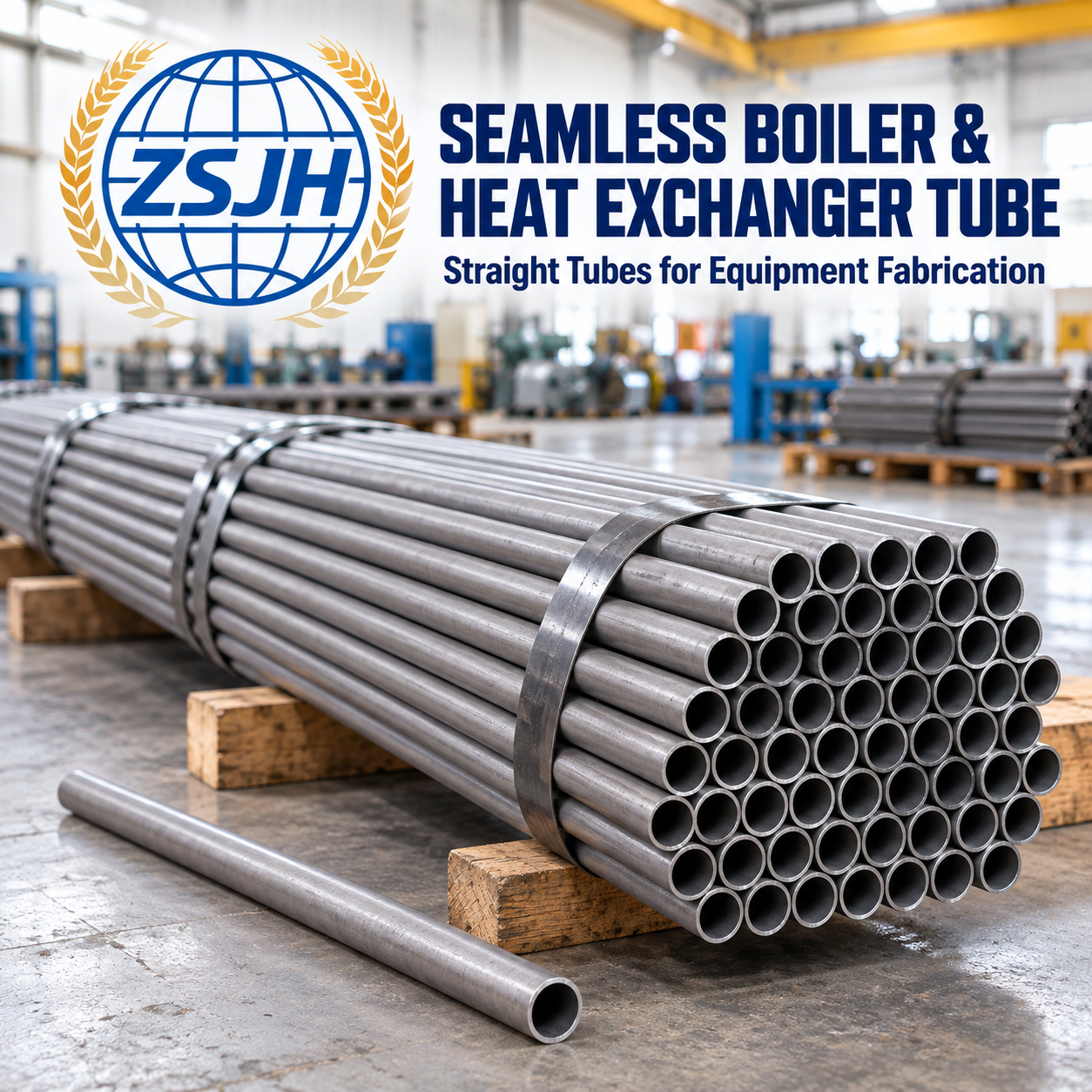
Seamless boiler and heat exchanger tubes are used in boilers, condensers, shell-and-tube heat exchangers and equipment replacement projects. Manufactured without a longitudinal weld seam, they are specified to meet the equipment’s material, dimensional and service requirements.
For equipment manufacturers and maintenance buyers, the key purchasing priorities are consistent tube dimensions, acceptable inner and outer surfaces, controlled wall thickness, correct heat treatment and suitable tube ends.
| Parameter | Specification / Ordering Requirement |
|---|---|
| Product | Seamless round steel tube for boiler or heat-transfer equipment |
| Material | Carbon steel or specified alloy steel, subject to confirmation |
| Product Standard | Selected according to the equipment application |
| Outside Diameter | Actual OD in mm, with applicable tolerance |
| Wall Thickness | Specify minimum-wall or average-wall basis where applicable |
| Length | Fixed or cut lengths, with agreed tolerance |
| Manufacturing Route | Cold-drawn or hot-finished, according to the specification |
| Heat Treatment | Required condition under the selected standard and material |
| Surface Condition | Inner and outer surface requirements to be agreed |
| Tube Ends | Plain cut, deburred or specially prepared to drawing |
| Further Processing | Bending or U-tube preparation, subject to confirmation |
| Inspection Documents | Material certificate and required test records |
Recommended ordering format:
Standard + Material Grade/Designation + OD × Wall Thickness × Length + Wall Basis + Heat Treatment + End Condition + Inspection Requirements.
Small-diameter tubes provide the individual flow passages used in many heat-transfer assemblies. Dimensional consistency helps equipment manufacturers achieve the specified fit through tube sheets and baffles.
For bundle fabrication, confirm:
Outside-diameter tolerance and ovality.
Straightness and fixed-length tolerance.
Wall-thickness acceptance requirements.
Tube-sheet joint method, such as expansion or welding.
Surface condition in the tube-end joining area.
Where U-tubes are required, provide the bend radius, leg spacing, straight-leg lengths and allowable bend thinning or ovality. Any post-bending heat treatment and examination should also be specified.
The tube bundle’s thermal performance depends on the complete equipment design, including tube layout, material, fluid conditions and fouling.
Outer Surface
Specify acceptable surface condition for handling, tube-sheet fit and fabrication. Defects must be assessed against the applicable standard and agreed acceptance criteria.
Inner Surface
The bore should meet the specified requirements for surface condition and cleanliness. Residual scale, debris or preservation materials may need particular control for the intended service.
If roughness or enhanced cleaning is important, state measurable acceptance requirements. “Smooth surface” alone does not define a roughness limit or guarantee freedom from fouling.
For storage and transport, agree suitable preservation, packaging and end protection. These measures should be compatible with the equipment manufacturer’s cleaning and assembly process.
The wall-thickness basis must be clear before quotation.
| Wall Basis | Meaning for Procurement |
|---|---|
| Minimum Wall | Acceptance is based on the specified minimum-wall requirement and applicable tolerances |
| Average Wall | Acceptance follows the specified average-wall basis and its permitted variation |
ASTM A179 and ASTM A192 cover minimum-wall tubes. ASTM A213 includes minimum-wall or, when ordered, average-wall requirements. These ordering bases should not be treated as interchangeable.
Wall checks should follow the required sampling and examination plan. Measurement at a cut end alone does not demonstrate thickness throughout the entire tube.
For bent tubes, confirm the allowable wall reduction at the bend separately. Pressure suitability depends on material properties, temperature, design allowances and the equipment code—not wall thickness alone.
Heat treatment is selected according to the material, manufacturing route and product standard. It influences the properties required for fabrication and service.
The purchase specification should identify:
Required heat-treatment condition.
Applicable mechanical and hardness requirements.
Whether additional treatment is required after bending.
Required records or supplementary tests.
Annealing, normalizing, normalizing and tempering, and solution treatment serve different materials and requirements. They should not be listed as interchangeable finish options.
For replacement tubes, match the approved material and delivery condition. Similar dimensions are insufficient to establish equivalence.
Tube ends should suit the equipment’s joining method.
Plain, Deburred Ends
Specify cut squareness, length tolerance and acceptable internal and external burr condition.
Prepared Welding Ends
Where required, provide the bevel or special end geometry from the fabrication drawing.
Tube-Sheet Joining Areas
State any additional cleanliness, surface or dimensional requirements for expanded or welded joints.
Avoid unnecessary beveling when the equipment requires square-cut ends. Protective caps should also be specified where cleanliness or transport protection is important.
| Standard | Main Product Scope |
|---|---|
| ASTM A179/A179M | Seamless cold-drawn low-carbon steel tubes for heat exchangers, condensers and similar heat-transfer equipment |
| ASTM A192/A192M | Seamless carbon steel boiler and superheater tubes for high-pressure service |
| ASTM A213/A213M | Seamless ferritic and austenitic alloy-steel boiler, superheater and heat-exchanger tubes |
Select the standard, material and edition for the actual equipment requirements. These specifications cover different products and should not be assumed equivalent.
A tube-product standard does not establish the allowable pressure or temperature of the complete boiler or heat exchanger. Equipment design requirements must be checked separately.
| Check / Test | Purchasing Purpose |
|---|---|
| OD, Ovality & Straightness | Verify dimensions for assembly |
| Wall Thickness & Length | Confirm ordered dimensions and acceptance basis |
| Surface & End Inspection | Assess condition for fabrication |
| Chemical Analysis | Verify the specified material |
| Mechanical / Hardness Tests | Meet the selected standard’s requirements |
| Flattening, Flaring or Other Tests | Verify applicable fabrication-related requirements |
| Hydrostatic / Nondestructive Testing | Meet the product standard and agreed inspection plan |
| Bend Examination | Verify additional requirements where bent tubes are supplied |
Test methods, coverage and acceptance criteria should be agreed before ordering.
Material records should link the supplied tubes to their specification, heat identification and required test results. State the certificate type and any third-party inspection requirements at inquiry stage.
Bundle tags and required markings may identify the manufacturer, specification, material designation, dimensions, length and heat or batch reference.
Illustrative inquiry:
Seamless Heat Exchanger Tube — ASTM A179/A179M — OD 19.05 mm × Minimum Wall 2.11 mm × Length 6,000 mm — Plain Deburred Ends — Heat Treatment and Testing to Specification — Material Certificate Required
This is a specification example, not confirmation of stock availability or equipment suitability.
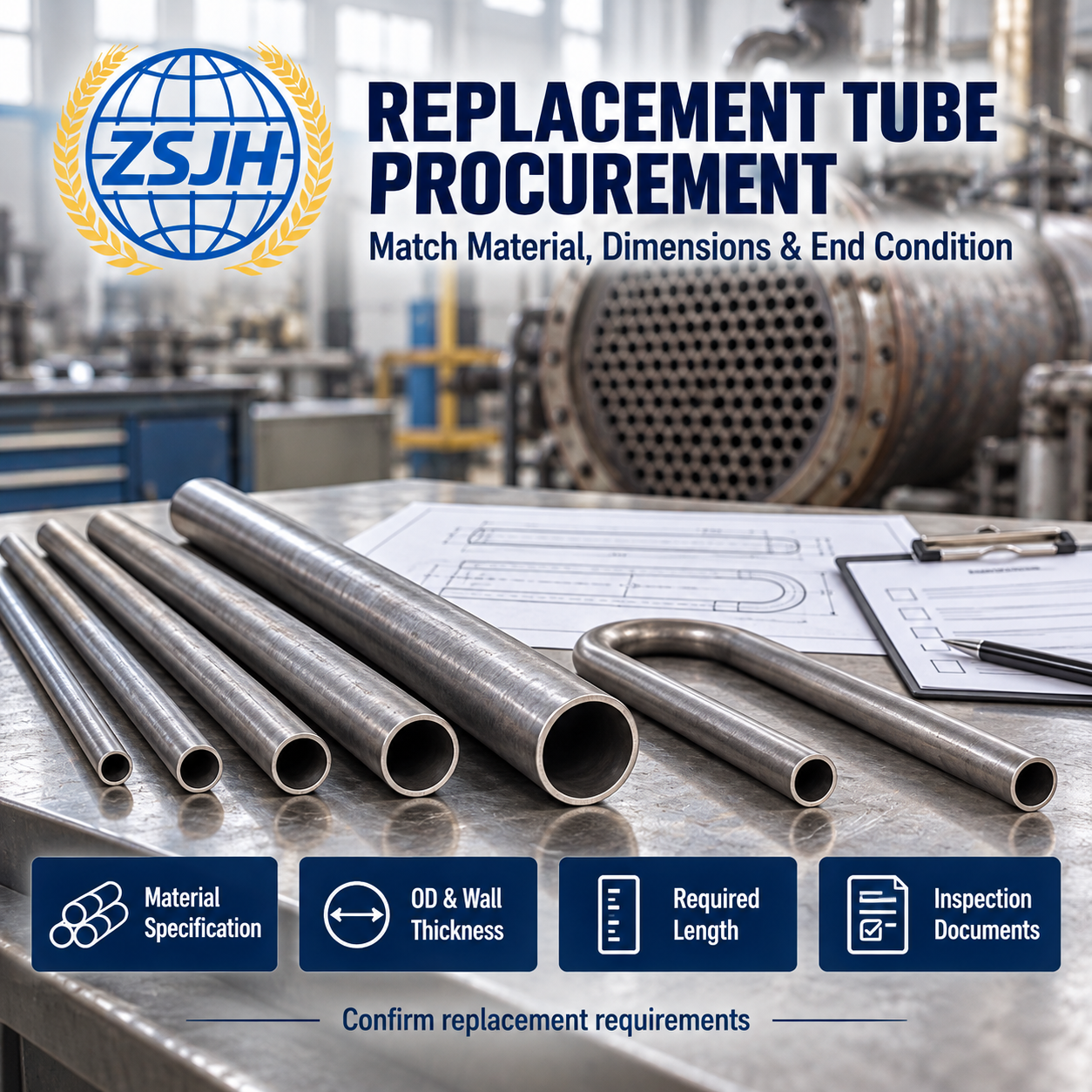
For repair orders, include the original drawing or approved replacement specification. Do not rely only on measurements from a worn or corroded tube.
Boiler Manufacturers: Tubes for specified heating surfaces, boiler assemblies and related components.
Heat Exchanger Manufacturers: Straight or specially processed tubes for shell-and-tube equipment.
Condenser Manufacturers: Tubes selected for the fluid, temperature and corrosion conditions.
Equipment Maintenance: Replacement tubes for retubing and repair to an approved specification.
Can boiler tubes and heat exchanger tubes be substituted?
Only after technical review and approval. Material, heat treatment, dimensions and test requirements may differ.
Should I specify minimum wall or average wall?
Use the basis required by the equipment design and product standard. State it explicitly in the inquiry.
Are all tubes cold-drawn?
No. The permitted manufacturing route depends on the specification. ASTM A179 specifically covers cold-drawn tubes.
Can you supply U-bent tubes?
Provide the bend drawing and requirements for thinning, ovality, heat treatment and inspection. Supply feasibility will be confirmed.
Can a smoother bore prevent fouling?
Surface condition can matter, but fouling also depends on fluid chemistry, temperature, flow and maintenance. Specify roughness when the design requires it.
What information is needed for replacement procurement?
Provide the approved material, standard, OD, wall basis, length, end details and any bend drawing, together with required inspection documents.
ZSJHSTEEL helps boiler manufacturers, heat-exchanger fabricators and maintenance buyers define clear tube procurement requirements.
We support coordinated sourcing around dimensions, wall-thickness basis, material condition, end preparation and inspection documentation. Packing, identification and delivery arrangements can be agreed to support equipment fabrication and replacement planning.
Send ZSJHSTEEL your:
Equipment application and required tube standard.
Material grade or designation.
Outside diameter and wall thickness.
Minimum-wall or average-wall requirement.
Length schedule and quantity.
Heat-treatment and surface requirements.
End preparation or bending drawings.
Required tests, material certificates and delivery destination.
Contact ZSJHSTEEL for seamless boiler and heat exchanger tubes matched to your equipment specification.


