:sales@zsjhsteelgroup.com WhatsApp:+86-15122582058






| Quantity: | |
|---|---|


ZSJH
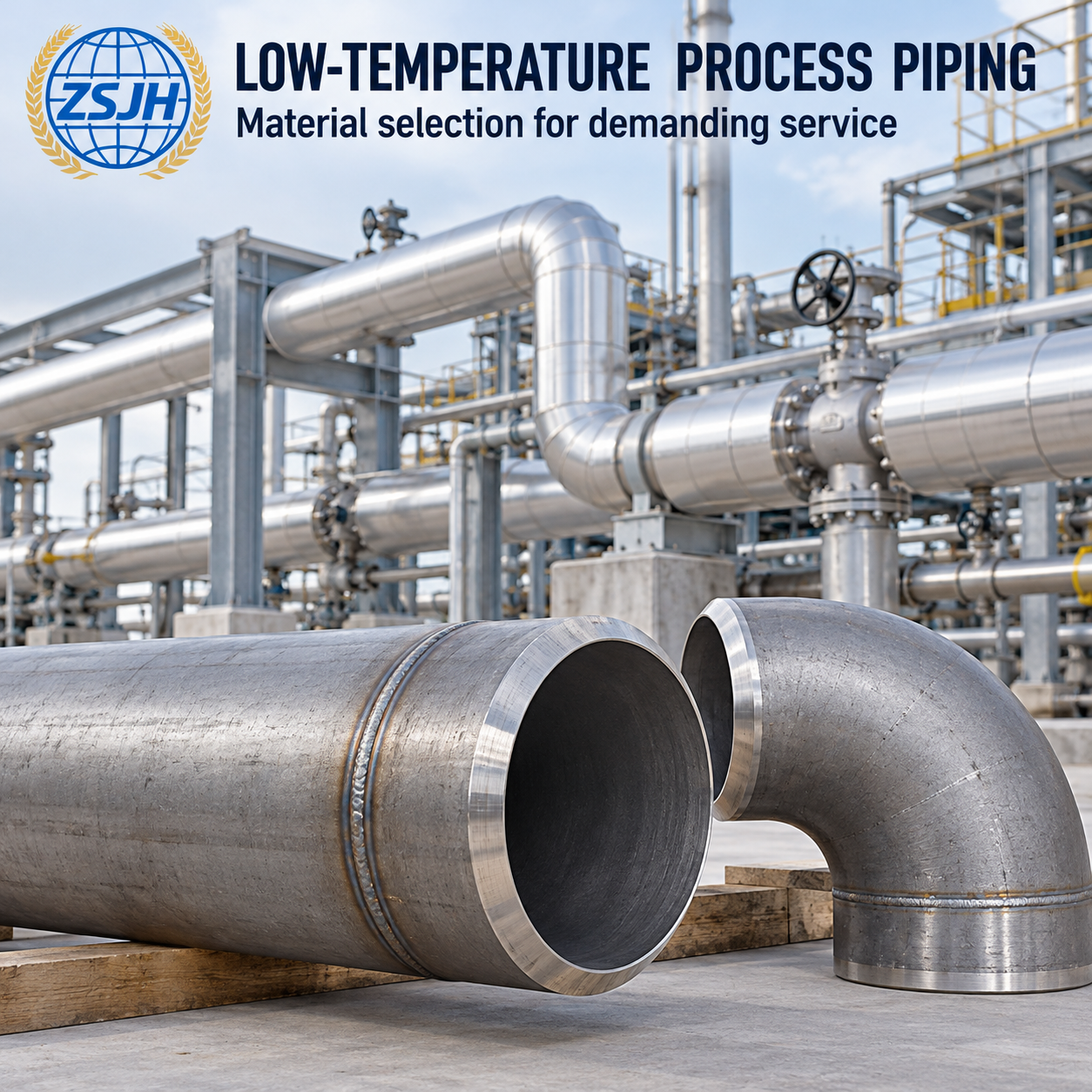
Low-temperature seamless steel pipe is intended for process piping and equipment applications where specified notch toughness is required. Suitable material selection combines the steel grade, wall thickness, heat treatment and verified impact properties with the project’s pressure and temperature requirements.
For buyers, the key is documented performance: impact results must represent the supplied material and be traceable to its heat or test batch. ZSJHSTEEL welcomes enquiries based on your piping specification, material requisition or equipment drawings.
Main Product Parameters
| Parameter | Specification to Confirm |
|---|---|
| Manufacturing route | Seamless |
| Material standard | ASTM A333/A333M or the approved project specification |
| Steel grade | ASTM A333 Grade 6 or another specified grade, subject to confirmation |
| Outside diameter | NPS with corresponding OD, or specified metric OD |
| Wall thickness | Schedule or nominal thickness, including applicable tolerance |
| Length | Random, fixed or cut length |
| Heat treatment | Condition required by the selected grade and specification |
| Impact testing | Test temperature, specimen size, orientation and acceptance criteria |
| End preparation | Plain or beveled ends to the order requirements |
| Inspection | Dimensional, visual and specified mechanical/integrity testing |
| Documentation | Material certificate, impact results and agreed inspection records |
| Identification | Grade, size and heat/batch traceability |
| Protection | Agreed surface preservation, end caps and transport packaging |
Steel Grade Selection
ASTM A333 Grade 6 is a common specification for low-temperature carbon steel pipe. Other grades may be considered where the design requires different material properties or lower-temperature performance.
Grades should not be treated as interchangeable. Selection must consider:
Minimum design temperature and operating conditions.
Required strength and wall thickness.
Impact toughness acceptance criteria.
Welding, fabrication and subsequent heat treatment.
The applicable piping or equipment design code.
A grade designation alone does not establish suitability for every low-temperature application. Availability and compliance should be confirmed for the actual size, wall thickness and ordered condition.
Impact Test Temperature and Toughness
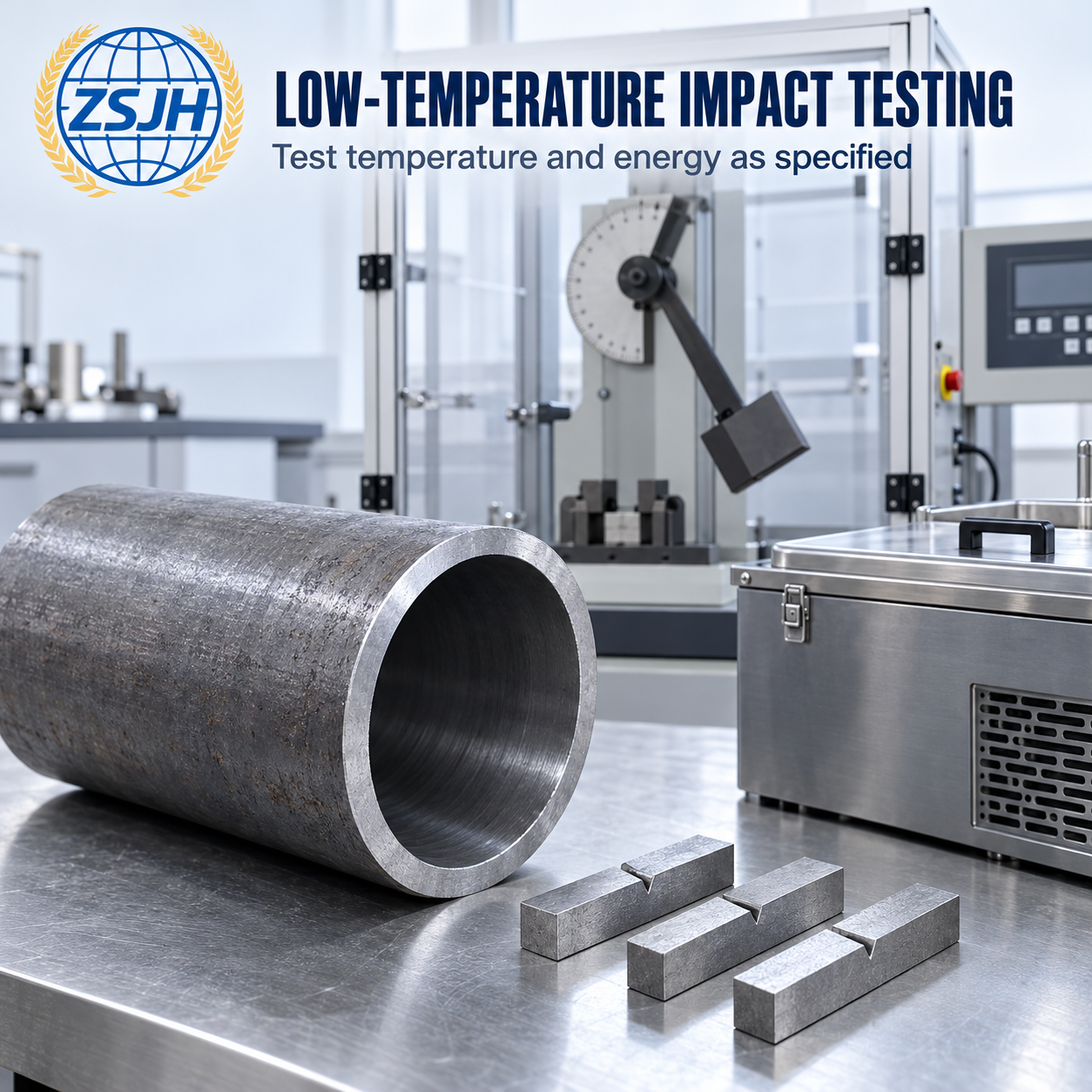
Charpy V-notch impact testing evaluates the energy absorbed by a notched specimen under defined test conditions. It provides evidence used to assess material toughness for the specified application.
A meaningful impact report should identify:
The actual test temperature.
Specimen dimensions and orientation.
Individual absorbed energy results and the set average.
Applicable acceptance criteria.
Heat or test-batch identification.
The material condition represented by the specimens.
Test temperature and minimum design temperature serve different purposes. Passing an impact test at a particular temperature does not, by itself, establish the allowable minimum service temperature of a complete piping system.
Specimen size also matters. Where pipe dimensions require subsize specimens, the applicable standard’s temperature and acceptance rules must be followed. Results from different specimen sizes should not be compared directly without accounting for those rules.
Heat Treatment and Delivery Condition
Heat treatment controls the material condition that supports the required mechanical properties and toughness. The permitted treatment route depends on the grade and governing specification.
Where normalized material is required, state that condition explicitly in the purchase order. Other heat treatment routes should be reviewed against the selected grade and project requirements.
Inspection documents should identify the supplied condition. Where detailed furnace records or heat treatment charts are required, include them in the documentation scope before ordering.
Subsequent forming, welding or post-weld heat treatment may affect material properties. Fabrication procedures and any additional qualification requirements should be addressed by the project specification.
Material Certificates and Test Reports
Documentation should allow the buyer to verify both compliance and traceability.
| Record | Information to Review |
|---|---|
| Material identification | Standard, edition, grade, dimensions and manufacturing route |
| Chemical analysis | Reported composition linked to the heat |
| Tensile testing | Results checked against the specified requirements |
| Impact testing | Temperature, specimen details, individual results and acceptance |
| Heat treatment | Supplied condition and additional records where ordered |
| Integrity testing | Applicable hydrostatic or nondestructive test records |
| Traceability | Connection between pipe markings, package labels and certificates |
The required certificate type, additional test reports and third-party inspection scope should be agreed at quotation stage. Mill integrity testing and material impact testing serve different purposes; neither alone establishes the finished system’s operating rating.
Dimensions, Ends and Surface Protection
Outside diameter and wall thickness must match the piping design and connection requirements. Specify the Schedule or nominal thickness clearly, together with any minimum wall requirement and additional dimensional tolerances.
For welded installation, bevel geometry and end condition should match the fabrication specification. Pipes may also require temporary preservation, end caps and protected packaging suitable for the transport route.
Low-temperature toughness does not provide corrosion resistance. External protection, insulation detailing and fluid compatibility should be assessed separately.
Standards and Ordering Example
ASTM A333/A333M covers seamless and welded carbon and alloy steel pipe for low-temperature service and other applications requiring notch toughness. For this product, the order should explicitly specify the seamless manufacturing route.
The material specification should be used alongside the applicable piping or equipment design code and project requirements.
An illustrative ordering description is:
ASTM A333/A333M Grade 6 | Seamless | NPS 4 | Schedule 40 | Beveled Ends | Heat Treatment and Impact Testing as Specified | Heat-Traceable Material Certificate
This example shows how to structure an enquiry. It is not a statement of stock availability or a complete purchasing specification.
Typical Applications
Low-temperature process lines in chemical and petrochemical facilities.
Refrigeration and chilled process systems.
Equipment connecting pipework and engineered skid installations.
Plant piping exposed to specified low ambient temperatures.
Maintenance replacements requiring verified material toughness.
Suitability depends on the selected grade and engineering assessment. A general low-temperature pipe designation should not be assumed to cover extreme cryogenic service.
Frequently Asked Questions
Does Grade 6 automatically satisfy my project’s minimum design temperature?
No. Review the material condition, thickness, impact evidence and applicable design-code requirements against the project specification.
Can testing be requested at a lower temperature?
Additional testing can be assessed before quotation. Feasibility depends on the grade, dimensions, specimen requirements and acceptance criteria.
Is normalized pipe always required?
The required treatment depends on the grade, standard and project. Specify normalization explicitly when it is mandatory.
Does seamless pipe eliminate welding-related toughness requirements?
Installed pipework may still contain welded joints. Welding procedures, consumables and any required weld toughness qualification must be addressed separately.
Can reports be linked to the delivered pipes?
Specify heat/batch traceability and the required document scope so markings, labels and certificates can be checked together.
Why Choose ZSJHSTEEL
Clear technical requirements help make quotations easier to compare and supplied materials easier to verify. Send ZSJHSTEEL your material specification for review, including steel grade, impact testing, heat treatment, inspection and documentation requirements.
Confirming these details early helps align sourcing and delivery with the needs of your engineering and procurement teams.
Request a Quotation
Please provide your standard and edition, steel grade, OD/NPS, wall thickness/Schedule, length and quantity.
Include the minimum design temperature, design pressure, required impact test temperature and acceptance criteria, heat treatment condition, end preparation, certificate requirements and inspection scope. Attach your piping specification or material requisition for a more precise quotation.


