:sales@zsjhsteelgroup.com WhatsApp:+86-15122582058




| Quantity: | |
|---|---|


ZSJH
Seamless hydraulic and pneumatic tube is used for rigid fluid lines in hydraulic machinery, pneumatic equipment and mechanical installations. For these applications, reliable performance depends on more than steel strength: tube dimensions, internal cleanliness, surface condition and compatibility with fittings all influence installation and service.
ZSJHSTEEL welcomes enquiries for seamless tubing specified to your equipment drawings and purchasing requirements, including outside diameter, wall thickness, steel grade, delivery condition and protective packaging.
Key Specifications
| Parameter | Specification to Confirm |
|---|---|
| Product type | Seamless steel tube for hydraulic and pneumatic lines |
| Outside diameter | Metric or inch dimensions, matched to the selected fittings |
| Wall thickness | Nominal thickness, tolerance and minimum thickness requirements |
| Steel grade | Grade specified by the applicable standard or project |
| Delivery condition | Heat treatment and mechanical properties suitable for the intended fabrication |
| Dimensional control | OD tolerance, wall thickness tolerance, ovality and straightness |
| Internal cleanliness | Contaminant limits, cleaning method and acceptance procedure |
| Surface condition | Internal and external surface requirements; corrosion protection where specified |
| Tube ends | Cut-end quality, deburring and end protection |
| Length | Standard, fixed or cut lengths, subject to confirmation |
| Documentation | Material certificate and agreed inspection records |
| Packaging | Capped ends, protected bundles or crates according to the order |
Internal Cleanliness for Fluid Power Systems
Internal cleanliness is an important purchasing requirement for hydraulic and pneumatic tubing. Residual scale, metal particles, cutting chips and processing residues can enter the fluid circuit during installation.
For cleanliness-sensitive applications, the order should define measurable acceptance criteria. These may include particle size limits, residual contamination mass, sampling frequency and the inspection method. Any restrictions on protective oil or cleaning residues should also be stated, particularly where fluid compatibility is important.
A visually clean bore does not establish a measured cleanliness level. Likewise, an assembled system’s fluid cleanliness classification should not be presented as a tube cleanliness guarantee without an agreed verification procedure.
After cutting, bending and assembly, additional cleaning or flushing may be required under the equipment manufacturer’s installation procedure.
Dimensional Tolerances and Fitting Compatibility
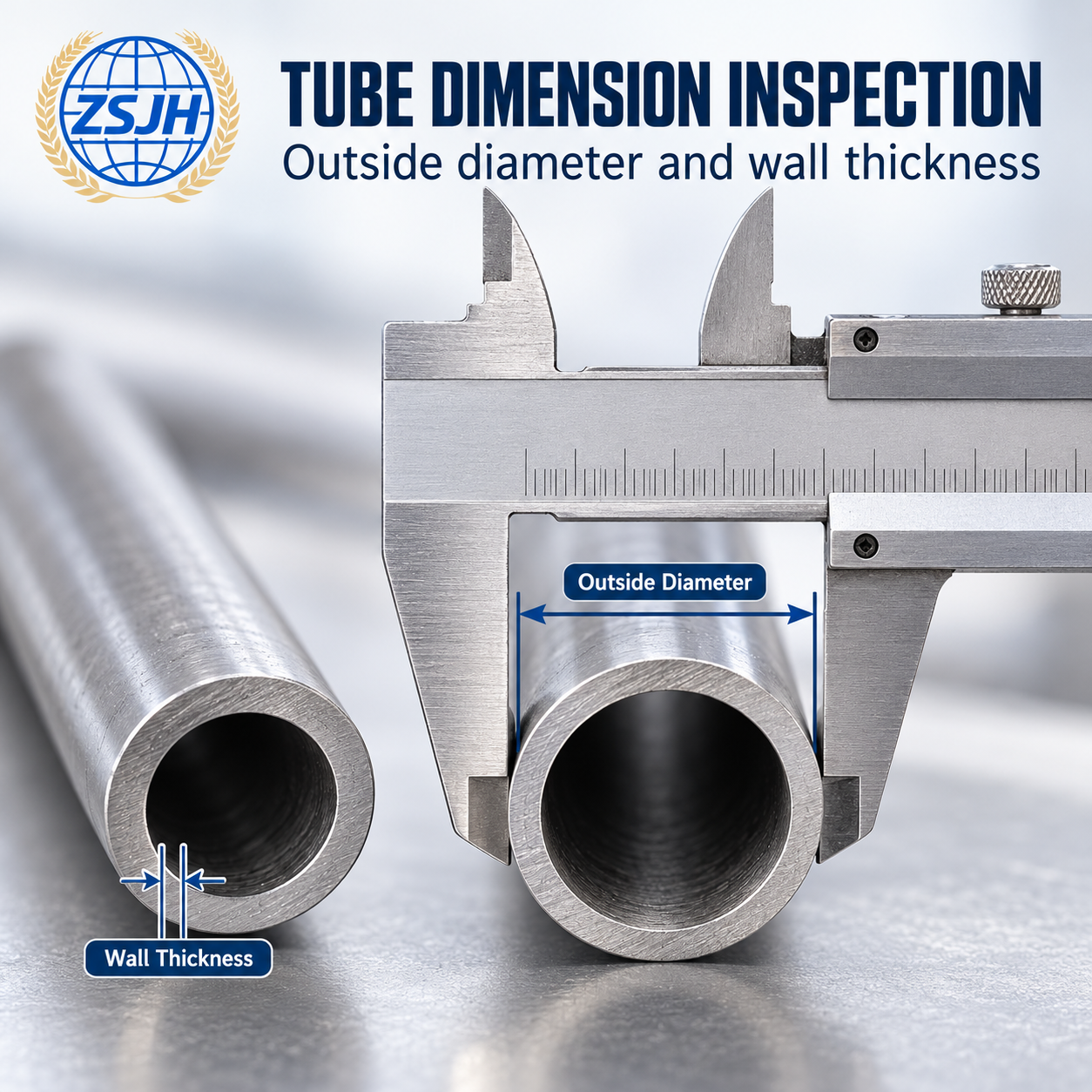
Consistent outside diameter helps achieve the required fit with compression fittings and other specified connections. Wall thickness affects the internal flow area, fabrication behaviour and pressure design.
When ordering, specify:
Nominal outside diameter and allowable tolerance.
Nominal wall thickness, allowable variation and any minimum wall requirement.
Ovality, straightness and cut-length requirements.
The fitting type and its tube material, hardness and surface requirements.
Metric and inch tubing should be selected to match the actual fitting specification. Similar nominal sizes should not be assumed interchangeable.
Tube working pressure must be established for the selected material, dimensions, temperature and connection system. A mill pressure test result is not an operating pressure rating.
Bending and End Forming
Hydraulic and pneumatic tube routing often requires controlled bends to suit machinery layouts. Suitable material properties and delivery condition help support fabrication, while the result also depends on tube dimensions, bend radius, tooling and processing method.
For formed tubing, provide a drawing showing the centreline bend radius, bend angles, straight lengths, orientation and connection positions. Inspection requirements may include bend ovality, local wall thinning and dimensional accuracy.
Where flaring or other end forming is required, compatibility should be checked against the tube specification and fitting manufacturer’s instructions. No single minimum bend radius or forming capability applies to every tube size and grade.
Internal and External Surface Condition
The external surface should meet the agreed requirements for fitting contact areas and fabrication. Scratches, dents or other defects near a connection may affect assembly and should be assessed against the applicable acceptance criteria.
Internal surface requirements should address scale, residues and any specified finish. If a numerical surface roughness value is needed, identify the surface to be measured, measurement method and acceptance limit.
Carbon steel tubing may require temporary preservation or an agreed external coating. Protection should be selected for the storage environment, service conditions and compatibility with subsequent assembly operations.
End Sealing and Export Packaging
End caps help reduce the entry of dust and moisture during handling and transport. For orders with defined cleanliness requirements, tubes should be capped after the agreed cleaning and inspection stages.
Packaging requirements can include:
Secure caps on both ends.
Protection against tube-to-tube abrasion and handling damage.
Bundles or crates suitable for tube length and shipment conditions.
Moisture protection appropriate to the shipping route and storage period.
Clear labels linking each package to its material and inspection documents.
End caps protect the tube during handling; they are not pressure closures.
Standards and Identification
EN 10305-4 covers the technical delivery conditions for seamless cold-drawn steel tubes used in hydraulic and pneumatic power systems. It addresses material properties, dimensions, tolerances, inspection and testing. The required standard edition and any additional project requirements should be identified in the purchase order.
An illustrative purchasing description is:
Seamless Hydraulic Tube | EN 10305-4 | Grade and Delivery Condition: As Specified | OD × WT × Length | Heat/Batch Identification
This is an ordering example. Actual markings and documentation should reflect the confirmed supply specification.
Typical Applications
Hydraulic lines on industrial machinery and production equipment.
Pneumatic equipment and rigid compressed-air circuits.
Machine tools, presses and automation systems.
Mechanical installations requiring accurately routed metal tubing.
Replacement tubing for equipment maintenance.
This product is intended for fluid lines. Hydraulic cylinder barrels with honed or specially finished bores require a separate specification.
Frequently Asked Questions
Can the tubing be bent?
Bending suitability depends on the grade, delivery condition, dimensions and required bend geometry. Provide your fabrication drawing for review.
Can a specific internal cleanliness level be requested?
Yes. State the contamination limits, inspection method and documentation requirements so they can be assessed before quotation.
Are the tubes ready for immediate installation?
Installation readiness depends on the agreed delivery scope. Cutting, forming, cleaning, flushing and system testing may still be required.
How should wall thickness be selected?
Selection should consider pressure, temperature, minimum wall thickness, material properties and fitting requirements under the applicable design rules.
Why Choose ZSJHSTEEL
A useful quotation starts with a clearly defined specification. Send ZSJHSTEEL your tube dimensions, fabrication drawings and acceptance requirements for review. Confirming these details early helps align material selection, inspection, documentation and packaging with your project.
Request a Quotation
Send your required outside diameter, wall thickness, steel grade, delivery condition, standard, length and quantity. Please also include operating conditions, fitting details, bend drawings, internal cleanliness limits, surface requirements and packaging instructions.


