:sales@zsjhsteelgroup.com WhatsApp:+86-15122582058







| Quantity: | |
|---|---|


ZSJH
Specialty stair systems can provide permanent or movable access where a conventional staircase requires too much floor area. Spiral, alternating-tread and ship-type configurations offer different approaches to space-efficient vertical access.
The total rise, stair angle, diameter, tread arrangement, landing position and connection details can be customized according to the available installation space.
Available configurations include:
Spiral steel staircases
Helical metal stair systems
Alternating-tread stairs
Ship-type access stairs
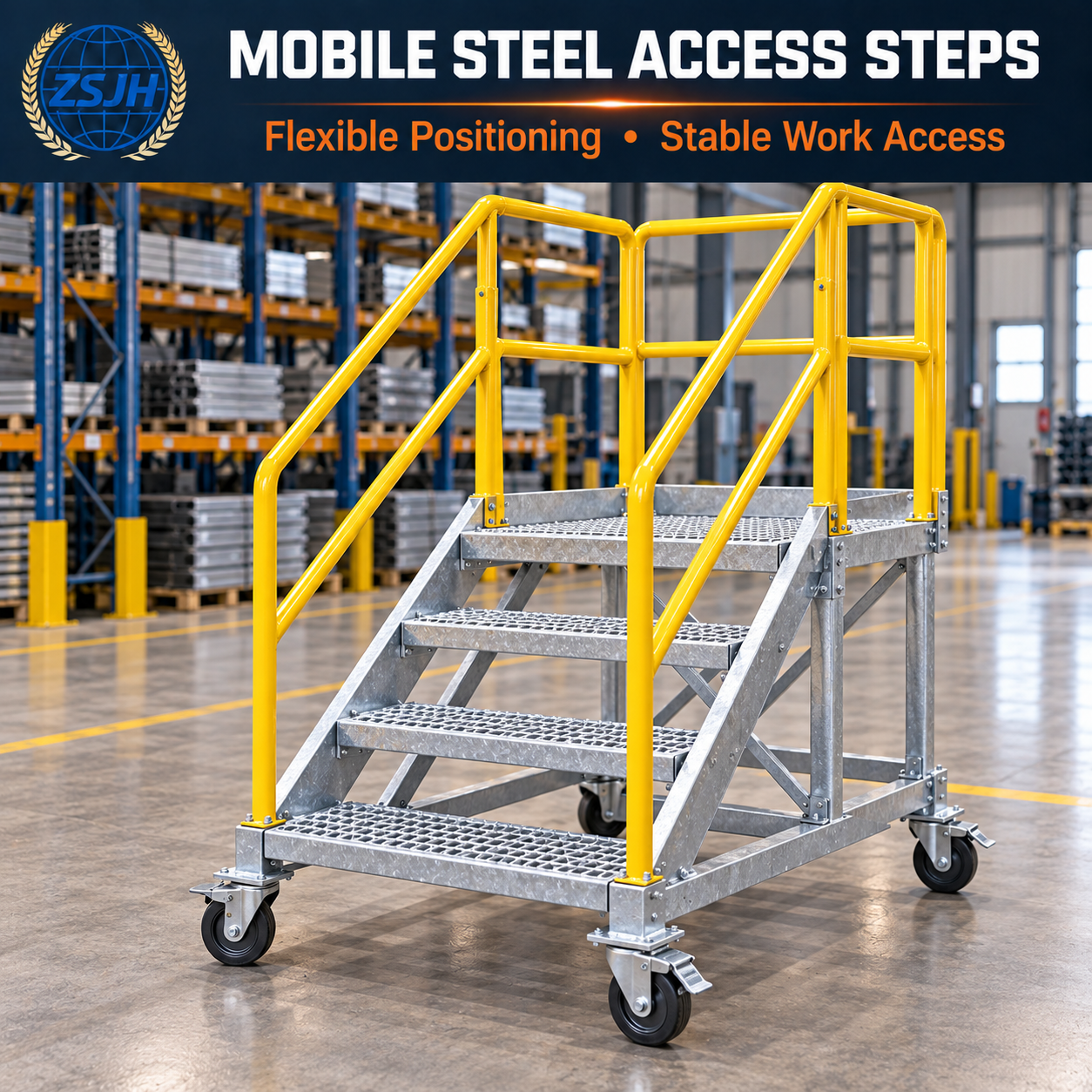
Mobile access platforms
Straight stainless steel stairs
Coastal and marine access systems
Custom stairs for tanks and equipment
Carbon steel, galvanized steel and stainless steel are available. Material selection is based on the operating environment, corrosion exposure, hygiene requirements and project specifications.
Serrated grating, perforated plate, checker plate and formed steel treads can be selected according to drainage, cleaning, contamination and slip-resistance requirements.
Stair systems can include handrails, guardrails, toe boards, protected landings, anti-slip nosing, locking casters and other project-specific safety components.
Stair flights, platforms, handrails and support frames are manufactured under controlled workshop conditions. Prefabricated sections help reduce site cutting, welding and assembly time.
Hot-dip galvanizing, industrial painting, powder coating, duplex coating and stainless steel finishes are available for indoor, outdoor, hygienic and coastal applications.
Specialty steel stairs are commonly used in:
Industrial production plants
Storage tanks and silos
Chemical and process facilities
Food-processing plants
Pharmaceutical facilities
Water-treatment plants
Power-generation facilities
Equipment maintenance areas
Pipe racks and service platforms
Warehouses and distribution centers
Ports and coastal terminals
Marine infrastructure
Rooftop equipment areas
Skid-mounted process systems
Restricted-access technical areas
Building service and utility areas
Spiral stairs are suitable for storage tanks, silos, vertical equipment and structures where the available installation footprint is limited.
Alternating-tread stairs provide steep, compact access to restricted maintenance areas. They are generally intended for trained personnel and project-specific access rather than normal public circulation.
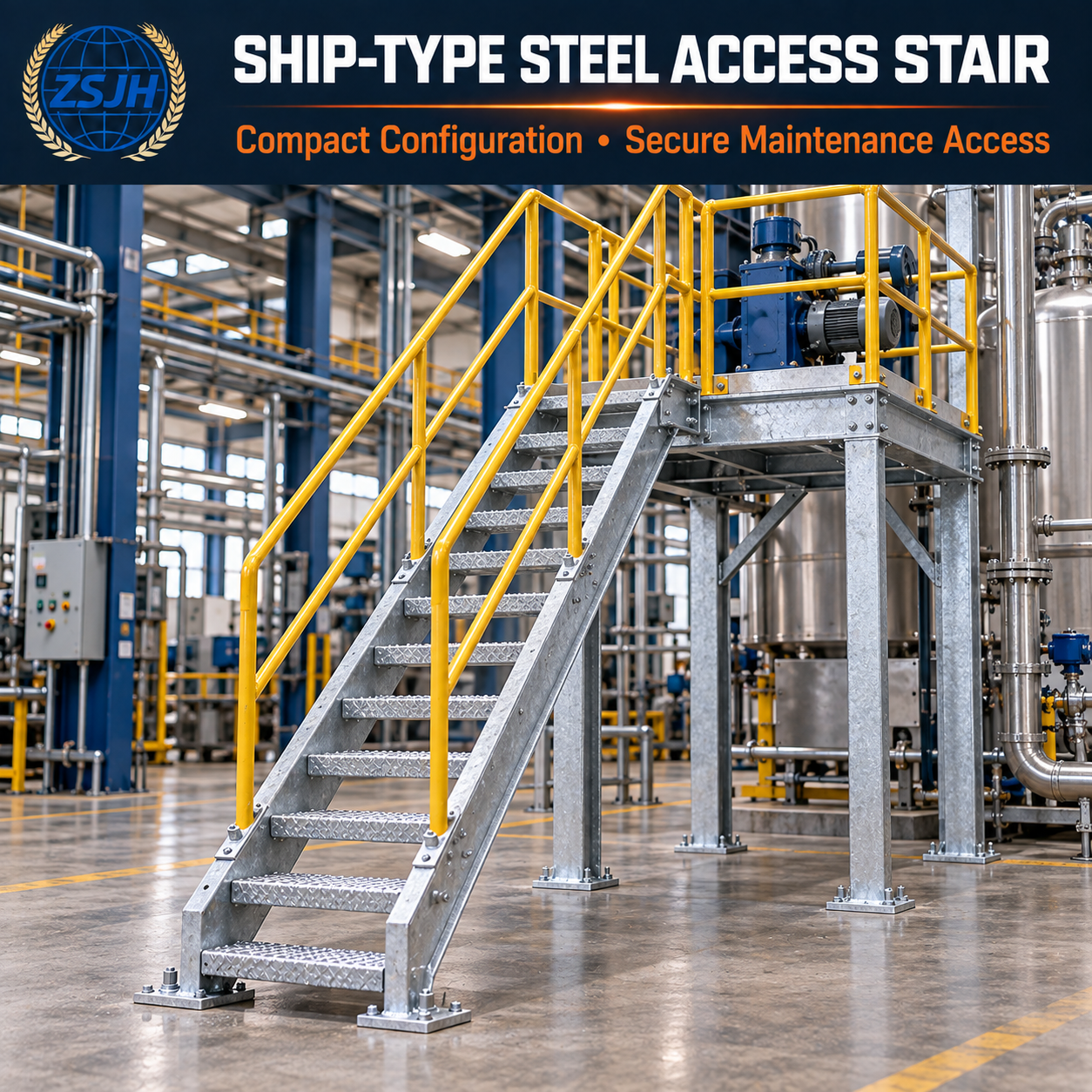
Ship-type stairs offer a transition between conventional stairs and vertical ladders. They are commonly used for machinery platforms, equipment skids and technical maintenance areas.
Mobile access units provide repositionable access for warehouse picking, production-line inspection, maintenance and other temporary elevated tasks. Locking systems and floor conditions must be considered for safe use.
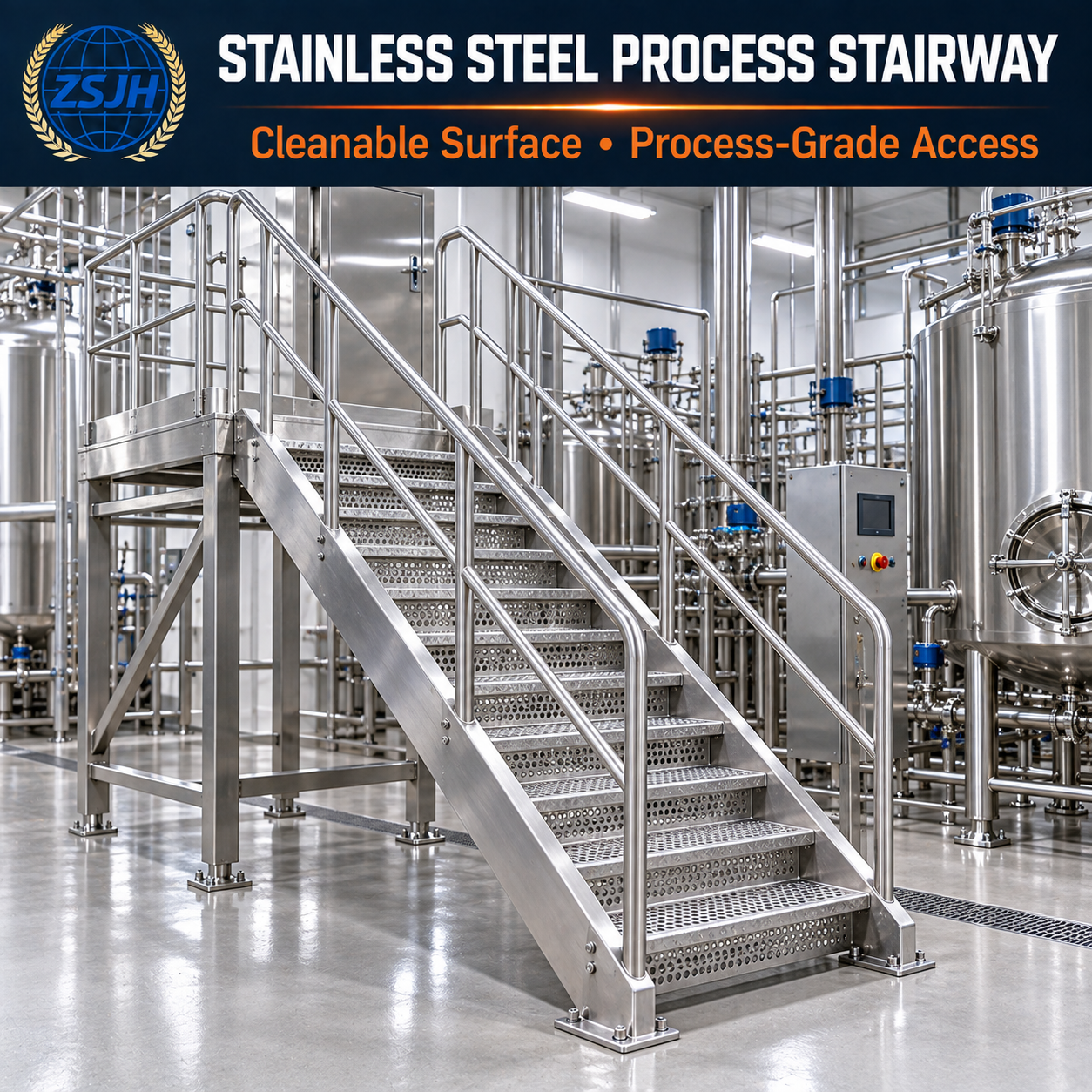
Stainless steel stairs are suitable for process environments requiring corrosion resistance, cleanable surfaces and controlled material selection.
Steel stairs for ports, terminals and coastal facilities can be manufactured using materials and protective systems selected according to the actual exposure environment.
The following specifications represent general manufacturing options. Final dimensions and structural details should be based on approved drawings, specified design loads and applicable project requirements.
| Specification Item | Available Options |
|---|---|
| Product type | Spiral, helical, alternating-tread, ship-type, mobile or process stair |
| Main material | Carbon steel, galvanized steel or stainless steel |
| Stair width | Customized |
| Total rise | Based on the required access elevation |
| Stair angle | Project-specific |
| Spiral stair diameter | Customized according to available space and intended use |
| Center support | Steel tube, structural pipe or fabricated column |
| Stringer type | Plate, channel, box section or fabricated stringer |
| Tread type | Serrated grating, perforated plate, checker plate or formed steel |
| Tread surface | Plain, perforated, serrated or anti-slip |
| Landing | Top, intermediate or equipment-access landing |
| Handrail | Tubular or project-specified configuration |
| Guardrail | Single, double or multi-rail |
| Toe board | Optional |
| Support method | Floor-mounted, structure-connected, tank-mounted or mobile |
| Mobile base | Fixed or locking industrial casters |
| Connection method | Bolted, welded or combined |
| Surface treatment | Galvanized, painted, powder-coated or duplex-coated |
| Stainless steel finish | Mill finish, brushed finish or project-specified finish |
| Fabrication form | Complete unit, modular sections or separate components |
| Production basis | Approved drawings and project specifications |
| Packing | Bundled, wrapped, crated or export-packed |
Depending on the stair configuration, a complete system may include:
Steel stringers
Spiral center columns
Tread-support brackets
Grating or perforated treads
Landing frames
Support columns
Base plates
Handrails and guardrails
Toe boards
Bracing members
Wall or tank brackets
Bolted splice plates
Industrial casters
Wheel brakes or locking devices
Anchor interfaces
Installation fasteners
The final supply scope can be adjusted according to the customer’s drawings and procurement requirements.
ZSJH Steel reviews the intended use, installation location, available space, access elevation, operating environment, required loading conditions and connection interfaces.
The proposed stair configuration is checked against the available footprint and surrounding equipment. Important considerations include:
Required access height
Available floor area
Headroom and clearance
Stair angle or spiral diameter
Tread arrangement
Landing position
Handrail configuration
Supporting structure
Equipment and pipe clearance
Installation method
Detailed fabrication drawings are prepared or reviewed to define component sizes, tread spacing, structural connections, support locations and installation interfaces.
Steel plates, tubes, structural profiles, gratings and fasteners are selected according to the approved material requirements and service environment.
Components are cut, drilled, bent, rolled or formed according to the stair geometry. Spiral and helical components require controlled forming to maintain consistent radius and alignment.
Treads are fabricated from grating, perforated sheet, checker plate or formed plate. Mounting brackets and anti-slip edges are added where specified.
Stringers, center columns, support frames, landing beams and base plates are assembled using appropriate fixtures.
Welding is carried out according to approved fabrication requirements. Joint preparation, alignment and weld appearance are checked during production.
Handrail tubes and posts are cut and formed to follow the stair geometry. Spiral and helical handrails are rolled to coordinate with the staircase radius.
Specialty stairs may be trial-assembled to verify:
Component fit
Tread alignment
Landing position
Handrail continuity
Bolted connection accuracy
Support and mounting interfaces
Key dimensions are inspected against approved drawings, including:
Overall stair height
Stair width
Spiral diameter
Tread spacing
Stair angle
Landing dimensions
Stringer alignment
Handrail geometry
Bolt-hole positions
Base-plate dimensions
Carbon steel components receive the specified coating or galvanizing system. Stainless steel surfaces can be cleaned and finished according to project requirements.
The completed products are inspected for dimensions, welding appearance, surface finish, connection details, moving components and product identification.
Stair modules and accessories are clearly marked and protected for transportation. Smaller components, fasteners and installation accessories can be separately packed and labeled to support efficient identification and site installation. Export packaging can be customized according to the product dimensions, transportation method and customer requirements.
Provides practical access in restricted installation areas
Offers space-saving alternatives to conventional stair systems
Supports complex equipment, tank and platform layouts
Available in spiral, alternating-tread, ship-type and mobile configurations
Custom dimensions coordinate with project-specific interfaces
Anti-slip tread options improve walking stability
Open treads support drainage, ventilation and easier cleaning
Stainless steel options are suitable for controlled process environments
Mobile units provide flexible access for inspection and maintenance
Modular construction simplifies transportation and site installation
Factory fabrication helps reduce on-site cutting and welding
Multiple corrosion-protection systems are available
Integrated handrails, landings and support frames can be supplied
Suitable for individual stair units or complete project packages
Can be manufactured according to approved customer drawings
Yes. ZSJH Steel manufactures spiral, alternating-tread, ship-type and other customized steel stairs for projects where a conventional staircase is difficult to install.
The diameter depends on the available space, required walking width, tread geometry, total access height, landing position and intended use. Final dimensions should be confirmed through project-specific design.
Alternating-tread stairs are generally intended for restricted maintenance or technical access. Their suitability must be verified according to the intended users, operating conditions and applicable local requirements.
A ship-type stair is typically steeper than a conventional staircase but provides wider treads and easier access than a vertical ladder. It is commonly used for machinery platforms, equipment skids and maintenance areas.
Yes. Mobile access units can include anti-slip treads, handrails, guarded platforms, industrial casters and locking devices. The design should consider the required load, floor condition and intended operating method.
Yes. Stainless steel stairs can be manufactured for food-processing, beverage, pharmaceutical, chemical and other process facilities. The appropriate material grade and surface finish should be selected according to the actual working environment.
Yes. Perforated carbon steel or stainless steel treads can be supplied for applications requiring drainage, ventilation, cleanability or reduced component weight.
Yes. Carbon steel stair components can be hot-dip galvanized. Suitable venting and drainage details should be incorporated into hollow or enclosed components during technical detailing.
The appropriate protection depends on salt exposure, humidity, splash conditions, required service life and maintenance arrangements. Available solutions may include hot-dip galvanizing, duplex coatings, specialized paint systems or selected stainless steel materials.
Smaller stair systems and mobile access units may be delivered fully assembled when transport dimensions permit. Larger spiral or specialty stairs are normally divided into modular sections.
Yes. ZSJH Steel can supply landing platforms, support frames, tank brackets, wall connections, base plates, handrails and installation fasteners as part of the complete stair package.
Yes. We can review customer drawings and manufacture according to the approved dimensions, material specifications, connection details and surface-treatment requirements.
Project-specific engineering support can be discussed according to the project scope. Please provide the required design loads, applicable standards, installation conditions and supporting-structure information.
Please provide:
Project drawings or dimensional sketches
Intended application
Required access height
Available installation space
Preferred stair configuration
Stair width or spiral diameter
Material grade
Required design loads
Tread type
Handrail and landing requirements
Supporting-structure details
Mounting and connection methods
Operating environment
Surface-treatment requirements
Applicable project standards
Order quantity
Delivery destination
Required delivery schedule
ZSJH Steel manufactures spiral stairs, alternating-tread stairs, ship-type access stairs, mobile steps, stainless steel process stairs and other specialty access systems.
Each stair system can be fabricated according to approved project dimensions, equipment layouts, access elevations and connection interfaces.
Our production capabilities cover technical detailing, material procurement, cutting, drilling, rolling, forming, welding, assembly, surface treatment, inspection and export packing.
Carbon steel, galvanized steel and stainless steel are available for different structural, corrosion-resistance and hygiene requirements.
Complex stair sections can be trial-assembled to verify tread alignment, handrail continuity, landing position and connection accuracy before delivery.
ZSJH Steel can supply stair flights, landing platforms, handrails, support frames, mounting brackets, base plates and installation components as one coordinated package.
Important dimensions, welds, connections, moving components and surface finishes are inspected throughout the manufacturing process.
Available options include hot-dip galvanizing, industrial painting, powder coating and duplex coating systems. Stainless steel finishes can also be customized according to project requirements.
Looking for a reliable supplier of specialty steel stair systems?
Send ZSJH Steel your project drawings and technical requirements. To prepare an accurate quotation, please include the following information:
Required stair type
Project drawings or dimensional sketches
Total access height
Available installation space
Stair width or spiral staircase diameter
Material grade
Required design loads
Tread type and dimensions
Handrail and landing requirements
Connection and mounting methods
Surface-treatment requirements
Operating environment
Required quantity
Delivery destination
Expected delivery schedule
Our technical team will review your requirements and provide a customized manufacturing solution, production proposal and competitive quotation.


