:sales@zsjhsteelgroup.com WhatsApp:+86-15122582058






| Quantity: | |
|---|---|


ZSJH
Hot-rolled UPN/UPE channels provide established section properties for properly engineered vehicle frames, cross-members and support assemblies.
The open-channel shape allows convenient access for drilling, welding, bolting, bracket installation and inspection.
Common structural grades allow manufacturers to select material according to strength, weldability, thickness and service conditions.
Channels can be supplied in fixed lengths and processed with holes, slots, notches, mitre cuts, end plates, stiffeners and mounting brackets.
CNC cutting and drilling can improve dimensional repeatability for batch-produced trailer, truck-body and mobile-equipment components.
Channels may be supplied as rolled, shot-blasted, primed, painted or galvanized, depending on fabrication sequence and corrosion exposure.
| Feature | UPN Channel | UPE Channel |
|---|---|---|
| Profile type | European standard channel | European parallel-flange channel |
| Inner flange surface | Tapered | Parallel |
| Plate contact | May require tapered washers or detailed connections | Flat flange surfaces simplify many connections |
| Fabrication access | Suitable for drilling, welding and bolting | Suitable for drilling, welding and bolting |
| Common use | General cross-members and fabricated supports | Connection-intensive subframes and assemblies |
| Selection basis | Section properties and connection design | Section properties and connection design |
UPN and UPE profiles with similar nominal depths are not necessarily interchangeable. Their flange widths, thicknesses, masses and section properties may differ.
| Parameter | Available Specification |
|---|---|
| Product name | UPN/UPE Steel Channels for Transport and Vehicle Fabrication |
| Product type | Hot-rolled European structural channel |
| Profile options | UPN tapered-flange and UPE parallel-flange channels |
| Common steel grades | S235JR, S275JR, S355JR or equivalent |
| Material reference | EN 10025 series or agreed specification |
| Dimensions and section properties | EN 10365 or agreed section schedule |
| Dimensional tolerances | EN 10279 or agreed requirements |
| Section size | According to the selected UPN/UPE designation |
| Length | Standard mill length or customized fixed length |
| Surface condition | As rolled, blasted, primed, painted or galvanized |
| Cutting | Straight cut, fixed-length cut or mitre cut |
| Processing | Drilling, slotting, coping, notching and welding |
| Connection method | Bolted, welded or combined |
| Inspection | Dimensions, straightness, surface and processing accuracy |
| Documentation | According to purchase-order requirements |
| Packaging | Bundled with steel straps, supports and export protection |
Final specifications must be confirmed according to vehicle design, fabrication drawings, regulatory requirements and actual material availability.
UPN/UPE channels may be used as selected components in:
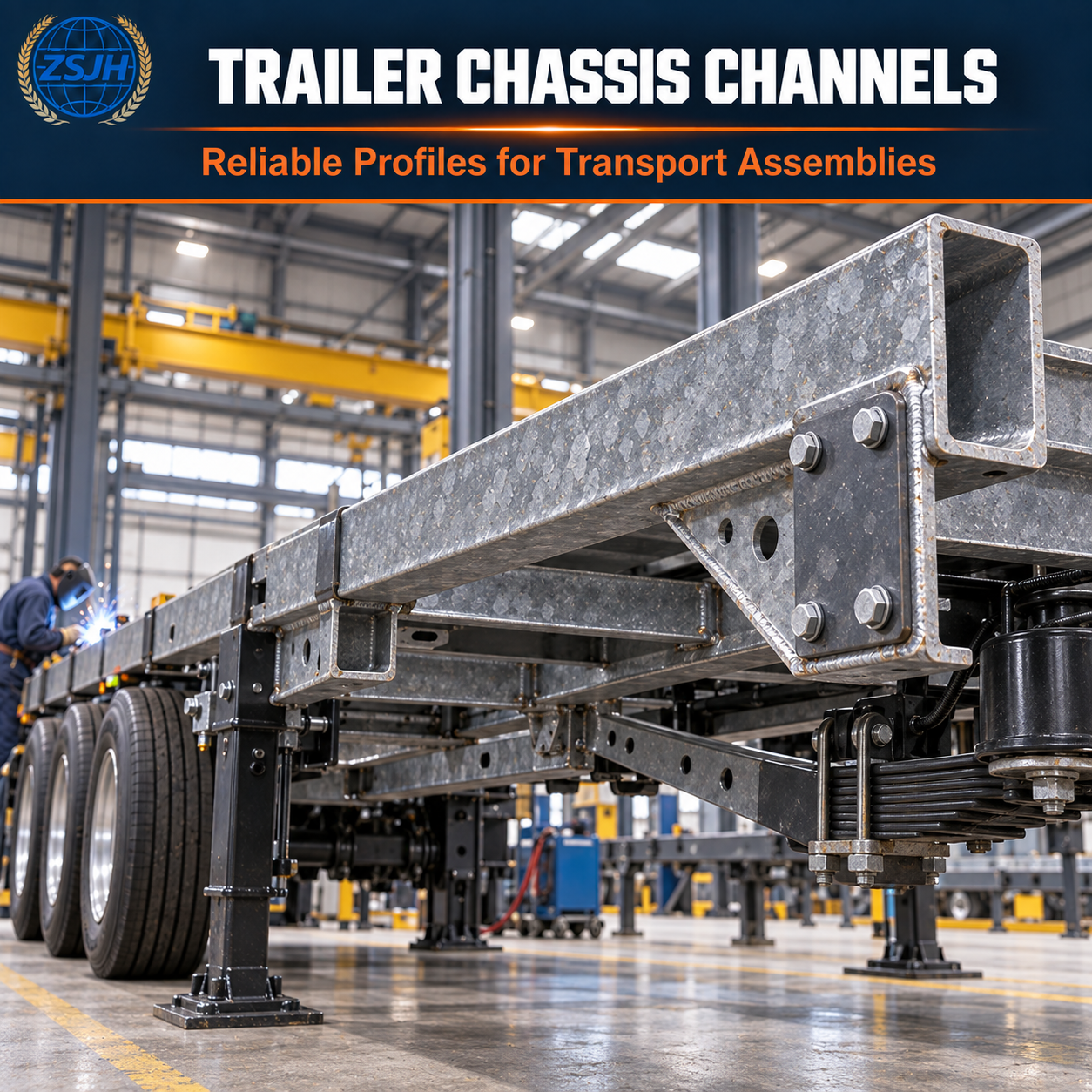
Semi-trailer cross-members
Trailer side-frame supports
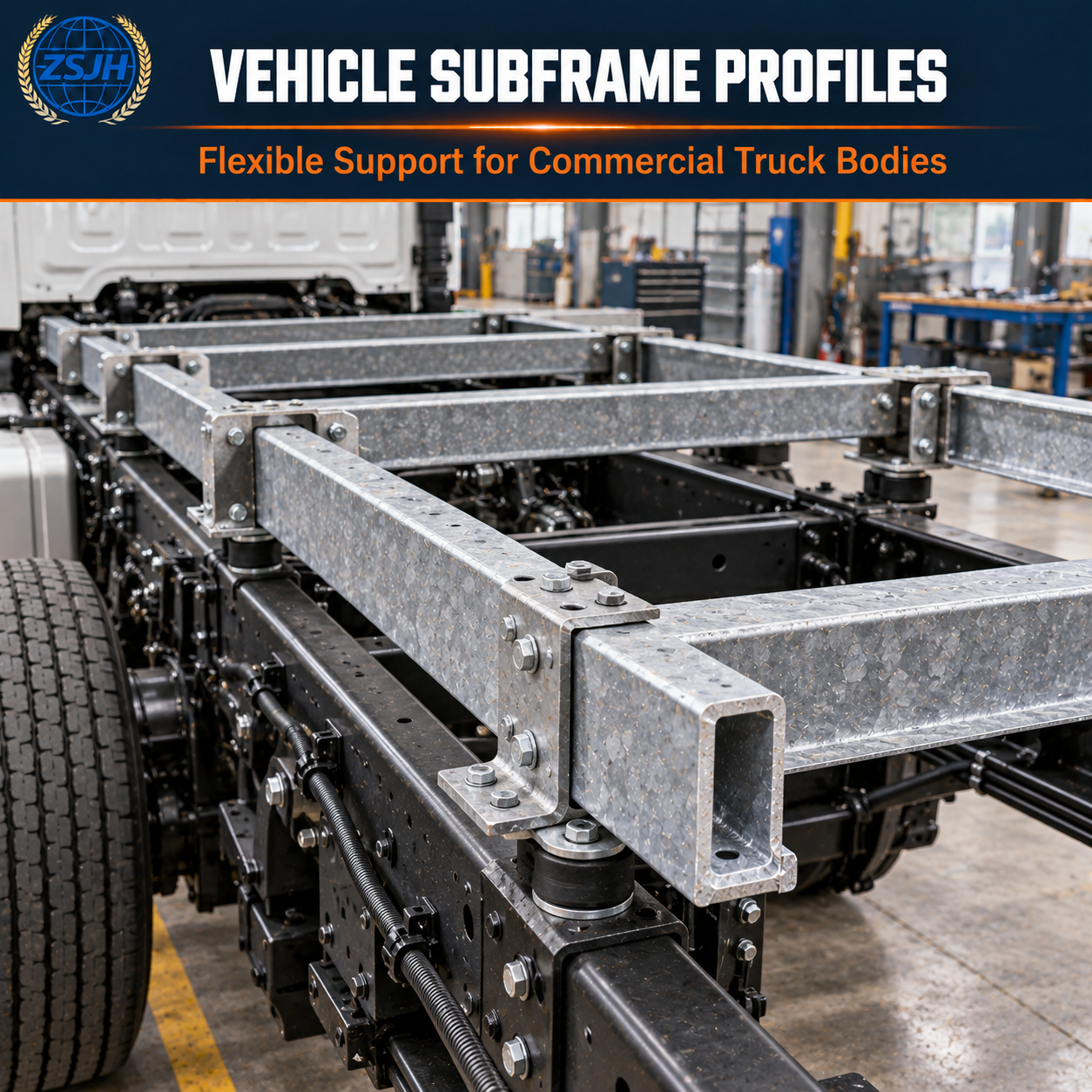
Commercial-vehicle body subframes
Truck cargo-body structures
Flatbed body framing
Agricultural trailer frames
Tipping-body reinforcement
Container-handling assemblies
Mobile workshop structures
Rail maintenance vehicles
Service-vehicle equipment mounts
Utility-vehicle body frames
Transport-equipment platforms
Auxiliary chassis components
General mobile-equipment fabrication
UPN/UPE channels should not automatically be treated as replacements for purpose-designed vehicle chassis rails. Primary chassis applications require approval from the vehicle designer or manufacturer.
These channels are suitable for transport-equipment manufacturers, body builders and fabrication workshops requiring standardized European sections, flexible processing and repeatable component dimensions.
They can support:
New trailer manufacturing
Commercial truck-body construction
Agricultural transport equipment
Mobile industrial equipment
Vehicle refurbishment
Auxiliary frame modification
Spare structural components
Low- and medium-volume custom vehicle production
Batch-fabricated transport assemblies
Projects involving road-going vehicles, rail equipment or lifting systems must comply with the relevant design standards, inspection rules and local regulatory requirements.
Section size and steel grade must be selected according to payload, equipment weight, load distribution and support spacing.
Vehicles experience repeated loading from road vibration, acceleration, braking and surface irregularities. Welded joints, holes and abrupt section changes must be assessed for fatigue.
UPN/UPE channels are open sections and generally have lower torsional rigidity than closed sections. Eccentric loading can cause twisting unless appropriate bracing or restraint is provided.
Trailer and mobile-equipment structures may experience impact, shock and dynamic amplification. Static load capacity alone is not sufficient for final selection.
Excessive deflection can affect body alignment, door operation, equipment mounting and load distribution even when the member remains below its strength limit.
Poor weld termination, excessive heat input and sharp geometric transitions can create stress concentrations. Welding procedures should match the steel grade and fatigue requirements.
Bolt holes and slotted holes should be positioned according to approved drawings. Edge distance, pitch, bearing capacity and net-section strength must be verified.
Mounting points, suspension interfaces, body-to-chassis connections and rubber isolation components must follow the vehicle manufacturer’s requirements.
Steel is produced to the required chemical composition and cast into billets or blooms suitable for structural-section rolling.
The feed material is reheated under controlled conditions before entering the rolling line.
High-pressure water removes surface oxide scale before the principal rolling stages.
The heated steel passes through roughing stands to form the preliminary section.
Calibrated rolls form the web, flanges and root radii of the required UPN or UPE profile.
The rolled sections are cooled under controlled conditions to stabilize their geometry and mechanical properties.
Mechanical straightening controls bow, sweep and longitudinal alignment.
Channels are cut into standard mill lengths or customer-specified fixed lengths.
Section geometry, length, straightness and surface condition are checked before further processing.
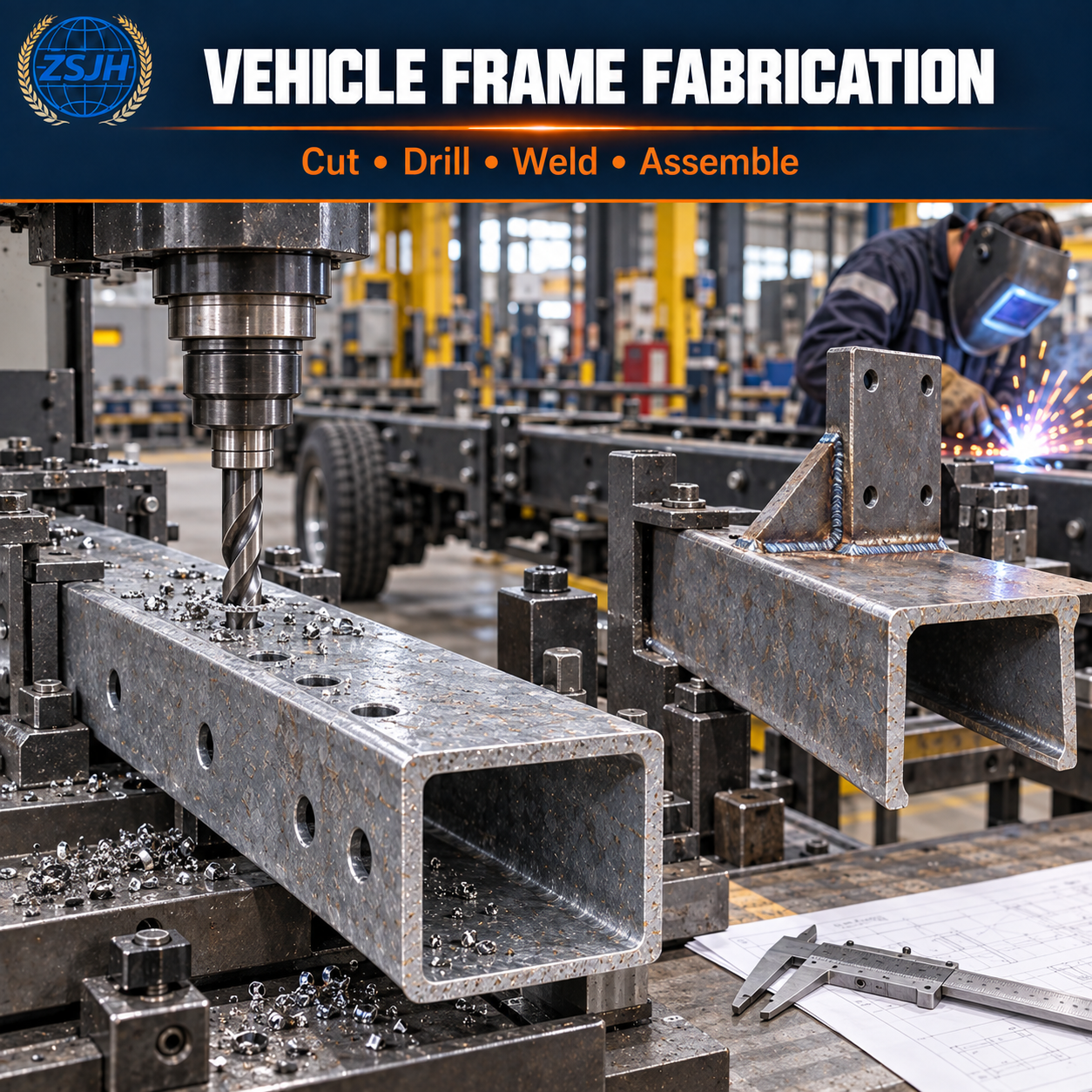
Cutting, drilling, slotting, notching, coping, plate welding and bracket installation can be completed according to approved drawings.
Fabricated channels may be shot-blasted, primed, painted or galvanized according to the specified protection system.
Finished components are inspected, identified and packaged for handling and international transportation.
ZSJH can coordinate:
Fixed-length saw cutting
Mitre cutting
CNC hole drilling
Slotted-hole processing
Web and flange notching
End coping
Gusset installation
End-plate welding
Mounting-bracket welding
Stiffener installation
Paired-channel assembly
Shot blasting
Shop primer
Finish painting
Hot-dip galvanizing
Component marking
Export packaging
Processing tolerances should be stated on approved fabrication drawings before production.
Pre-cut and pre-drilled channels can reduce measuring, marking and secondary processing during vehicle assembly.
Standardized hot-rolled profiles support repeatable fabrication and connection detailing.
UPN/UPE channels can be integrated with plates, brackets, stiffeners, bolts and welds to create engineered assemblies.
The open profile allows easier access to many connections for inspection, coating and repair.
Higher-strength grades may allow engineers to optimize section size, but weight reduction must be confirmed through complete structural and fatigue analysis.
The channels can be processed using commonly available steel-fabrication equipment, including band saws, drilling machines, CNC lines and welding systems.
Suitable when the customer will perform further fabrication and final coating.
Removes loose mill scale and prepares the surface for primer or paint.
Provides temporary protection during storage, fabrication and transportation. It is not necessarily a complete long-term coating system.
A project-specific paint system can provide corrosion protection and the required finished appearance.
Suitable for many outdoor or agricultural applications. Venting, drainage, dimensional clearance and distortion risks must be considered.
Vehicle components exposed to road salt, fertilizer, chemicals or continuous moisture may require an enhanced coating and maintenance plan.
Quality checks can include:
Material identification
Section designation
Length measurement
Straightness inspection
Cross-sectional dimensional checks
Surface-condition inspection
Hole size and position
Cut angle and end condition
Weld appearance
Fabricated-component dimensions
Coating appearance and thickness
Packaging and marking
Additional testing or documentation should be specified when requesting a quotation.
They can be used for selected vehicle-frame components, but they should not automatically replace purpose-designed chassis rails. Complete chassis use requires engineering analysis, fatigue verification and manufacturer or regulatory approval.
UPN channels have tapered inner flange surfaces. UPE channels have parallel flanges, which can simplify certain mounting-plate and bolted connections.
S235JR, S275JR and S355JR may be considered depending on the design. S355 provides higher yield strength, but fatigue, weldability, thickness and regulatory requirements must also be evaluated.
Not automatically. Weight reduction depends on stiffness, fatigue, buckling, connection design and minimum practical thickness as well as material strength.
Yes. Fixed-length cutting can be arranged according to the cutting schedule and transportation requirements.
Yes. Drilling, slots, notches, plates, stiffeners and brackets can be processed according to approved drawings.
Common structural grades generally offer good weldability when suitable welding procedures, consumables and heat-control methods are used.
Yes. Hot-dip galvanizing may be arranged, although component geometry, venting, drainage, distortion and final dimensional requirements must be reviewed.
Please provide the profile designation, steel grade, component length, quantity, hole pattern, cutting details, weld requirements, tolerances and surface treatment.
Available documentation depends on the order and may include material inspection documentation, packing lists and dimensional inspection records. Required documents should be confirmed before ordering.
ZSJH helps customers confirm UPN/UPE designations, steel grades, lengths, surface conditions and processing requirements.
Components can be produced according to approved cutting lists and fabrication drawings for repeatable vehicle-frame assembly.
Cutting, drilling, notching, welding and surface treatment can be coordinated within one supply program.
Material identification, dimensions, hole positions, processing details, surface condition and packaging are checked during production.
ZSJH supports prototype, small-batch and project-based supply requirements, subject to profile availability and production arrangements.
Channels and fabricated components are bundled and protected according to their dimensions, surface condition and shipping method.
Our team supports specification confirmation, drawing review, quotation preparation, order updates and export coordination.
Send ZSJH the required UPN/UPE profile designation, steel grade, component length, quantity, processing drawings, tolerance requirements, surface treatment and destination port.
Our team will review your requirements and prepare a suitable steel supply and processing proposal for trailer, commercial-vehicle, agricultural-equipment or rail-service applications.


