:sales@zsjhsteelgroup.com WhatsApp:+86-15122582058






| Quantity: | |
|---|---|


ZSJH
| Feature | UPN Steel Channel | UPE Steel Channel |
|---|---|---|
| Section type | European standard channel | European parallel-flange channel |
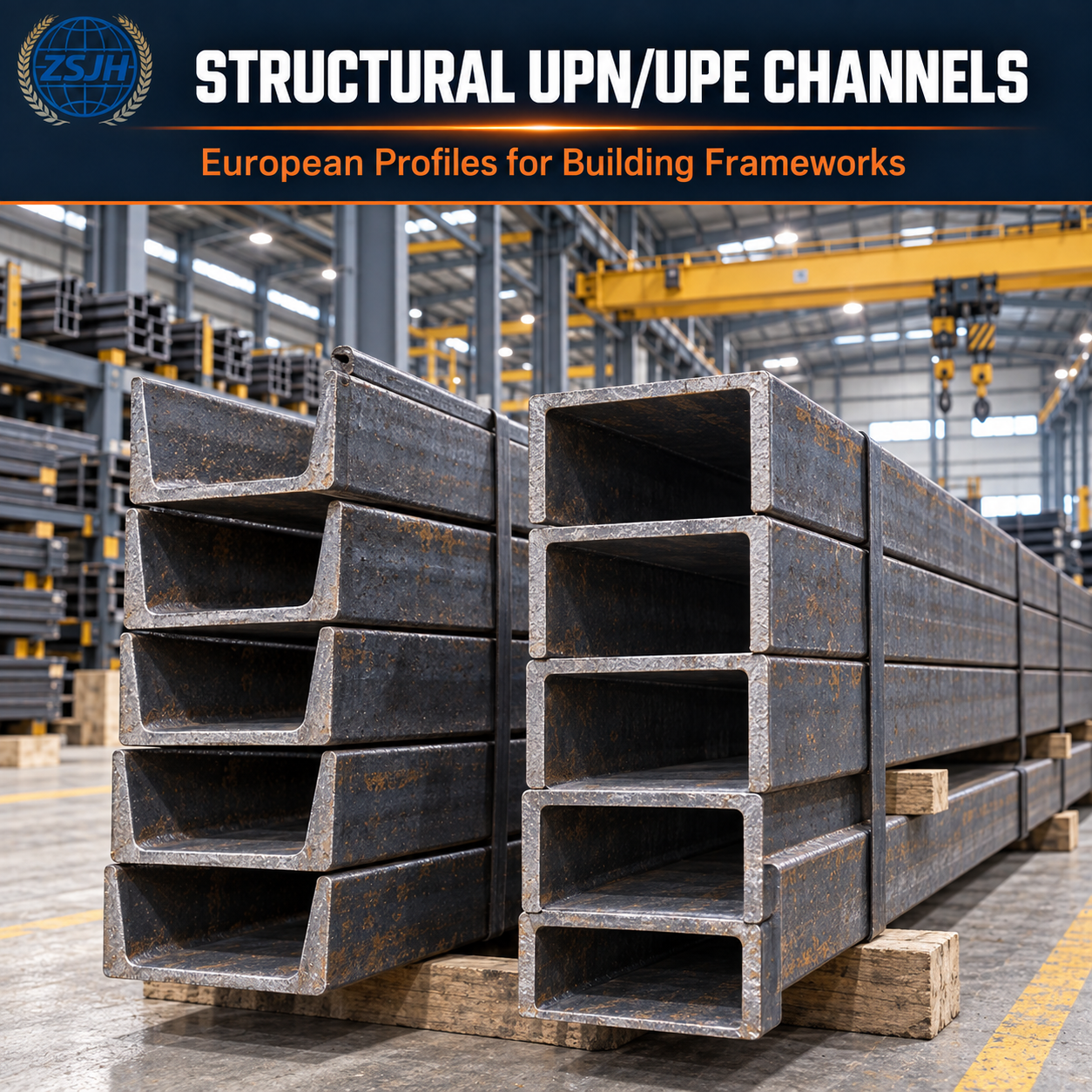
| Inner flange surface | Tapered | Parallel |
| Connection surface | May require tapered washers or suitable connection detailing | Flat flange surfaces simplify many bolted connections |
| Internal profile space | Relatively limited by tapered flange geometry | More uniform internal space |
| Typical applications | Conventional building structures and general fabrication | Engineered frames, modular structures and connection-intensive assemblies |
| Processing | Cutting, drilling, welding and bolting | Cutting, drilling, welding and bolting |
| Selection method | Based on section properties and connection design | Based on section properties and connection design |
The selection between UPN and UPE should be based on engineering calculations. UPE is not automatically stronger than UPN; load capacity depends on the selected section size, steel grade, effective length, restraint conditions and load direction.
UPN and UPE channels are available in recognized European section designations, making them suitable for projects that use European structural-steel specifications.
The hot-rolled channel profile provides practical bending strength and structural stiffness for secondary framing, edge supports, lintels, trimmers and other building components.
UPN/UPE channels can be connected using bolts, welds, cleats, end plates, gusset plates and other engineered connection systems.
The open-section geometry provides convenient access for cutting, drilling, welding, inspection and the installation of brackets or connecting plates.
Different structural grades can be supplied according to strength, weldability, service temperature and project requirements.
Fixed-length cutting, drilling, notching, coping, welding and surface preparation can be arranged according to approved fabrication drawings.
| Parameter | Available Specification |
|---|---|
| Product name | Structural UPN/UPE Steel Channels |
| Product category | Hot-rolled structural steel channel |
| Profile types | UPN tapered-flange channel and UPE parallel-flange channel |
| Common steel grades | S235JR, S275JR, S355JR or equivalent |
| Manufacturing standard | EN 10025 series or agreed material standard |
| Dimensions and section properties | According to EN 10365 or agreed specification |
| Dimensional tolerances | According to EN 10279 or agreed project requirements |
| Section size | Selected according to the required UPN/UPE designation |
| Length | Standard mill length or customized fixed length |
| Surface condition | As rolled, shot-blasted, primed, painted or galvanized |
| Cutting method | Saw cutting, mechanical cutting or other agreed processing |
| Connection method | Bolted, welded or combined connection |
| Additional processing | Drilling, notching, coping, welding and component fabrication |
| Inspection | Dimensions, straightness, surface condition and processing accuracy |
| Identification | Bundle labels, marks or customized identification |
| Packaging | Steel bundles with straps and export protection |
Available section sizes, grades, lengths and surface treatments depend on production and raw-material availability. Final specifications must be confirmed before placing an order.
A commonly used structural steel grade suitable for general building frames, secondary supports and standard fabrication applications.
Provides higher yield strength than S235JR and can be selected for projects requiring increased structural capacity.
Frequently used for higher-strength structural applications where increased load capacity or material optimization is required.
Steel grade selection must consider structural calculations, member thickness, welding procedures, service temperature, applicable standards and project-specific requirements.
Channel profiles can be used as secondary beams, edge members, wall supports and framing components without requiring complex built-up fabrication.
Common structural grades generally provide suitable weldability when the correct welding process, consumables and procedures are used.
Controlled dimensions and straightness help improve alignment during workshop fabrication and on-site installation.
Pre-cut and pre-drilled products can reduce field fabrication, installation time and material waste.
UPN/UPE channels can be integrated into prefabricated wall frames, floor assemblies, equipment openings and transportable building modules.
Depending on the exposure environment, the channels may be painted, galvanized or supplied with another specified protective coating.
ZSJH structural UPN/UPE channels can be used for:
Commercial building frameworks
Industrial building extensions
Secondary structural framing
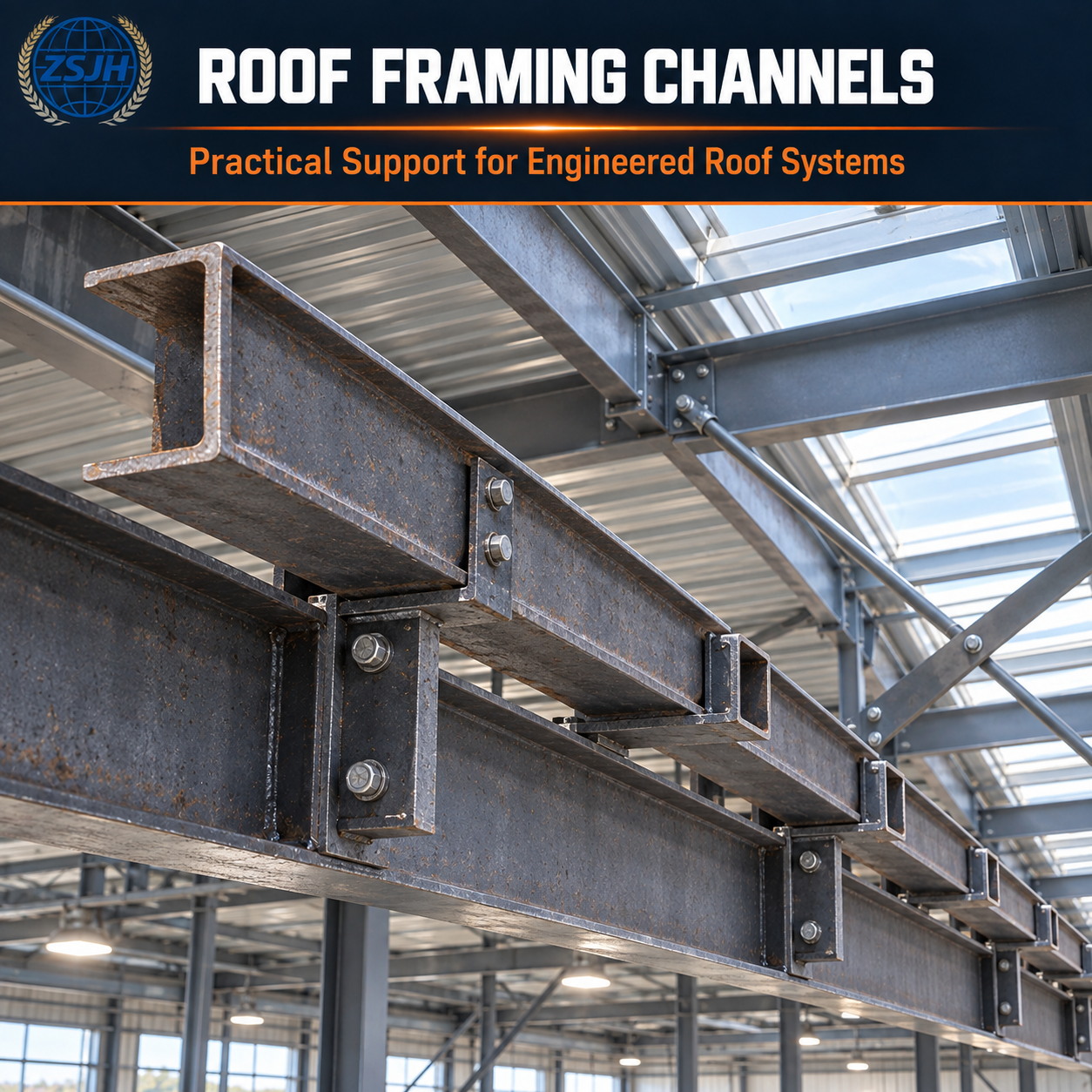
Roof-support members
Roof openings and equipment curbs
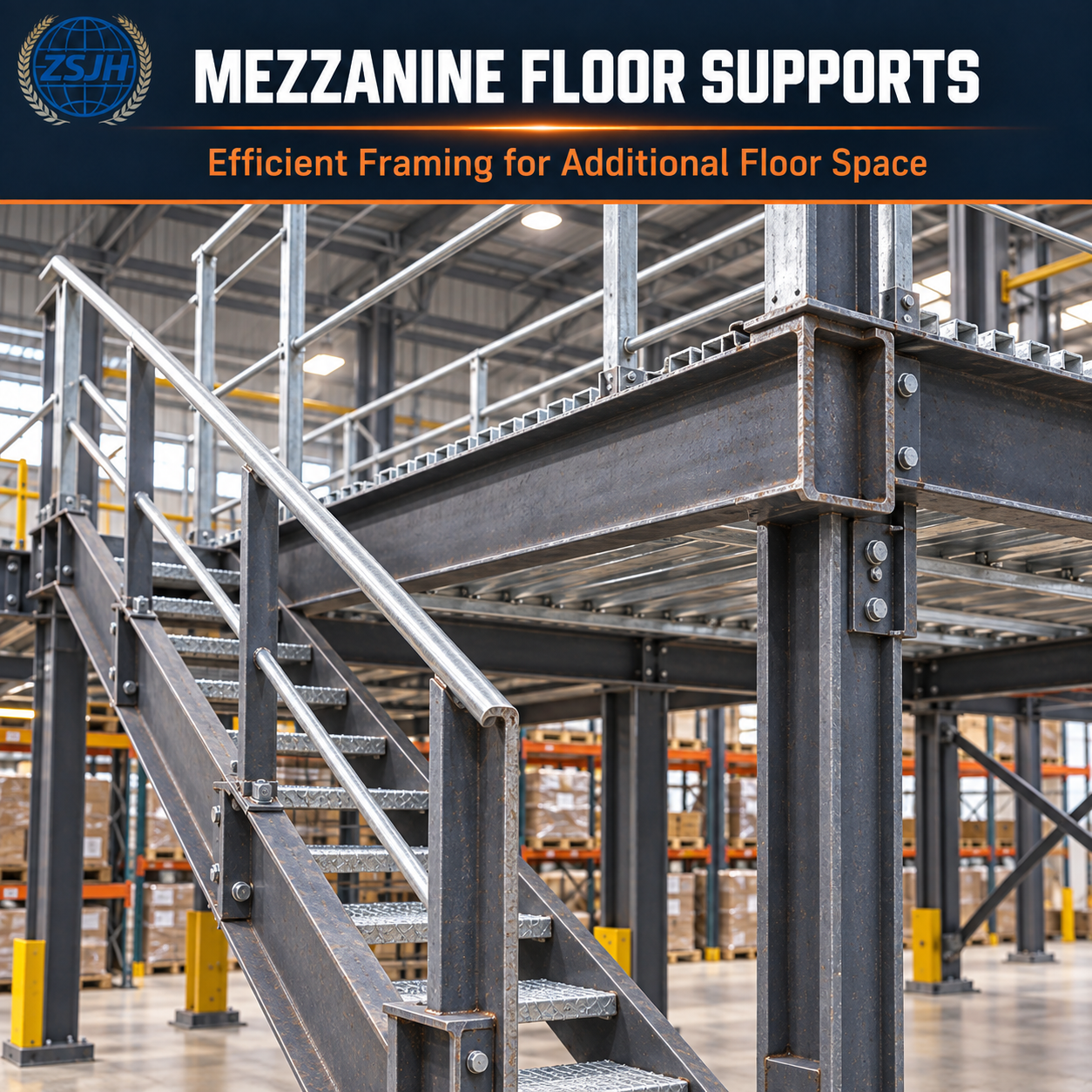
Mezzanine floor structures
Stair stringers and landing frames
Wall-support structures
Door and window opening frames
Façade and cladding subframes
Modular and prefabricated buildings
Renovation and reinforcement projects
Bridge maintenance structures
Infrastructure service platforms
Utility-support frameworks
General structural fabrication
These hot-rolled channels are suitable for new construction, building extensions, structural renovation, modular construction and infrastructure-support projects.
They are commonly selected when a project requires:
Standardized European channel profiles
Reliable secondary structural members
Bolted or welded connections
Customized cutting and drilling
Efficient workshop fabrication
Convenient installation
Different surface-treatment options
Export-ready steel supply
Final structural use must be confirmed by the project engineer, particularly where the channels are exposed to high loads, torsion, fatigue, vibration or harsh environmental conditions.
UPN and UPE channels are open sections. Their torsional resistance is generally lower than that of closed hollow sections. Eccentric loads may cause twisting if sufficient restraint is not provided.
Channel performance depends on the orientation of the section and the direction of loading. Loads should be applied and restrained according to the structural design.
Long, unrestrained channels may require lateral bracing, bridging or connection to adjacent structural components.
UPN tapered flanges may require tapered washers or specially detailed connection plates. UPE parallel flanges offer flat contact surfaces for many bolted and plated connections.
For mezzanine floors, engineers should consider imposed loads, vibration, deflection, floor-deck interaction, connection stiffness and fire-protection requirements.
Façade-support channels must be designed for cladding weight, wind loads, thermal movement, bracket spacing and corrosion exposure. Lightweight cold-formed systems may be more appropriate for some façade applications.
The suitability of UPN/UPE channels for roof framing depends on span, member spacing, roof loads, wind uplift, snow load and lateral restraint.
Molten steel is produced to the required chemical composition and cast into billets or blooms for section rolling.
The steel is reheated to the appropriate rolling temperature in a controlled furnace.
Oxide scale is removed before rolling to support a more consistent surface condition.
The heated steel passes through roughing stands to gradually form the initial structural profile.
A series of calibrated rolls forms the channel web, flanges, root radii and required UPN or UPE geometry.
The finished sections are cooled under controlled conditions to achieve stable dimensions and mechanical properties.
Roll straightening equipment is used to control bow, sweep and overall alignment.
The channels are cut into standard mill lengths or customer-specified fixed lengths.
Dimensions, straightness, section geometry, length, surface condition and material identification are inspected.
Products can be drilled, notched, coped, welded or prepared for surface treatment according to approved drawings.
Qualified channels are bundled, strapped, marked and protected for handling and international transportation.
ZSJH can coordinate processing according to customer drawings, including:
Customized length cutting
Straight and mitre cutting
CNC drilling
Slotted-hole processing
Web and flange notching
End coping
End-plate welding
Stiffener and bracket installation
Paired-channel assembly
Shot blasting
Primer application
Finish painting
Hot-dip galvanizing
Customized marking
Export packaging
Fabrication tolerances and acceptance requirements should be stated clearly on the approved drawings.
Suitable when the customer will perform further fabrication or surface treatment after delivery.
Removes loose mill scale and prepares the steel for primer or protective coating application.
Provides temporary protection during transportation, storage and fabrication. It is not necessarily a complete long-term coating system.
A coating system can be selected according to the project environment, required durability and specified color.
Suitable for many outdoor and humid applications. Venting, drainage, distortion control and final dimensions should be considered before galvanizing fabricated components.
UPN channels have tapered inner flange surfaces, while UPE channels have parallel flanges. This affects connection detailing, internal clearance and the contact surface available for plates and fasteners.
No. UPN and UPE sections with similar nominal depths can have different flange widths, thicknesses, masses and section properties. The exact designation must be checked before substitution.
S235JR, S275JR and S355JR are commonly specified. The appropriate grade depends on structural calculations, fabrication requirements and applicable project standards.
They may be used as structural members when supported by engineering calculations. For long spans, heavy loads or torsion-sensitive applications, another section or a built-up arrangement may be more suitable.
Yes. Fixed-length cutting can be arranged according to the order schedule and transportation limitations.
Yes. Drilling, notching, coping and plate welding can be provided according to approved fabrication drawings.
Yes. Hot-dip galvanizing can be arranged, subject to section size, fabrication condition and galvanizing requirements.
They can be used for engineered façade-support structures. The final section must be selected according to cladding weight, wind load, bracket spacing and corrosion conditions.
Channels are normally bundled with steel straps and suitable lifting supports. Protective wrapping, markings and other packaging can be arranged according to shipping requirements.
Please provide:
UPN or UPE profile designation
Required steel grade
Applicable standard
Length and quantity
Cutting and drilling requirements
Fabrication drawings
Surface-treatment requirements
Inspection and documentation requirements
Destination port or delivery location
ZSJH supports the confirmation of channel type, section designation, steel grade, length, surface condition and fabrication requirements.
Both tapered-flange UPN channels and parallel-flange UPE channels can be supplied for different structural and connection requirements.
Cutting, drilling, notching, welding and surface preparation can be coordinated according to approved project drawings.
Material identification, section dimensions, straightness, surface condition and fabrication accuracy are checked during the supply process.
Our team supports bill-of-material review, drawing confirmation, order scheduling, packaging and shipping coordination.
Products are bundled and protected according to section dimensions, length, processing condition and international transportation requirements.
ZSJH provides efficient support for quotations, technical confirmation, production updates and export documentation.
Send ZSJH your required UPN/UPE section designation, steel grade, length, quantity, processing drawings, surface-treatment requirements and destination port.
Our team will review your project requirements and provide a suitable steel supply and processing proposal for building frames, roof systems, mezzanine structures, façade subframes or modular construction.


