:sales@zsjhsteelgroup.com WhatsApp:+86-15122582058





| Quantity: | |
|---|---|


ZSJH
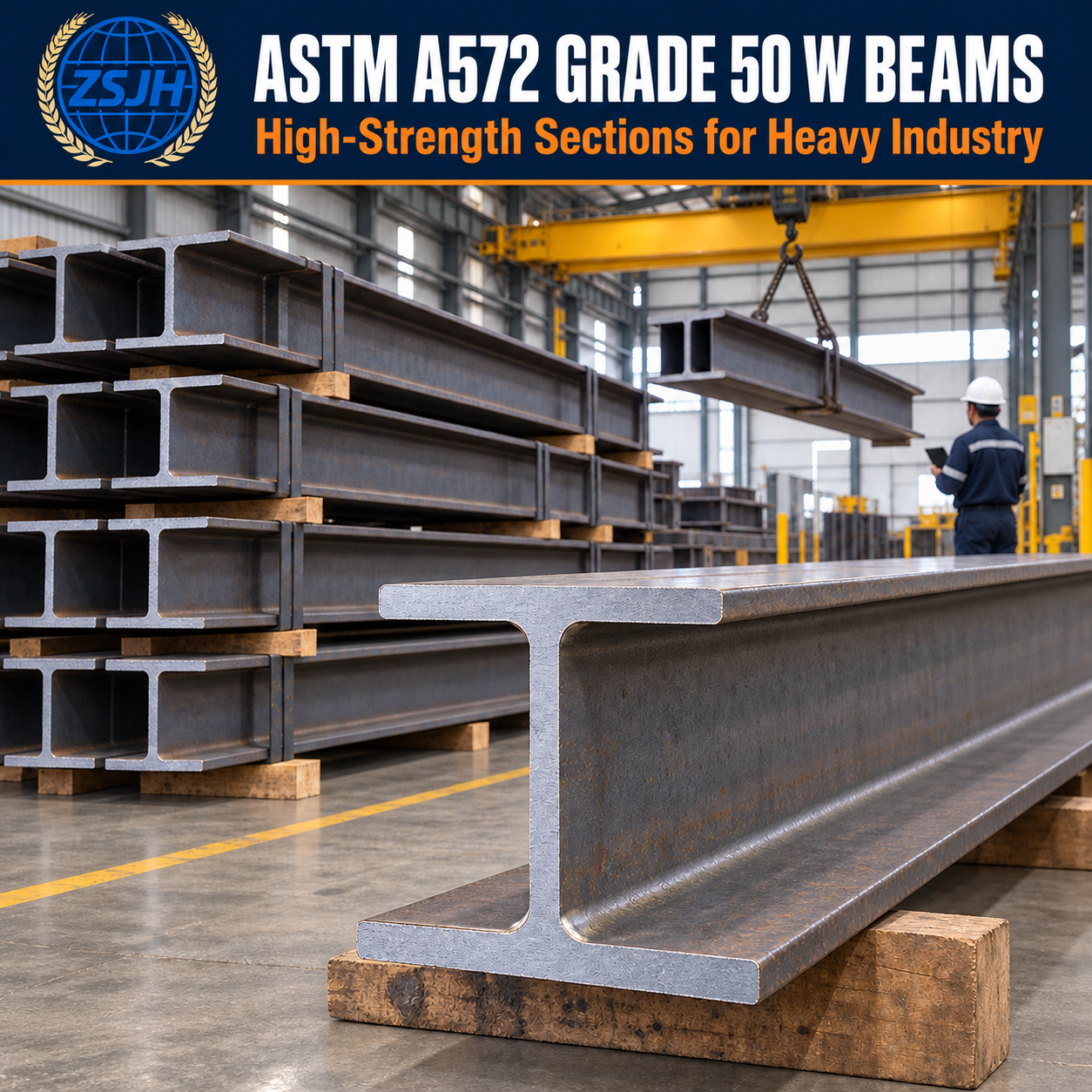
A specified minimum yield strength of 50 ksi provides dependable load-bearing performance for industrial structures and can support efficient member selection when permitted by the engineering design.
The flanges provide resistance to bending stresses, while the web carries shear forces. This makes W sections suitable for beams, columns, equipment-support frames and elevated platforms.
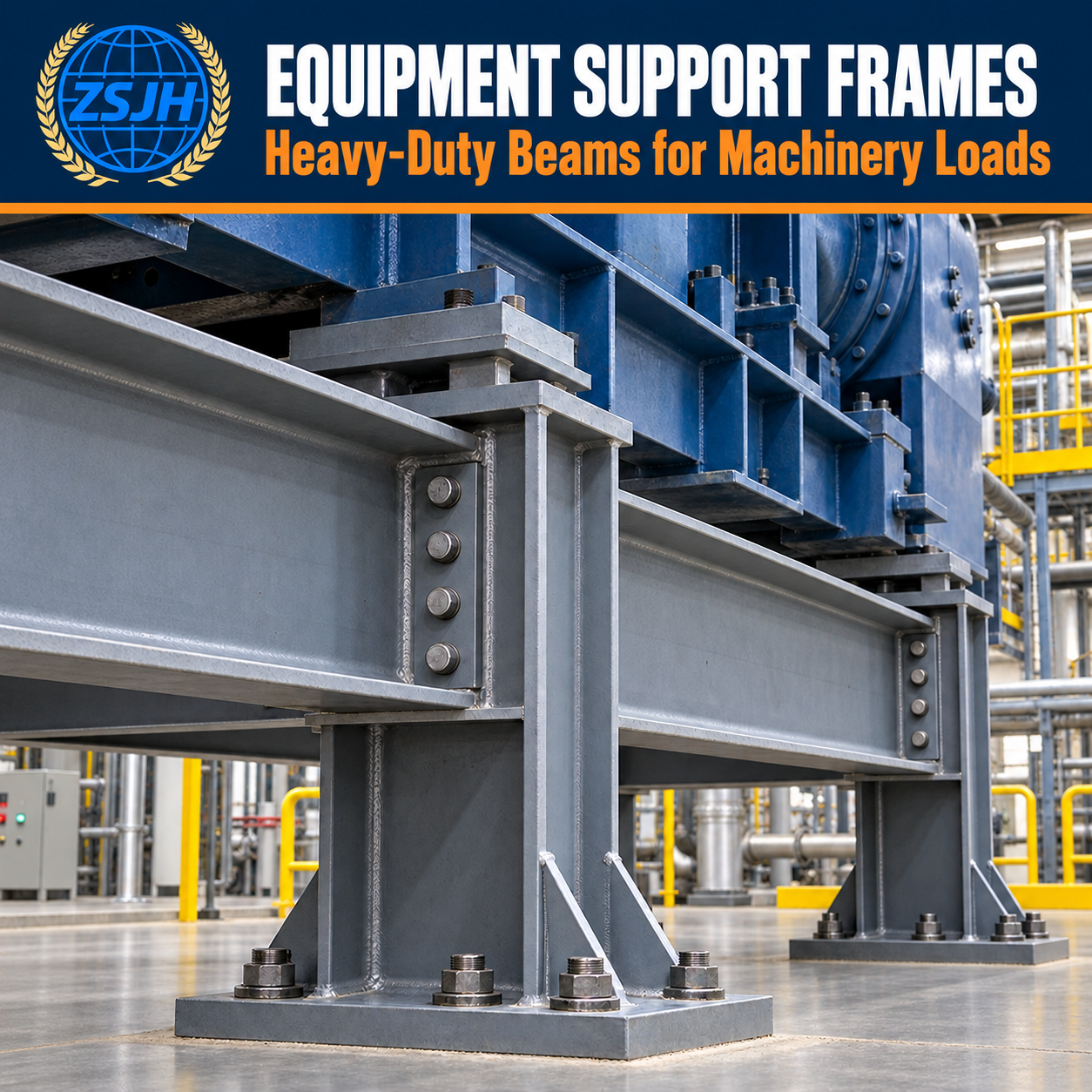
The beams can be incorporated into process structures, pipe racks, mezzanines, machinery-support frames, maintenance platforms and plant-expansion projects.
ASTM A572 Grade 50 W beams can generally be cut, drilled, coped, bolted and welded using qualified procedures appropriate to the material, thickness and joint configuration.
ZSJH can coordinate custom lengths, bolt holes, copes, connection plates, stiffeners, base plates and other fabrication work according to approved drawings.
Beams can be supplied in an as-rolled condition or with shot blasting, shop primer, paint or other project-specific corrosion-protection systems.
| Parameter | Available Specification |
|---|---|
| Product Name | High-Strength ASTM A572 Grade 50 W Beam |
| Product Form | Hot-rolled American wide-flange section |
| Material Standard | ASTM A572/A572M |
| Steel Grade | Grade 50 |
| Minimum Yield Strength | 50 ksi / 345 MPa |
| Minimum Tensile Strength | 65 ksi / approximately 450 MPa |
| Section Type | American W shape |
| Section Designation | According to the specified W depth and nominal weight |
| Dimensions | According to the ordered section and applicable dimensional tables |
| Length | Standard mill length or custom-cut length |
| Dimensional Tolerances | ASTM A6/A6M or agreed project requirements |
| Surface Condition | As-rolled, blasted, primed, painted or otherwise specified |
| Processing Services | Cutting, drilling, coping, welding and component assembly |
| Inspection Documents | Mill test certificate and agreed inspection records |
| Identification | Grade, heat number and section identification as applicable |
| Packaging | Bundled or project-specific export packaging |
Mechanical requirements, section availability and dimensional limits depend on the applicable standard revision, beam designation, flange thickness and producing mill. All details must be confirmed before ordering.
The parallel flanges of a W beam are positioned away from the neutral axis, helping the section resist bending efficiently. The web connects the flanges and transfers shear forces through the member.
Depending on its orientation and structural design, a W section can be used as:
A primary floor or platform beam
A secondary framing member
A vertical column
A machinery-support beam
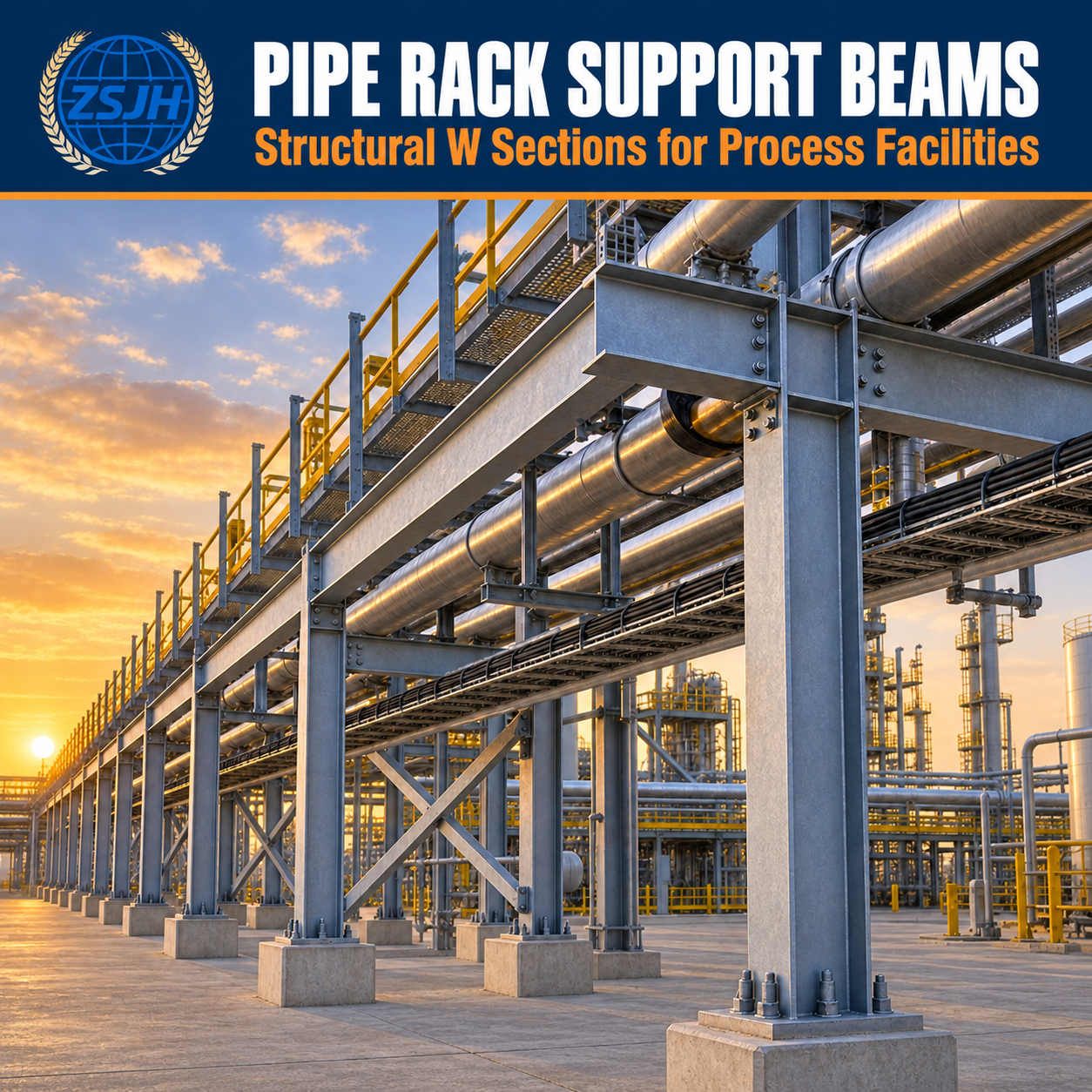
A pipe-rack beam or column
An industrial mezzanine member
A crane-runway support member
A plant-expansion framing component
Section depth, flange width, web thickness, flange thickness and unit weight vary with each W designation. Final selection must consider bending, shear, axial force, deflection, vibration, buckling, connection behavior and service conditions.
ASTM A572 Grade 50 W beams may be used in:
Oil and gas processing facilities
Petrochemical plants
Power-generation facilities
Manufacturing plants
Mining and mineral-processing facilities
Heavy-machinery support frames
Industrial equipment foundations
Pipe racks and utility-support structures
Conveyor-support frameworks
Industrial mezzanine systems
Maintenance and access platforms
Material-handling facilities
Plant expansion and modernization projects
Warehouses with heavy process loads
Selected crane runway and crane-support structures
These W beams are suitable for industrial projects requiring high-strength structural sections, customized processing and American W-shape geometry.
They may be considered for both new construction and structural modifications, including plant expansion, equipment replacement, platform additions and reinforcement projects. However, the existing structure, new loading conditions and connection capacity must be evaluated before modification.
For outdoor, coastal, chemical-processing or high-humidity environments, the corrosion-protection system should be selected according to the actual exposure category and maintenance plan.
Machinery can introduce concentrated loads, vibration, impact and dynamic forces. Beam selection should therefore consider equipment operating frequency, allowable deflection, vibration limits, anchor arrangements and maintenance conditions.
Crane-support members are subjected to repeated wheel loads, lateral forces, impact and fatigue. A beam suitable for ordinary gravity loading is not automatically suitable for crane runway service.
The runway beam, rail attachment, brackets, stiffeners, column connections and lateral restraint must be designed for the actual crane classification and operating conditions.
Pipe-rack members must accommodate pipe weight, operating contents, insulation, thermal movement, wind, seismic effects and maintenance loads. Expansion behavior and support locations should be coordinated with the piping design.
ASTM A572 Grade 50 and ASTM A992 may share similar minimum yield-strength values, but their specification requirements are not identical. Substitution should only be made after reviewing mechanical properties, chemical composition, weldability, availability and project documents.
Steel is produced to meet the chemical-composition and mechanical-property requirements of the ordered ASTM A572 Grade 50 material.
The semi-finished steel is inspected and prepared for rolling. Heat identification is maintained to support material traceability.
The steel is heated to the required rolling temperature to achieve consistent forming and mechanical performance.
The heated material passes through a sequence of rolling stands to form the required W-section depth, flange width, web thickness, flange thickness and root fillets.
After rolling, the section is cooled under controlled conditions to maintain dimensional stability and the required material properties.
Mechanical straightening equipment is used to correct sweep, camber and twisting within the applicable tolerances.
The W beams are cut to standard mill lengths or customized project lengths.
Dimensions, straightness, surface condition, identification and mechanical-test documentation are checked according to the order requirements.
When specified, the beams are drilled, coped, welded or fitted with stiffeners, base plates and connection components according to approved fabrication drawings.
The finished beams may be blasted, primed or painted before being bundled and prepared for domestic or international shipment.
ZSJH can coordinate the following services:
Fixed-length cutting
CNC drilling
Web and flange hole preparation
Beam coping
End preparation
Stiffener installation
Base-plate and connection-plate fabrication
Welding according to approved procedures
Trial assembly when specified
Abrasive blasting
Shop priming
Protective painting
Identification marking
Export packaging
Fabrication tolerances, welding standards, inspection levels and coating requirements should be stated in the project documents.
High strength-to-weight efficiency
Reliable load-bearing performance
Standardized American W-shape geometry
Suitable for beams and columns
Good fabrication versatility
Compatible with bolted and welded connections
Custom lengths help reduce site cutting
Prefabricated connections can accelerate installation
Suitable for new industrial construction and plant upgrades
Multiple surface-treatment options
Material traceability and inspection documentation available
Export-ready supply and packaging
Untreated carbon and low-alloy structural steel can corrode when exposed to moisture, chemicals, salt or industrial pollution. ASTM A572 Grade 50 should not automatically be treated as uncoated weathering steel.
Available protection options may include:
Mill scale or as-rolled surface
Abrasive blasting
Temporary shop primer
Zinc-rich primer
Epoxy intermediate coating
Polyurethane finish coating
Project-specific industrial paint systems
Hot-dip galvanizing where technically and dimensionally suitable
The required preparation grade, coating compatibility, dry-film thickness, color and repair procedure should be confirmed before production.
Depending on the order scope, quality control may include:
Material certificate review
Heat-number verification
Dimensional inspection
Straightness and length inspection
Surface-condition inspection
Hole-position and fabrication checks
Weld visual inspection
Nondestructive testing when specified
Coating-thickness inspection
Final identification and packaging inspection
Third-party inspection can be coordinated when requested before production.
ASTM A572 Grade 50 is a high-strength, low-alloy structural steel grade with a specified minimum yield strength of 50 ksi, or 345 MPa.
No. Although both can have a minimum yield strength of 50 ksi, they are separate material specifications with different scope and technical requirements. The specified grade should follow the project documents.
Not necessarily. Availability depends on the W designation, flange thickness, producing mill, required length, quantity and regional supply. Exact availability must be checked before quotation.
Yes. Standard mill lengths and custom-cut lengths can be supplied, subject to production, transportation and handling limitations.
Yes. Cutting, drilling, coping, stiffener installation, connection-plate assembly and welding can be provided according to approved drawings.
They can be used in machinery-support frames when selected through appropriate structural and vibration analysis. Equipment weight alone is not sufficient for beam selection.
They may be used when permitted by the design, but crane runway members require specific checks for wheel loads, fatigue, lateral forces, impact, deflection and connection behavior.
Yes, provided that an appropriate corrosion-protection system is selected for the service environment. Ordinary Grade 50 steel should not be assumed to provide weathering-steel performance.
Galvanizing may be available depending on beam size, length, chemical composition, fabrication details and galvanizing-facility capacity. Venting, drainage and distortion risks must be reviewed.
Common structural welding processes may be used with suitable filler metals, qualified welding procedures and appropriate control of heat input and preheat. The applicable welding code should be specified by the project.
Available documentation may include mill test certificates, heat-number records, dimensional reports, fabrication inspection records, weld reports and coating reports, depending on the agreed order scope.
Please provide the W designation, material grade, standard revision, required length, quantity, fabrication drawings, welding requirements, surface treatment, inspection documents and destination.
ZSJH supplies structural steel and fabricated components for industrial plants, equipment-support structures, process facilities and steel-building projects.
Our team reviews the required W designation, material grade, dimensions, quantity and documentation before confirming the supply solution.
Beams can be processed according to project drawings, helping reduce on-site cutting, drilling and welding.
Material identification, dimensions, fabricated details, weld appearance, surface treatment and packaging are checked throughout production.
ZSJH can coordinate W beams, connection plates, stiffeners, columns, platforms and other supporting steel components as part of an integrated supply package.
Products are prepared according to their size, length and transportation method to help reduce handling and shipping damage.
Our team supports specification clarification, drawing review, fabrication coordination, quotation preparation and international shipment planning.
Send ZSJH your required W-shape designation, ASTM grade, beam length, quantity, fabrication drawings, load or application information, surface-treatment requirements and destination port.
Our team will review the technical requirements and provide a project-specific quotation, fabrication solution and delivery plan.
Final member selection, connections and structural use must be verified by a qualified engineer according to the project loads, applicable design code and local regulations. Standardized W-shape dimensions may be checked using the official AISC Structural Steel Dimensioning Tool.


