:sales@zsjhsteelgroup.com WhatsApp:+86-15122582058






| Quantity: | |
|---|---|


ZSJH
Custom-fabricated steelwork for conveyor support, drive-end mounting, and maintenance access.
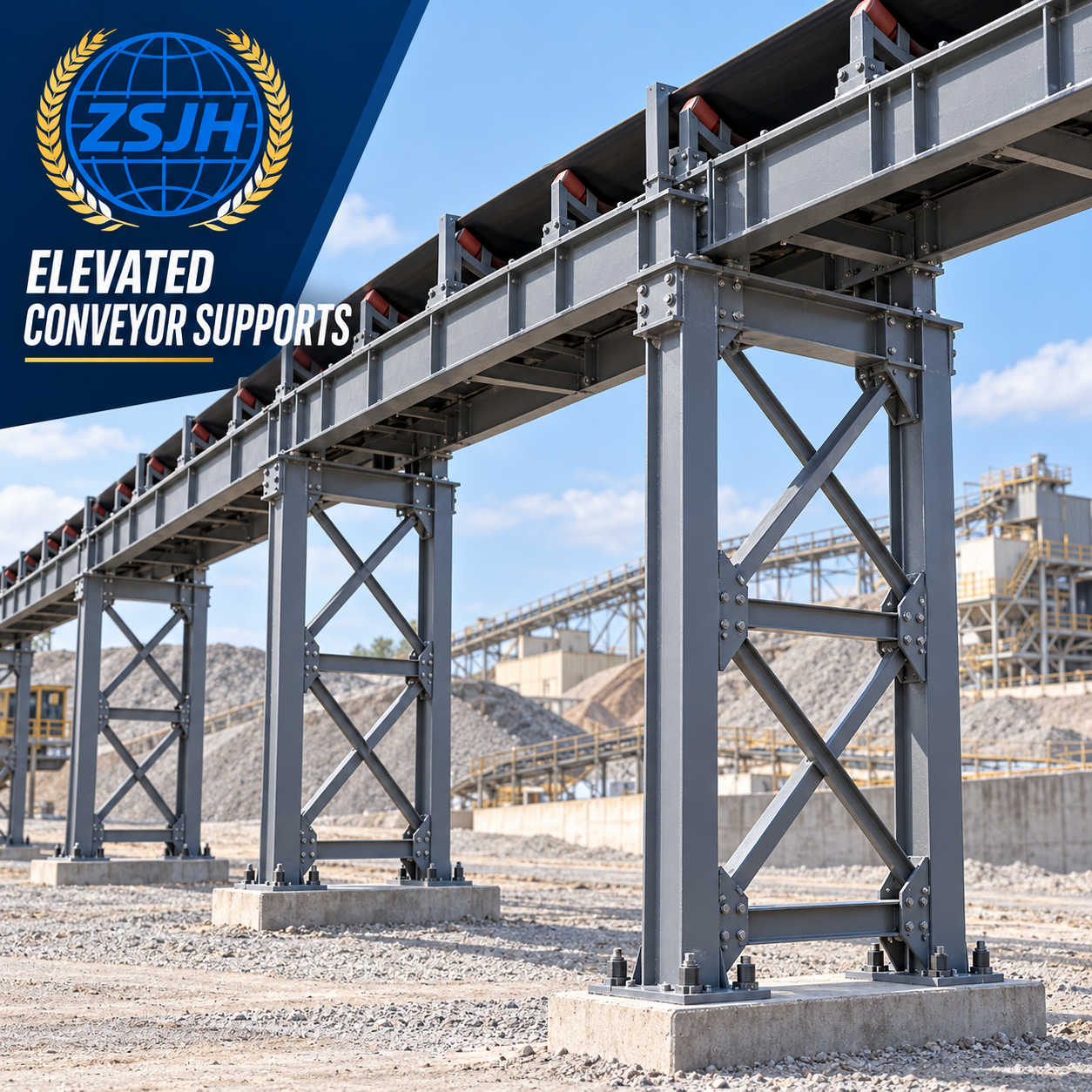
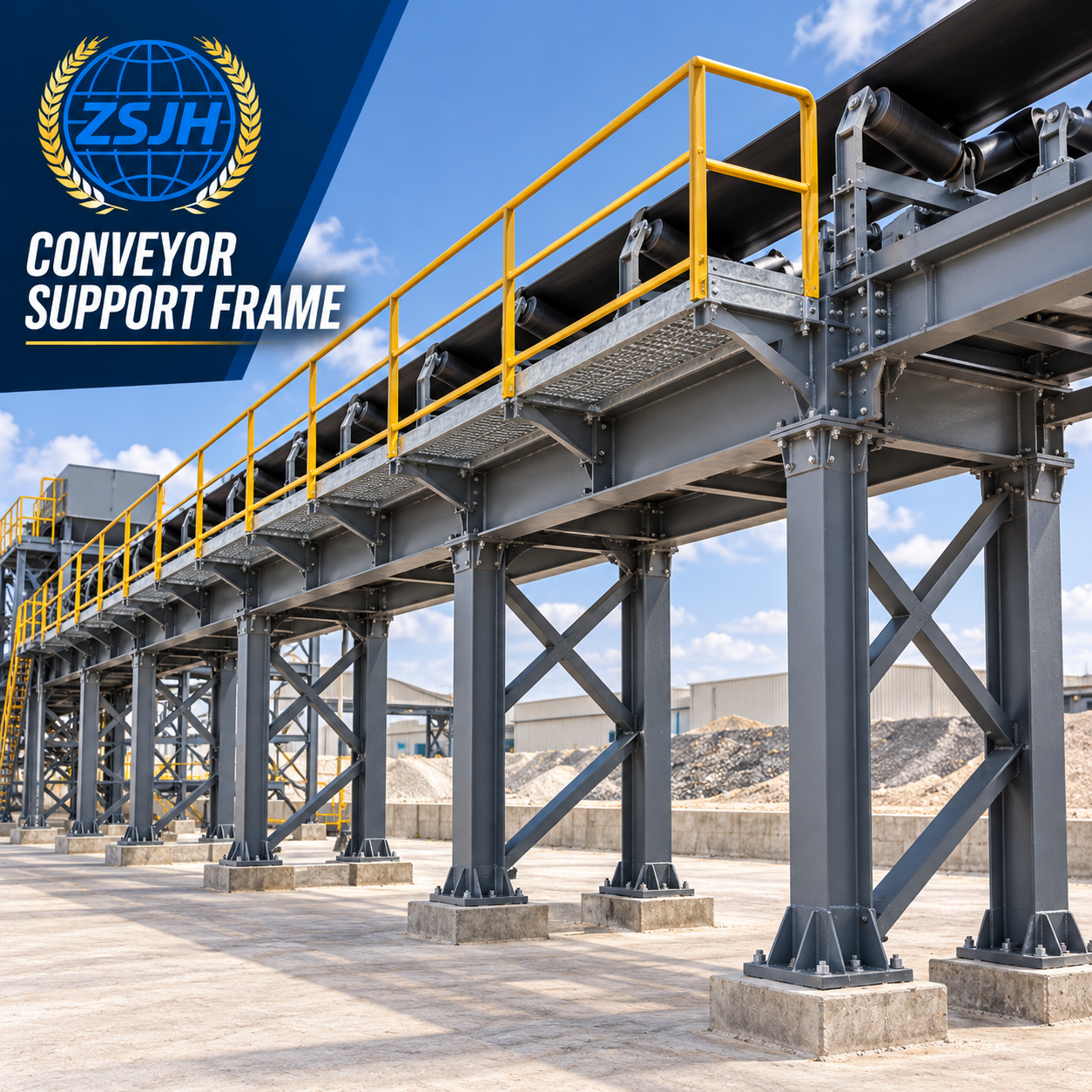
ZSJH STEEL supplies Industrial Conveyor Supporting Steel Structures for belt conveyors and bulk material handling installations. Our supply scope includes conveyor trestles, supporting frames, longitudinal trusses, drive-end support bases, bracing, and integrated access platforms.
Each package is fabricated to approved project drawings, with structural arrangements coordinated around the conveyor route, equipment interfaces, operating loads, and maintenance requirements.
Unlike pipe racks, which primarily support piping networks, conveyor supporting structures follow the conveyor alignment and accommodate its equipment support points, elevations, and transfer locations.
Compared with general equipment stands, these structures require closer coordination with longitudinal conveyor geometry, belt and material loads, drive reactions, and access along the conveying route. Applicable operating, starting, braking, impact, and maintenance loads must be established for the project.
| Component | Function and Supply Details |
|---|---|
| Conveyor Support Trestles | Steel columns, transverse beams, base plates, and bracing arranged to support conveyors at specified elevations and intervals. |
| Conveyor Supporting Frames | Fabricated beams and cross-members providing mounting locations for conveyor stringers or equipment assemblies. |
| Conveyor Support Trusses | Longitudinal trusses for elevated sections and crossings where the project requires wider spacing between supports. |
| Drive-End Support Frames | Reinforced steel bases and supporting members coordinated with head pulley, motor, gearbox, and drive assembly mounting requirements. |
| Bracing and Connections | Diagonal members, gusset plates, splice plates, and bolted or welded connections according to approved details. |
| Maintenance Access Steelwork | Walkways, platforms, stairs, handrails, and removable access sections where specified. |
The drive-end structure must be coordinated with the conveyor equipment supplier’s drawings and reaction loads. Depending on the agreed scope, fabrication can include:
Mounting plates and equipment support beams.
Specified bolt-hole patterns and installation datums.
Stiffeners at concentrated load and reaction points.
Interfaces for guards, removable covers, and maintenance platforms.
Allowances for shimming or adjustment where detailed.
Equipment alignment tolerances, interface dimensions, and final machining requirements should be confirmed before production.
Maintenance access is considered alongside the supporting steelwork. Platform layouts can accommodate inspection and servicing of bearings, drives, pulleys, and other designated conveyor components.
Project-specific arrangements may include clear walking routes, access stairs, guarded platform edges, and removable grating or railing sections for equipment removal. Required working clearances and lifting or withdrawal spaces should be defined using the equipment supplier’s maintenance requirements.
| Item | Project Options |
|---|---|
| Structural Configuration | Beam-and-column frames, braced trestles, longitudinal trusses, or combined systems |
| Steel Grade | Q235B, Q355B, or other specified grades, subject to project approval and availability |
| Member Types | Rolled sections, welded sections, hollow sections, and fabricated plate assemblies |
| Connections | Shop-welded assemblies and site-bolted connections as detailed |
| Surface Protection | Specified paint systems or hot-dip galvanizing, subject to component suitability |
| Access Flooring | Steel grating, checker plate, or other specified decking |
| Delivery | Marked components and transportable assemblies with agreed export packaging |
Steel grades and standards are confirmed individually; materials from different standard systems are not treated as automatically interchangeable.
Aggregate and quarry conveyor systems.
Cement and mineral processing facilities.
Port and terminal bulk handling installations.
Industrial production and material transfer lines.
Stockyard and storage-area conveyors.
The structural arrangement and protective treatment depend on the conveyed material, operating conditions, site exposure, and project requirements.
Agreed inspection activities can include material document review, dimensional checks, weld inspection, bolt-hole verification, and coating inspection. Trial assembly and additional testing can be arranged where specified.
Component identification, connection grouping, and export packaging are coordinated with the erection sequence and shipment plan to support site assembly.
Does the supply include the complete conveyor?
The standard scope is structural steelwork and agreed access components. Belts, idlers, pulleys, motors, gearboxes, controls, and other mechanical or electrical equipment are excluded unless separately agreed.
Can you fabricate to our conveyor supplier’s drawings?
Yes. Fabrication can follow approved drawings, with mounting interfaces and structural details reviewed before production.
Can existing conveyor systems be extended?
Extension steelwork can be supplied subject to verified existing dimensions, connection conditions, and engineering assessment of the existing structure.
What information is needed for a quotation?
Please provide the conveyor layout, support elevations and spacing, equipment interface drawings, support reactions and load cases, material specifications, coating requirements, and delivery destination.
ZSJH STEEL coordinates structural detailing, fabrication, inspection, surface treatment, and export preparation within an agreed supply scope. Our focus is on accurate conveyor interfaces, clearly identified steel components, and practical installation and maintenance access.
Send your conveyor arrangement drawings and technical requirements to ZSJH STEEL. We will review the structural steelwork scope, mounting interfaces, access requirements, and delivery needs to prepare a project-specific quotation.


