:sales@zsjhsteelgroup.com WhatsApp:+86-15122582058


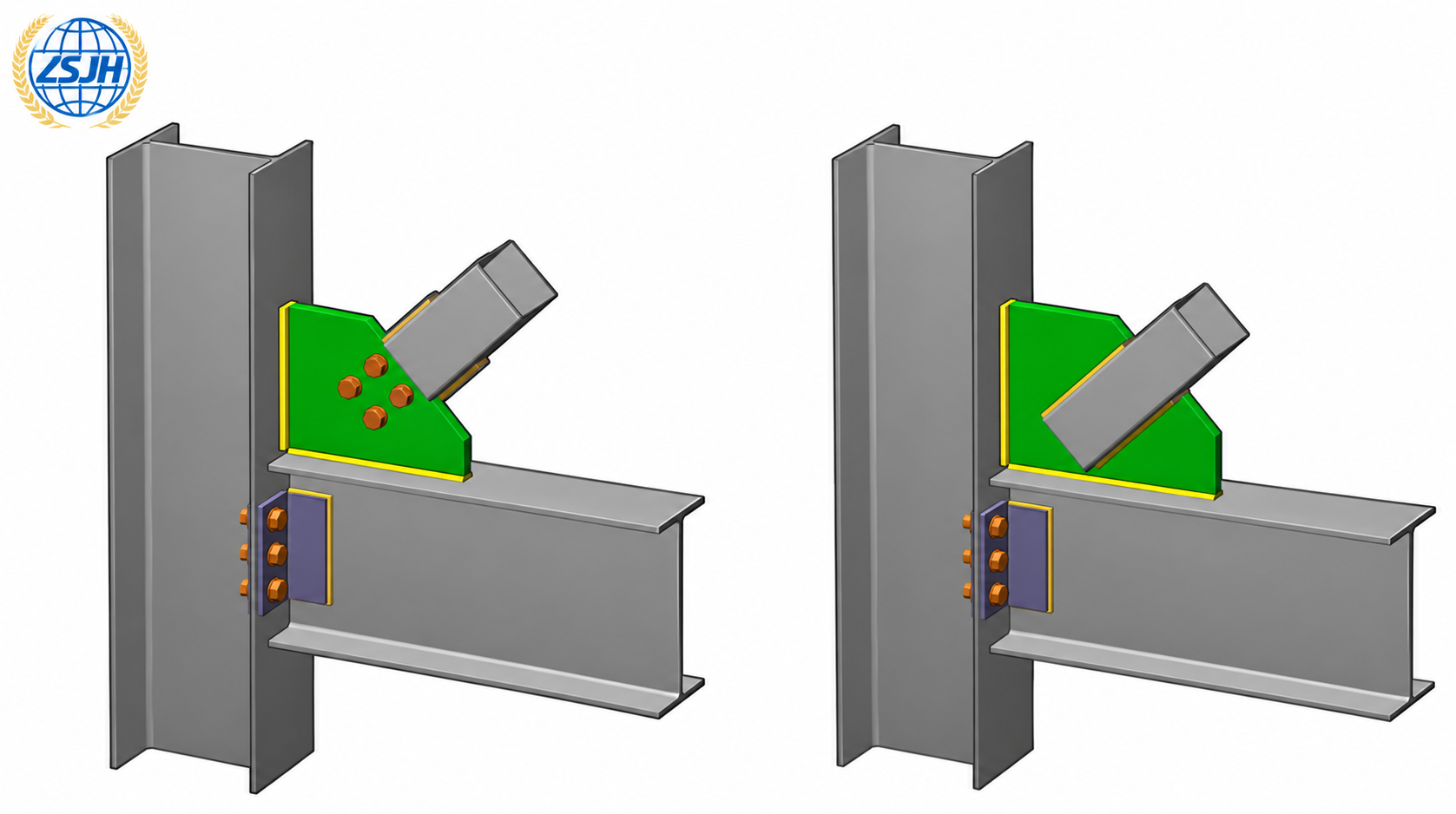


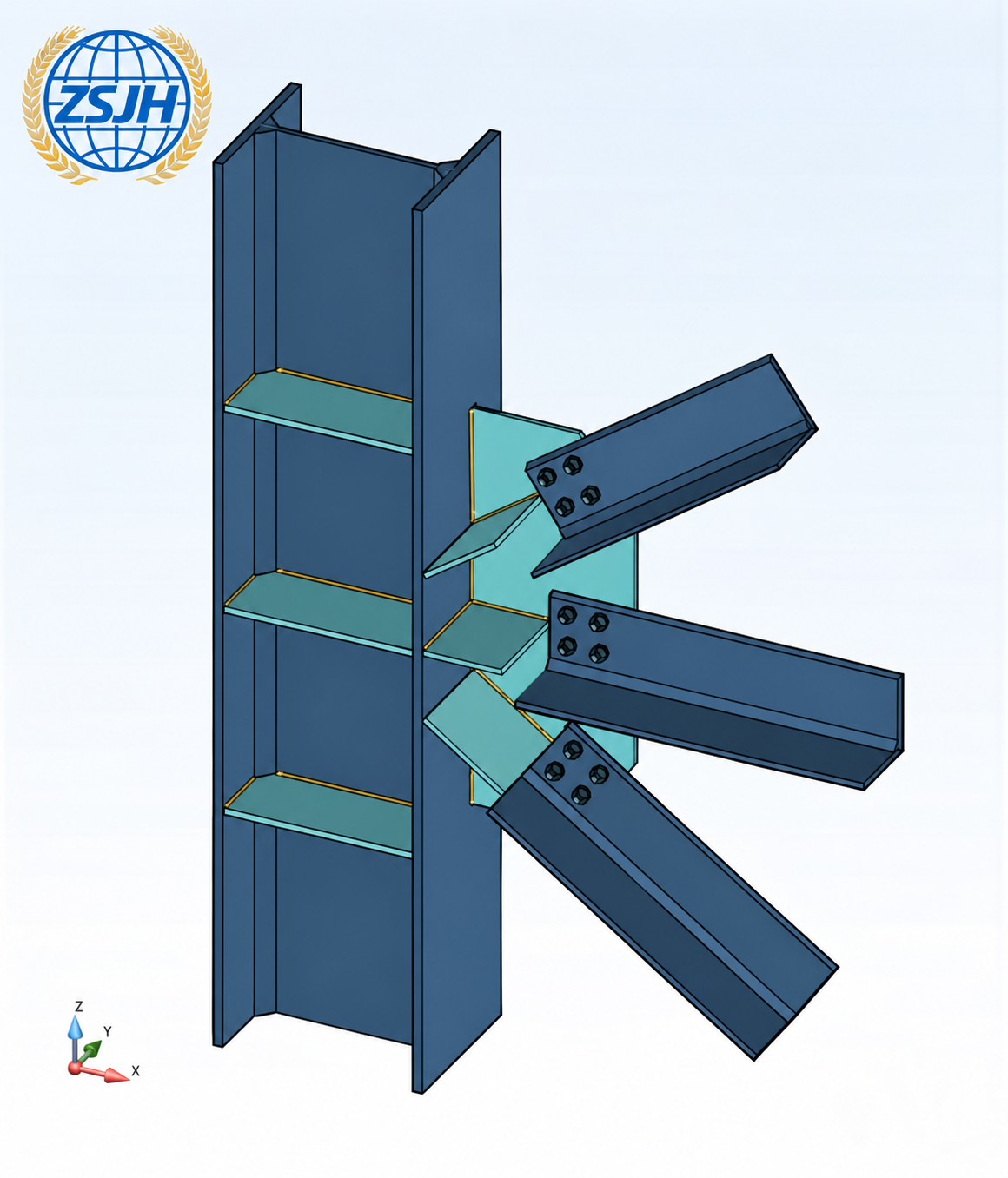


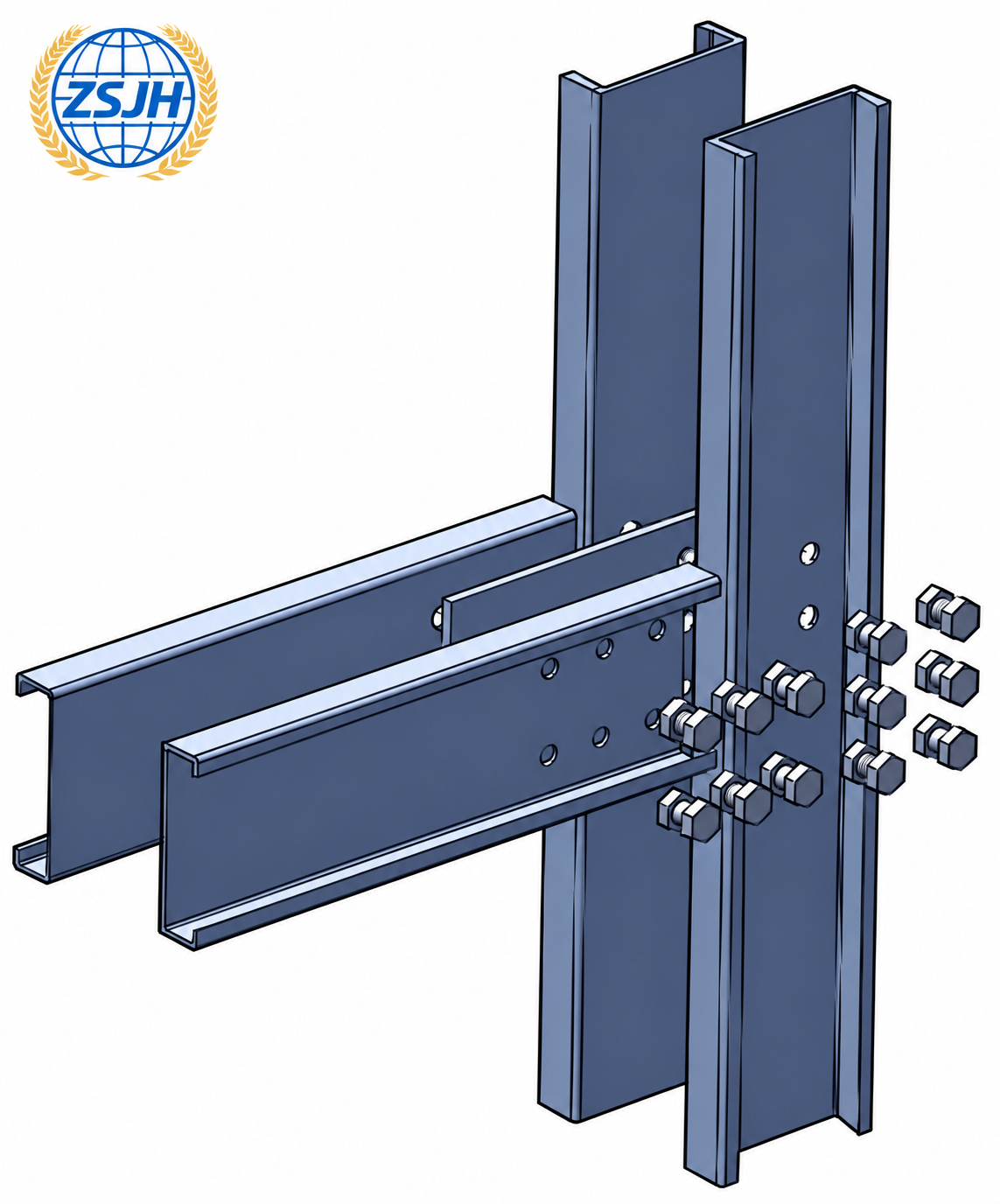

ZSJH STEEL supplies custom bolted bracing and gusset plate connections for steel workshops, warehouses, and multi-storey structures. Fabricated to approved project drawings, the assemblies feature coordinated brace ends, gusset plates, and bolt hole patterns, supporting accurate fit-up and efficient on-site installation.
| Quantity: | |
|---|---|


ZSJH
ZSJH STEEL supplies customized bolted bracing and gusset plate connections for steel buildings and industrial structures. These assemblies connect diagonal bracing members to the surrounding frame through prepared brace ends, gusset plates, and coordinated bolt hole groups.
Fabrication follows approved project drawings, with material grades, plate thicknesses, member sizes, and connection arrangements defined for each project. The supply scope can include bracing members, gusset plates, connecting plates, specified stiffeners, and agreed fastener sets. Component marking and organized packing help customers identify matching parts and follow the planned installation sequence.
Bolted bracing connections are used in structural systems where diagonal members transfer specified forces between parts of a steel frame. Their configuration depends on the structural design, brace section, connection location, and installation requirements.
Typical applications include:
Industrial Workshops: Wall and roof bracing connections within production buildings and associated steel framing.
Warehouses and Logistics Buildings: Bracing assemblies coordinated with storage areas, access openings, and building layouts.
Multi-Storey Steel Buildings: Connections for diagonal braces within designated braced bays.
Equipment Support Structures: Bracing connections for industrial frames, operating platforms, and maintenance structures.
Building Extensions: Components fabricated for approved additions or modifications to existing steel structures.
Single diagonal, cross-bracing, and chevron arrangements can be accommodated where included in the project design. These configurations require different gusset shapes, brace end details, and bolt layouts. Connections for seismic applications also require project-specific detailing and are fabricated only to the applicable approved requirements.
Brace ends form the interface between the diagonal member and the gusset plate. Their geometry is coordinated with the brace section, connection angle, and specified fastening arrangement.
Depending on the drawings, bracing members may use angle sections, channels, hollow sections, or other structural profiles. End preparation can involve cutting to angle, drilling connection holes, or fitting connecting plates. Slotted hollow-section ends and welded end fittings are provided where specifically detailed.
Checks focus on member length, end orientation, cut angle, hole position, and the relationship between the brace centerline and the connection. Correct orientation is particularly important for assemblies that appear similar but serve different positions within the frame.
Gusset plates provide the connection interface between the brace and the supporting steelwork. Plate shape, thickness, dimensions, and attachment details follow the approved design.
Triangular, rectangular, and other project-specific plate profiles can be fabricated to suit the connection geometry. Cutting and edge finishing are coordinated with adjacent members, installation access, and any specified clearance requirements.
Gusset plates may be attached to beams, columns, base assemblies, or other supporting components through welded or bolted details. Where welding is required, the weld arrangement and inspection requirements are defined in the fabrication documents.
Bolt hole groups are coordinated across the brace ends, gusset plates, and associated connecting components. Inspection covers hole diameter, spacing, edge distances, and alignment with the relevant reference points.
Standard, oversized, or slotted holes are produced only where specified. Slots are oriented according to the drawings, and hole edges are deburred to support fit-up. Changes to hole size or position require approval before implementation.
Bolt diameter, grade, length, nuts, and washers are selected according to the connection specification. Fastener sets can be supplied within the agreed scope, with identification corresponding to the relevant assembly or bolt schedule.
The connection layout should provide the required space for bolt insertion, washer placement, and tightening tools. Fabrication review considers potential interference between brace ends, plate edges, stiffeners, and adjacent members. Final bolt installation follows the approved site procedure.
Processing begins with a review of the approved drawings, component schedule, and connection details. The review checks brace orientation, gusset geometry, hole patterns, attachment arrangements, and any features affecting fabrication or assembly.
The typical production sequence includes:
Material Preparation: Structural sections and plates are selected according to the specified grades and dimensions. Identification is maintained through the agreed fabrication process.
Cutting: Bracing members are cut to the required lengths and angles, while gusset and connecting plates are cut to their specified profiles.
Hole Processing: Bolt holes are produced using suitable approved methods, followed by checks of diameter, spacing, and location.
Fit-Up and Welding: Specified brace end fittings, gusset attachments, and stiffeners are assembled and welded according to the fabrication requirements.
Dimensional Checking: Member lengths, end orientations, plate positions, and matching hole groups are checked before finishing.
Marking: Components receive identification references that correspond to the drawings and packing documents.
Production planning also considers surface treatment and shipping requirements. Contact faces, identification marks, and areas requiring later site work are addressed before finishing. Questions affecting connection geometry are referred for clarification before fabrication proceeds.
Inspection requirements are established according to the contract, project specifications, and approved inspection arrangements. Checks concentrate on material conformity, connection geometry, workmanship, and the condition of finished components.
Material verification reviews the available documentation and identification against the specified steel grades, plate thicknesses, and section sizes. Where fasteners are included, their documentation is checked against the agreed bolt requirements.
Dimensional inspection covers brace length, end angles, gusset plate dimensions, connecting plate positions, and hole group geometry. Particular attention is given to the relationship between matching components, since individual dimensions alone may not confirm assembly fit.
Weld inspection applies to welded brace end fittings, gusset attachments, and other welded components within the supply scope. Visual examination and specified non-destructive testing follow the project requirements.
Trial assembly can be arranged for selected connections when required. This helps check component orientation, hole alignment, and installation access before shipment. Its extent is agreed in advance and does not replace the specified site installation checks.
Surface inspection covers preparation condition, coating appearance, and dry film thickness where applicable. Inspection records are supplied according to the agreed documentation scope.
Brace ends, gusset plates, connecting components, and hole patterns are considered as parts of one assembly. This coordination helps maintain consistency between fabrication drawings, delivered components, and installation requirements.
Different brace sections, connection angles, plate profiles, and bolt arrangements can be accommodated according to project requirements. Supply can cover individual connection components or coordinated bracing assemblies, as agreed.
Drawing review considers orientation, component access, and matching interfaces. Addressing these details before production helps reduce avoidable sorting and fit-up difficulties during erection.
Clear component marks, organized loose-part packing, and assembly references help customers locate matching items. Where agreed, packing can be grouped by building area, braced bay, or installation stage.
Surface treatment is selected according to the exposure conditions, coating system, connection design, and delivery requirements. Options can include blast cleaning and protective paint systems. Hot-dip galvanizing may be considered where suitable for the component geometry and project specification.
For painted components, surface preparation, primer compatibility, subsequent coats, and required film thickness are defined before application. Plate edges, welded areas, and difficult access locations receive attention during preparation and inspection.
Bolted contact surfaces require treatment appropriate to the connection design. For slip-resistant connections, faying surfaces must meet the specified preparation and coating requirements. These surfaces may require masking or a different treatment from the exposed steel.
Where galvanizing is specified for hollow sections or enclosed details, venting and drainage provisions must be coordinated before manufacture. Hole allowances and component fit also require consideration under the approved specification.
Required site touch-up procedures should be compatible with the original finish. Identification marks must remain readable after treatment so that components can be matched during installation.
Packing is planned around component dimensions, weight, finish, and the expected handling method. Bracing members are bundled with suitable supports and restraints to reduce movement during transport. Separation materials help protect coated surfaces where required.
Gusset plates and smaller connecting components are secured in bundles, crates, or other suitable containers. Labels identify the relevant drawing marks, quantities, or assembly references. Sharp edges and projecting attachments are considered when arranging protection and loading.
Fasteners, when supplied, are packed separately in labeled containers to support receipt checking and site distribution. Packing documents distinguish bracing members from loose plates and fastener sets.
Where agreed, shipment groups follow erection zones or installation stages. Unloading and lifting should follow the approved handling arrangements, with component identification maintained until assembly. Organized delivery helps installation teams locate the correct brace, gusset plate, and connection hardware when needed.


