:sales@zsjhsteelgroup.com WhatsApp:+86-15122582058








| Quantity: | |
|---|---|


ZSJH
HSLA grades are developed to provide increased yield strength for load-bearing structures and components. The required grade should be selected according to design load, thickness, fabrication process and service conditions.
Higher material strength can support lighter structural designs. However, weight reduction is not automatic and must be verified by qualified engineering calculations.
Thermomechanically rolled grades can combine high strength with controlled forming performance. Minimum bend radius, rolling direction, edge quality and springback must be considered during process design.
Many HSLA grades use controlled carbon and alloy content to support welding. The welding procedure, consumables, heat input, preheating and interpass temperature must be determined for the exact grade and thickness.
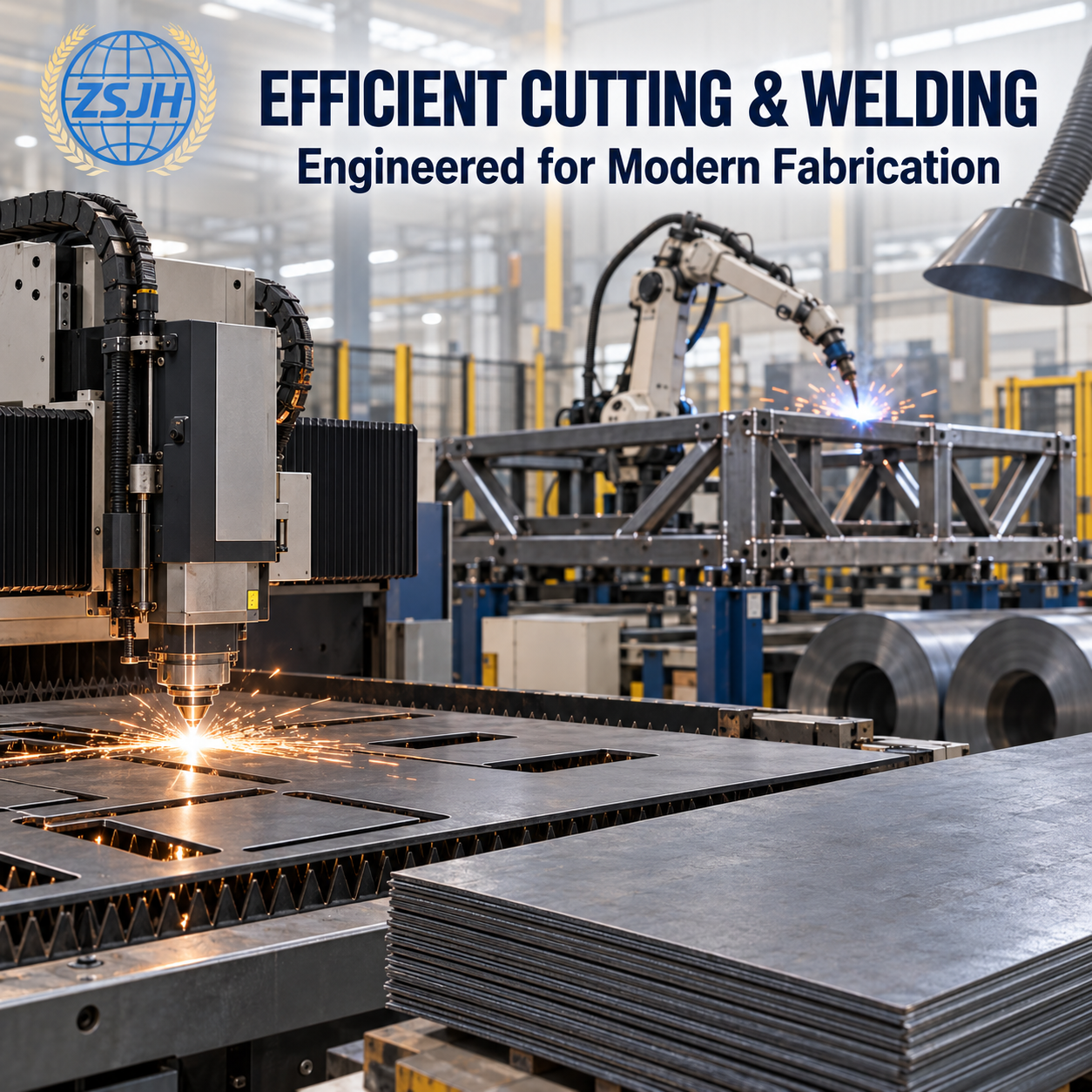
The material can be processed using suitable laser cutting, plasma cutting, mechanical cutting, drilling, bending, roll forming and welding equipment.
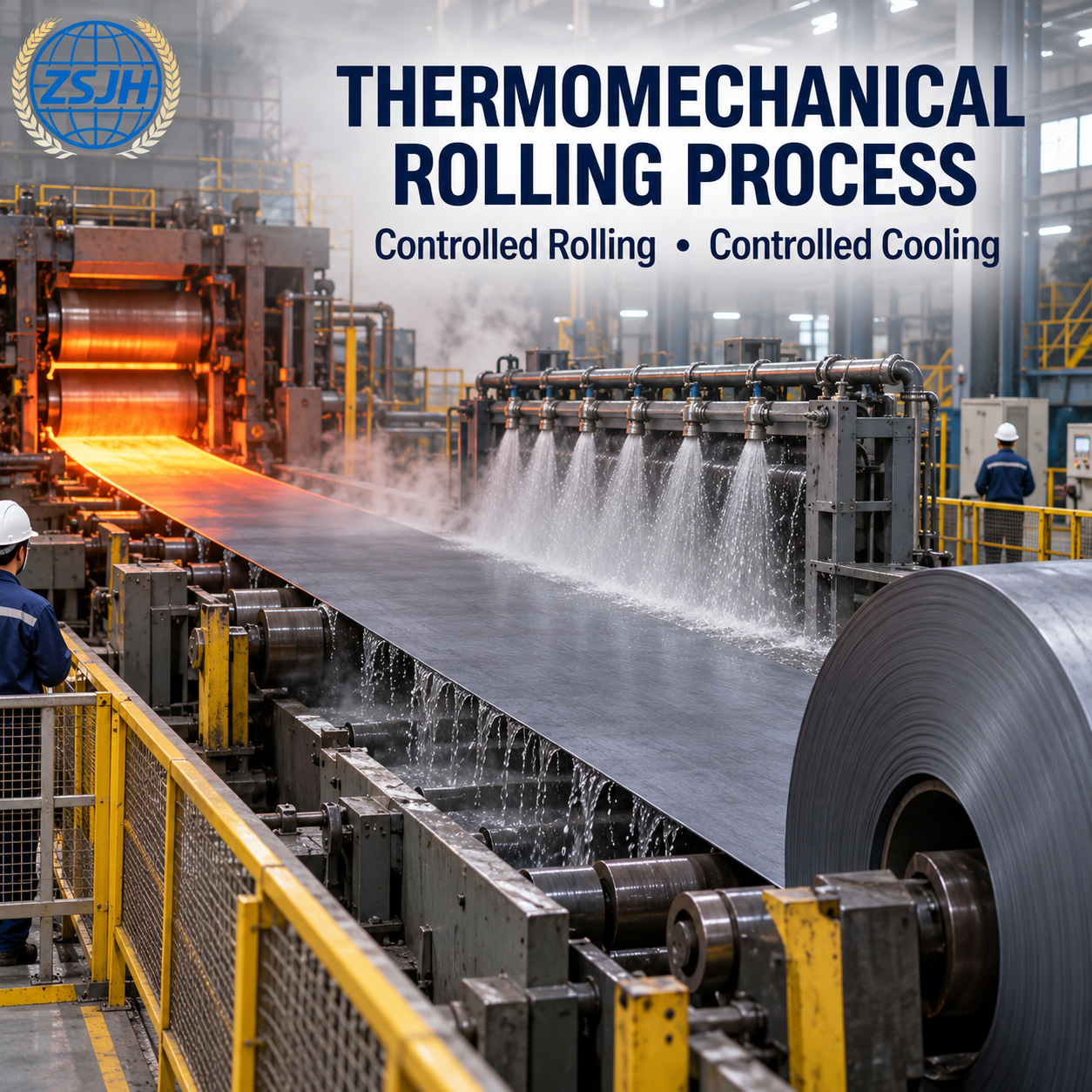
Controlled steelmaking, rolling and cooling help provide stable dimensions and mechanical properties according to the ordered material specification.
| Parameter | Available Specification |
|---|---|
| Product Name | High-Strength Low-Alloy Hot-Rolled Steel Sheet |
| Product Type | HSLA hot-rolled steel for structural and cold-formed components |
| Principal Reference Standard | EN 10149-2 or another agreed material standard |
| Grade Examples | S355MC, S420MC, S500MC and S700MC |
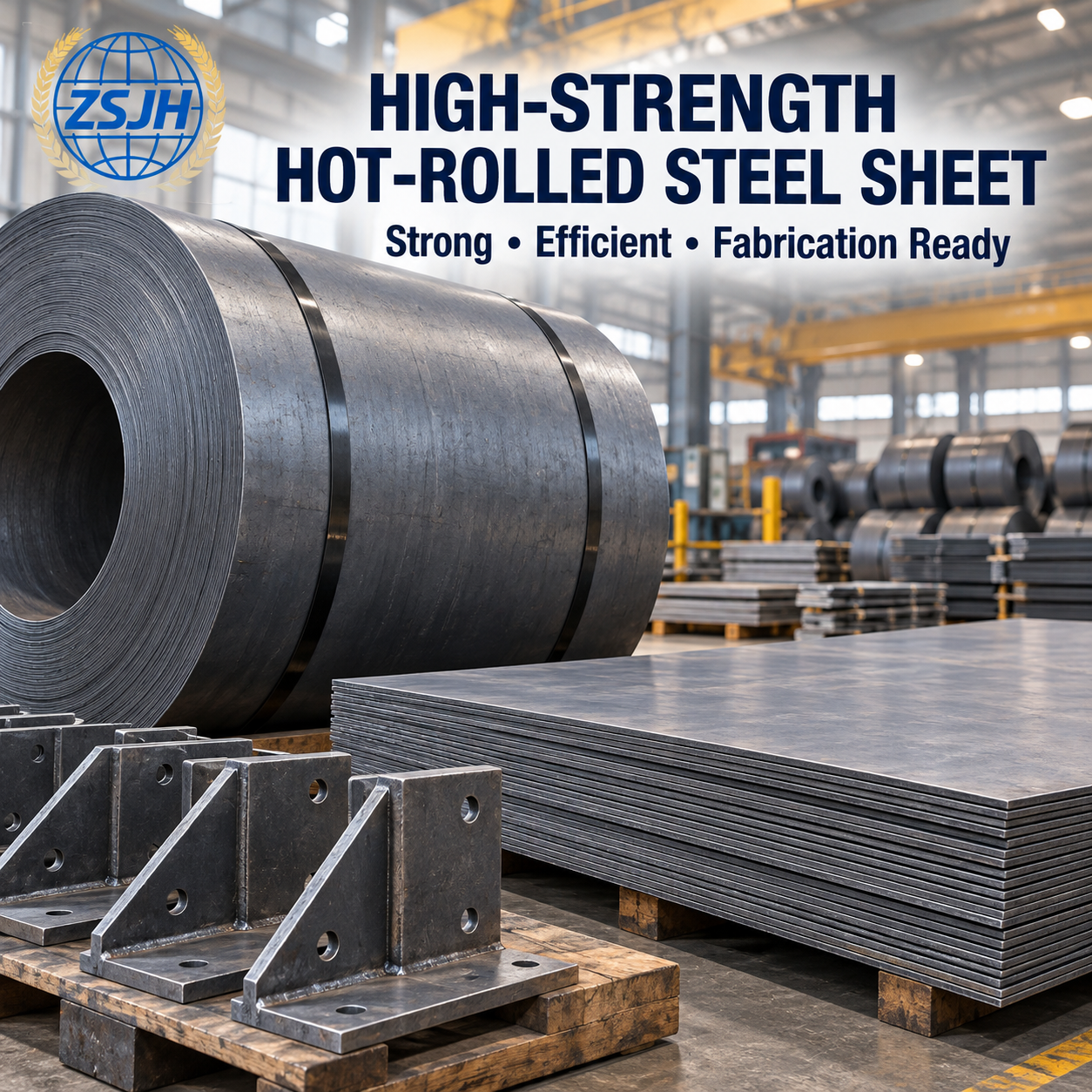
| Product Form | Coil, slit strip, cut-to-length sheet or processed blank |
| Thickness | According to the selected grade, standard and mill capability |
| Width | Standard mill width or customized after confirmation |
| Length | Standard or cut to the agreed order dimensions |
| Delivery Condition | According to the selected grade and applicable standard |
| Surface | Hot-rolled mill finish or another agreed condition |
| Edge Type | Mill edge, slit edge or cut edge |
| Flatness | According to the applicable standard and order specification |
| Dimensional Tolerance | According to the agreed execution standard |
| Processing Services | Leveling, slitting, cutting, drilling, bending and fabrication |
| Packaging | Standard seaworthy export packaging |
| Inspection Documents | According to the purchase agreement and available mill documentation |
The listed grades represent different minimum-strength and processing requirements. They are not automatically interchangeable. Mechanical properties, chemical composition, thickness limits and testing requirements must be checked against the applicable standard.
A high-strength hot-rolled grade commonly considered for structural and cold-formed components requiring a balance of strength, formability and weldability.
Suitable for components requiring a higher strength level while retaining practical fabrication characteristics.
Used for more demanding load-bearing parts where increased strength can support optimized structural design.
A high-strength grade intended for carefully engineered lightweight components. Bending, springback, cutting-edge condition and welding procedures require particular attention.
Grade selection must be based on the component drawing, design calculations, material thickness, fabrication route and applicable engineering standard.
HSLA steel achieves its properties through controlled chemical composition and thermomechanical processing. Alloying additions and controlled rolling practices help develop a refined microstructure and the required balance of strength, toughness and processability.
Higher-strength grades may allow smaller cross-sections or reduced thickness in selected components. However, designers must also consider:
Buckling resistance
Fatigue loading
Local stress concentration
Stiffness and deflection
Impact-toughness requirements
Welded-joint performance
Corrosion allowance
Manufacturing tolerances
Applicable safety factors
A higher-strength grade cannot compensate for an unsuitable component design or welding procedure.
Steel is melted and refined. Carbon, manganese and microalloying elements are controlled according to the specified grade.
The refined steel is continuously cast into slabs suitable for controlled hot rolling.
Steel slabs are reheated under controlled conditions before entering the rolling line.
High-pressure water removes surface oxide before the main rolling stages.
The slab is progressively reduced and prepared for finish rolling.
Rolling temperature and deformation are controlled to develop the required microstructure and mechanical properties.
The hot-rolled strip passes through a controlled cooling section. Cooling rate and final temperature are managed according to the material grade and production specification.
The finished strip is wound into coils under controlled conditions.
Coils may be slit, leveled or cut into sheets and processed blanks according to customer requirements.
Material identification, dimensions, surface condition and specified mechanical properties are inspected according to the applicable standard and purchase agreement.
Finished products are packaged with suitable supports, protective wrapping, edge guards and steel straps for transportation.
Higher yield strength than conventional mild-steel grades
Potential for weight-efficient structural design
Suitable for load-bearing industrial components
Practical bending and forming performance when correctly processed
Compatible with modern cutting and welding processes
Available in multiple strength levels
Suitable for coil-fed and sheet-fed production
Customizable dimensions and processing options
Supports high-volume component manufacturing
Useful for vehicles, machinery and lifting equipment
HSLA hot-rolled steel is commonly used for:
Truck chassis rails
Trailer frames and crossmembers
Vehicle reinforcement components
Construction-machinery frames
Excavator and loader components
Crane structural components
Lifting and material-handling equipment
Agricultural machinery
Industrial platforms and support frames
Rail and transportation equipment
Storage and logistics equipment
High-strength brackets and mounting plates
Roll-formed structural profiles
Welded load-bearing assemblies
This product is suitable for projects requiring higher strength and potential weight reduction without moving directly to quenched-and-tempered wear-resistant plate.
The specification should be selected according to:
Required yield and tensile strength
Material thickness
Static and dynamic loading
Fatigue requirements
Forming complexity
Minimum bend radius
Cutting method
Welding procedure
Operating temperature
Impact-toughness requirements
Corrosion environment
Applicable design code
For cranes, lifting equipment, vehicle safety parts, pressure-containing components and fatigue-critical structures, engineering review and qualified welding procedures are required.
Laser, plasma and mechanical cutting may be used where suitable. Cutting parameters must match the material thickness, grade and required edge quality.
Higher-strength steel normally produces greater forming forces and springback than mild steel. Tool opening, punch radius, bend direction and minimum bend radius must be selected accordingly.
Qualified procedures should control heat input and joint preparation. Consumables must be selected according to the required joint strength, toughness and service environment.
Drilled or accurately cut holes may be preferable for demanding fatigue applications. Edge defects and excessive heat-affected zones should be avoided.
Uncoated HSLA steel is not inherently corrosion-resistant. Components exposed to moisture require appropriate cleaning, blasting, priming, painting, galvanizing or another approved protective system.
ZSJH can discuss:
Grade and standard selection
Coil or sheet supply
Slitting and cut-to-length processing
Customized blanks
CNC laser or plasma cutting
Drilling and hole preparation
Press-brake bending
Roll forming
Bevel preparation
Welding and component fabrication
Shot blasting
Primer application
Identification and traceability requirements
Export packaging
All processing capabilities should be confirmed against the exact grade, thickness, dimensions and component drawing.
HSLA means high-strength low-alloy steel. It uses controlled composition and processing to provide higher strength than conventional mild steel while maintaining practical fabrication properties.
It may support weight reduction, but the final thickness must be determined through structural, stiffness, buckling and fatigue calculations. Substituting a thinner sheet without engineering verification is not recommended.
They belong to different strength levels. Higher-numbered grades generally require greater attention to forming force, bend radius, springback, cutting quality and welding procedure. Exact requirements must follow the applicable standard.
It can be bent using suitable equipment and tooling. Compared with mild steel, it normally requires greater forming force and may exhibit more springback.
Yes, when an appropriate welding procedure is used. Grade, thickness, carbon equivalent, joint restraint, heat input and required toughness must be considered.
No. HSLA structural steel is primarily selected for strength and load-bearing performance. Wear-resistant plate is designed for abrasive-service conditions and belongs to a different product category.
Ordinary uncoated HSLA steel can corrode. A suitable protection system is required for outdoor, humid or corrosive environments.
Not automatically. Grades from different standards may have different chemical composition, strength, toughness, thickness limits and testing requirements. Any substitution requires technical review.
Cutting, drilling, bending and welding services may be available according to confirmed drawings, tolerances, grade and order quantity.
Please provide the material standard, complete grade, thickness, width, length, quantity, component drawings, forming requirements, welding requirements, inspection documents and destination port.
ZSJH assists customers in selecting suitable HSLA grades according to load, fabrication method and service environment.
The standard, grade, dimensions, delivery condition and documentation requirements are confirmed before order execution.
We can coordinate cutting, drilling, bending, surface preparation and component fabrication according to approved drawings.
ZSJH supports both raw-material supply and fabricated steel components, helping customers integrate material purchasing with project manufacturing.
Material identification, dimensions, processed edges, hole locations, forming condition, weld appearance and packaging can be checked according to agreed requirements.
Products are protected with suitable supports, wrapping, edge guards and steel straps according to their size and transportation method.
Our team supports technical clarification, quotation preparation, drawing review, production coordination, inspection arrangements and international shipping documentation.
Send ZSJH your required standard, steel grade, dimensions, quantity, component drawings, fabrication requirements, documentation requirements and destination port. Our team will review the specification and recommend a suitable high-strength hot-rolled steel solution.


