:sales@zsjhsteelgroup.com WhatsApp:+86-15122582058






| Quantity: | |
|---|---|


ZSJH
The mechanical properties are selected according to the specified steel grade and execution standard, making the material suitable for a wide range of load-bearing and general fabrication applications.
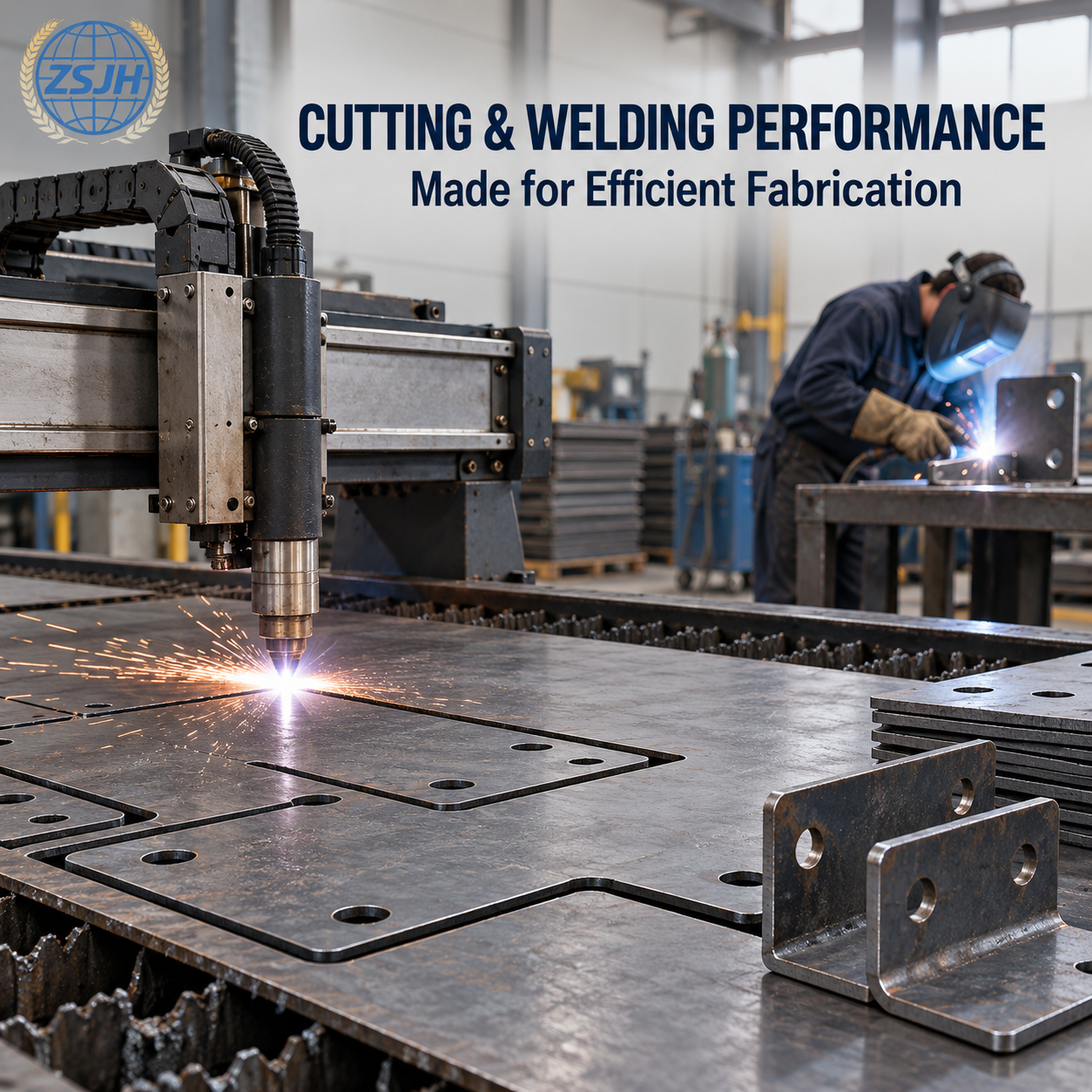
Appropriate low-carbon and structural steel grades can be processed using common welding methods. The welding procedure, consumables and preheating requirements must be determined according to the actual grade, material thickness and applicable fabrication code.
Hot-rolled steel sheet is compatible with plasma cutting, laser cutting, flame cutting, sawing, drilling, punching and other fabrication methods. The suitable cutting process depends on material thickness, required edge quality and dimensional tolerance.
The material can be bent, rolled or formed when the selected grade and bend radius are suitable for the component design. Formability should be confirmed before producing parts with demanding deformation requirements.
Hot-rolled carbon steel provides a practical balance between mechanical performance, material availability and fabrication cost for industrial and construction projects.
Products can be supplied in standard or customized dimensions, subject to the selected steel mill, grade, standard, processing requirements and minimum order quantity.
| Parameter | Available Specification |
|---|---|
| Product Name | General-Purpose Hot-Rolled Carbon Steel Sheet |
| Product Category | Uncoated hot-rolled carbon or structural steel |
| Product Form | Sheet, plate, coil, slit coil or processed blank |
| Reference Standards | ASTM, EN, JIS, GB/T or another agreed standard |
| Grade Examples | ASTM A1011 commercial or structural grades, S235/S275/S355 series, SS400, Q235/Q355 series or an agreed equivalent |
| Thickness | According to the selected product form, grade and mill capability |
| Width | Standard mill width or customized after confirmation |
| Length | Standard or cut to the agreed order dimensions |
| Surface | Hot-rolled mill finish |
| Surface Condition | As-rolled, shot-blasted, primed, pickled or another agreed condition |
| Edge Type | Mill edge, slit edge or cut edge |
| Flatness | According to the applicable standard and purchase specification |
| Dimensional Tolerance | According to the agreed execution standard |
| Processing Services | Cutting, slitting, leveling, drilling, bending, welding and component fabrication |
| Packaging | Standard seaworthy export packaging |
| Inspection Documents | According to the purchase agreement and available mill documentation |
The grade examples above belong to different standards and are not automatically interchangeable. Chemical composition, mechanical properties, dimensional tolerances and testing requirements must be checked against the selected standard before ordering.
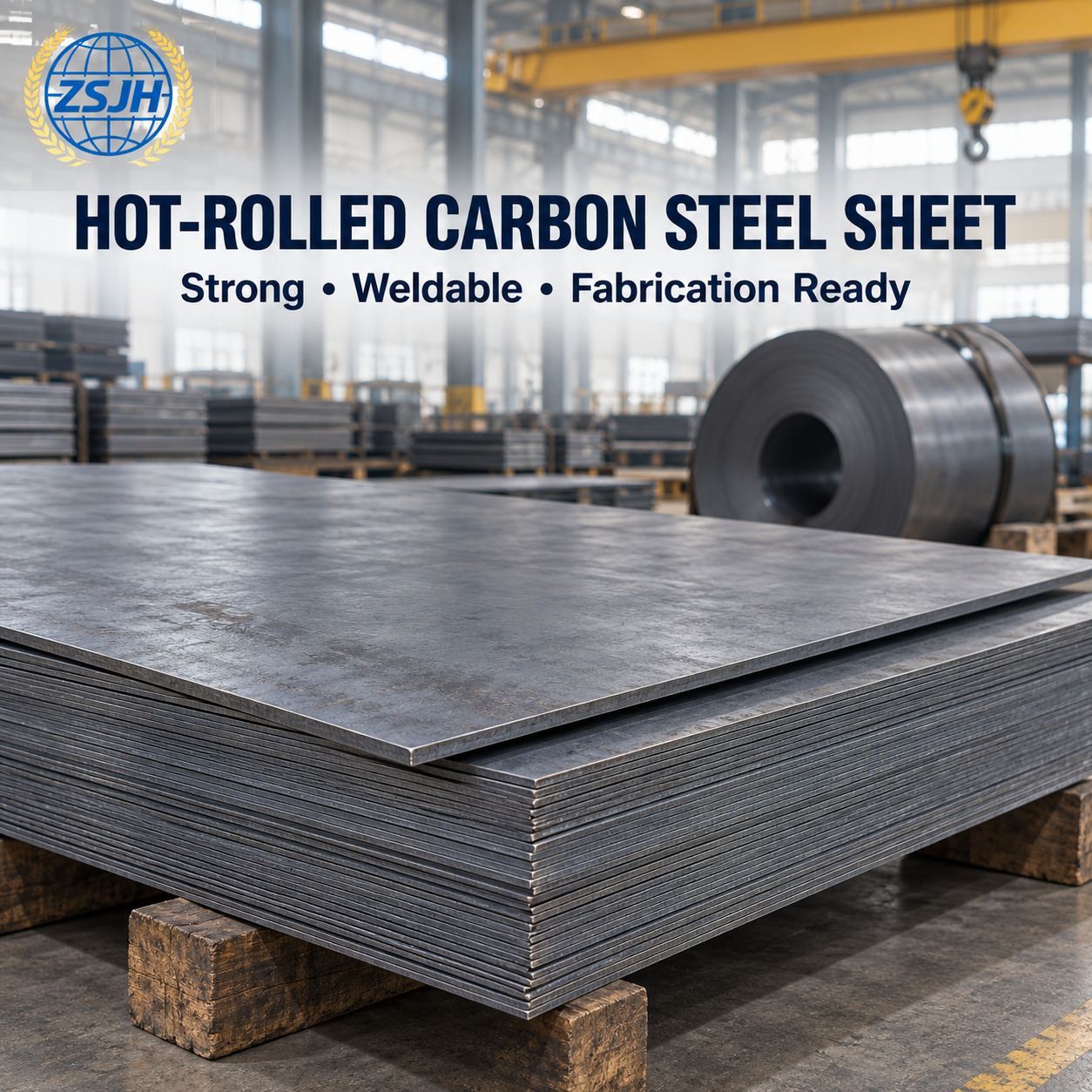
Hot-rolled steel is normally characterized by a dark gray or blue-gray surface with natural mill-scale variation. Slight differences in tone and surface texture may occur as a result of rolling temperature, cooling conditions, storage and handling.
The as-rolled surface is suitable for many structural and industrial components. However, it is not a decorative finish and should not be confused with cold-rolled, galvanized or stainless steel.
Mill scale does not provide dependable long-term corrosion protection. Components exposed to moisture, outdoor conditions or corrosive environments should receive suitable surface preparation and a properly specified protective system, such as primer, paint, galvanizing or another engineered coating.
Raw materials are melted and refined. The chemical composition is controlled according to the required steel grade and applicable material standard.
The molten steel is cast into slabs suitable for subsequent hot-rolling operations.
Steel slabs are reheated to the temperature required for controlled rolling.
High-pressure water removes surface oxide before the slab enters the main rolling stands.
The slab passes through a series of rolling stands that progressively reduce its thickness and form the required flat steel product.
The rolled steel is cooled under controlled conditions. Cooling practice influences the final microstructure and mechanical properties.
Depending on the ordered product, the hot-rolled strip may be coiled or processed into flat sheets and plates.
The material can be leveled and cut to the required width and length. Additional cutting, slitting or blanking may be completed according to customer requirements.
Inspection may include product identification, dimensions, surface condition, flatness, chemical composition and mechanical properties as required by the applicable standard and purchase agreement.
Qualified material is securely stacked or bundled with suitable supports, edge protection, strapping and moisture-resistant packaging for transportation.
ZSJH can discuss the following processing services based on project requirements:
Coil leveling and cut-to-length processing
Width slitting
CNC plasma cutting
Laser cutting where technically suitable
Flame cutting for suitable thicknesses
Drilling and punching
Bending and rolling
Bevel preparation
Shot blasting
Shop-primer application
Welding and component fabrication
Identification marking
Customized export packaging
Final processing capability should be confirmed against the material grade, dimensions, tolerances and drawings.
Suitable for general structural and industrial fabrication
Good processing performance with the appropriate grade
Compatible with common cutting and welding methods
Available in multiple flat-product formats
Can be processed according to project drawings
Practical material cost for volume fabrication
Suitable for both individual components and assembled structures
Compatible with subsequent surface preparation and coating
Convenient for standardized and customized production
Supports a wide range of industrial supply requirements
Hot-rolled carbon steel sheet is commonly used for:
Steel building components
Welded beams and plate girders
Base plates and connection plates
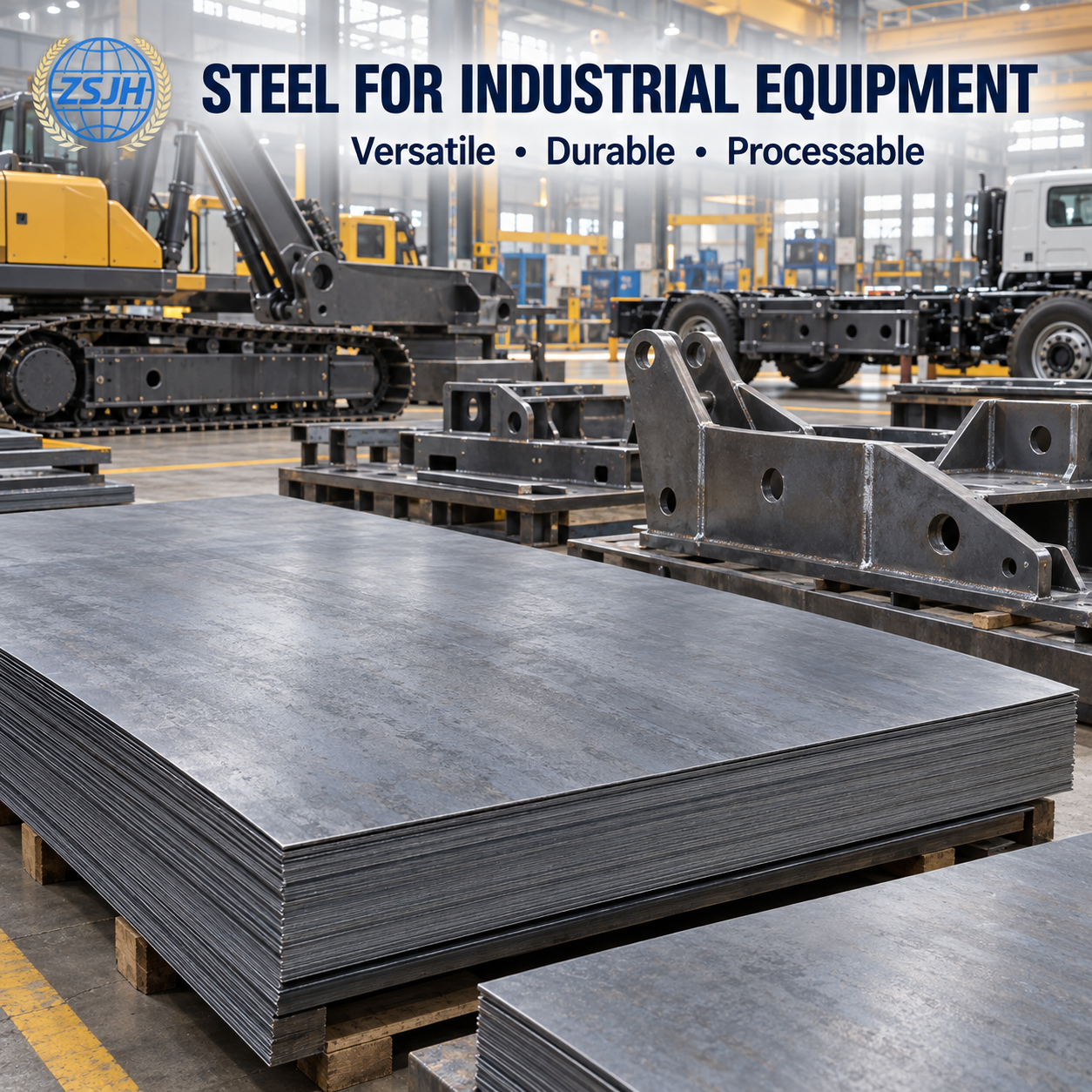
Equipment frames and machinery bases
Construction machinery components
Truck and trailer structural parts
Storage racks and industrial platforms
Agricultural machinery
Material-handling equipment
General welded assemblies
Brackets, supports and stiffeners
Tanks and fabricated containers where the selected grade is suitable
Industrial flooring and structural panels
Shipbuilding or transportation components when an approved grade is specified
This product is suitable for general engineering projects that require an economical, weldable and processable carbon steel material.
The final grade and specification should be selected according to:
Design load and required strength
Component thickness
Welding process
Forming requirements
Operating temperature
Impact-toughness requirements
Surface and appearance expectations
Corrosion environment
Applicable building or manufacturing standard
Required inspection and traceability documents
Applications involving low temperatures, pressure containment, fatigue loading, marine classification, seismic design, abrasion or severe corrosion require specifically approved grades and engineering confirmation.
Before production or procurement, the following requirements should be confirmed:
Applicable material standard
Complete steel-grade designation
Required chemical and mechanical properties
Thickness, width and length
Dimensional and flatness tolerances
Surface condition
Edge condition
Testing and inspection requirements
Material documentation
Processing drawings
Packaging method
Destination port and transportation conditions
Clearly defining these requirements helps prevent the substitution of superficially similar but technically different grades.
Hot-rolled steel is rolled at elevated temperature and normally has a darker mill-finish surface with less demanding dimensional and surface tolerances. Cold-rolled steel receives additional processing at room temperature, producing a smoother surface and closer dimensional control. The correct choice depends on the application and fabrication requirements.
No. Ordinary hot-rolled carbon steel can oxidize when exposed to moisture and corrosive environments. Mill scale should not be treated as a permanent protective coating. Suitable surface preparation and corrosion protection should be specified when required.
Yes, many common low-carbon and structural grades have good weldability. However, the welding procedure must consider the specific grade, carbon equivalent, material thickness, joint design and governing fabrication standard.
Yes, provided that the grade, rolling direction, thickness, bend radius and forming method are suitable. A forming trial may be recommended for demanding parts.
Yes. Cut-to-length, slitting and processed-blank services may be available. Final dimensions and tolerances must be confirmed according to material availability and processing capability.
Mill finish refers to the natural surface produced during hot rolling and cooling. It may contain mill scale and normal variations in color or texture. It is not equivalent to a polished or coated finish.
Yes. Oil, loose scale, rust and contaminants must first be removed using a surface-preparation method compatible with the selected coating system. Primer and topcoat selection should reflect the actual exposure environment.
Not automatically. Grades from ASTM, EN, JIS and GB/T standards may have similar intended uses but different chemical, mechanical, testing and dimensional requirements. Equivalency must be reviewed before substitution.
Document availability depends on the mill, material and purchase agreement. Customers should specify the required inspection certificate, test results, traceability and third-party inspection requirements before ordering.
Please provide the standard, complete grade, thickness, width, length, quantity, surface condition, edge requirements, processing drawings, inspection-document requirements and destination port.
ZSJH assists customers in reviewing steel grades, standards, product forms and processing requirements according to the intended project application.
We can coordinate cutting, leveling, slitting, drilling, bending, surface preparation and component fabrication according to confirmed drawings and technical requirements.
Material identification, dimensions, surface condition, processed parts and packaging are checked according to the agreed order specification.
In addition to supplying steel sheets, ZSJH can support structural components, welded assemblies and other steel-building products for integrated project procurement.
Products can be packaged with suitable supports, protective materials, edge guards and steel straps according to their dimensions and transportation method.
Our team supports specification confirmation, drawing review, quotation preparation, production coordination, inspection arrangements and international shipping documentation.
Send ZSJH your required material standard, grade, dimensions, quantity, surface condition, processing drawings, documentation requirements and destination port. Our team will review the technical information and provide a suitable hot-rolled steel supply and fabrication solution.


