:sales@zsjhsteelgroup.com WhatsApp:+86-15122582058






| Quantity: | |
|---|---|


ZSJH
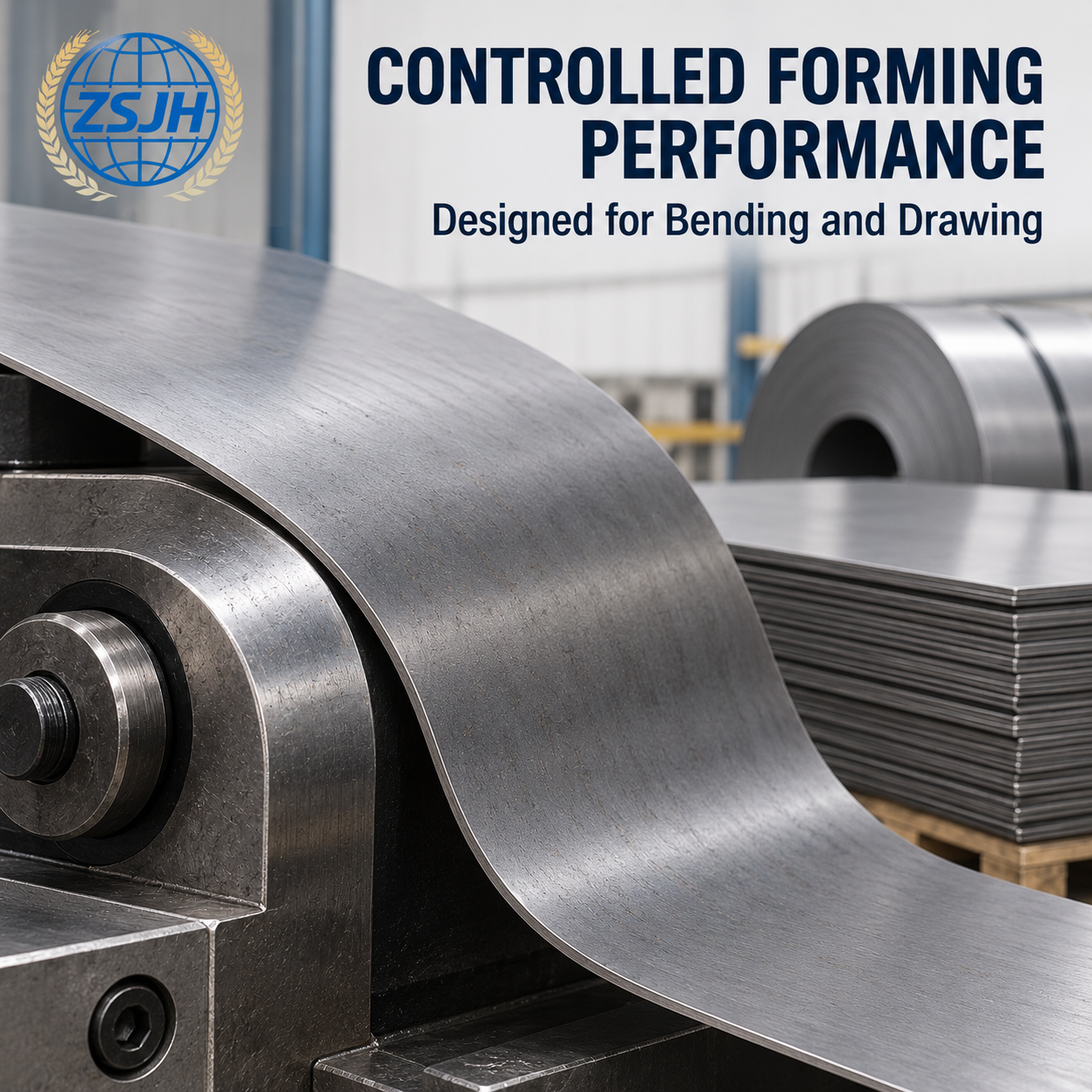
Different forming grades are available for different deformation levels. The material should be selected according to drawing depth, component geometry, bend radius and production method.
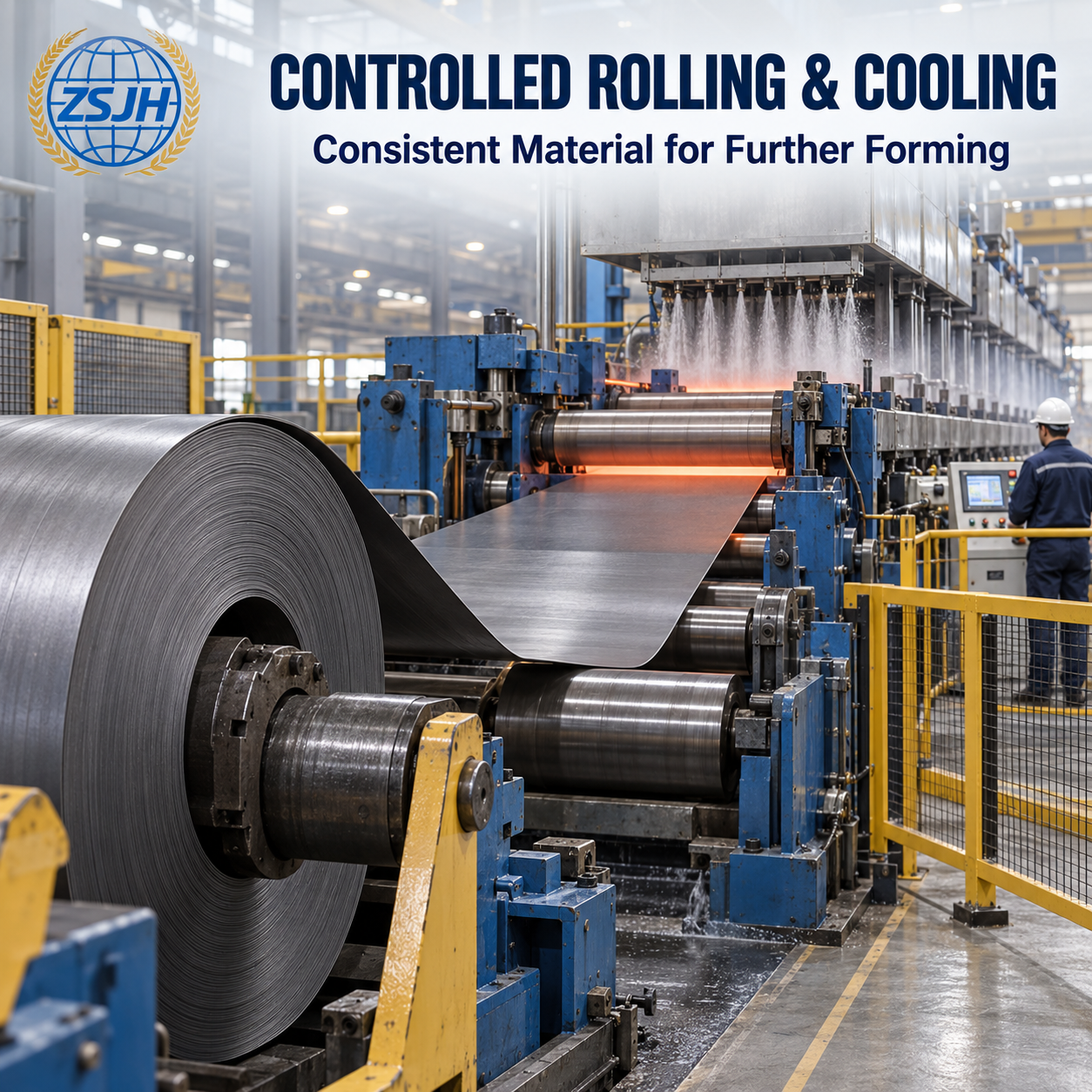
Controlled chemical composition, rolling and cooling help provide stable material behavior during continuous stamping and forming operations.
Higher-formability grades can be considered for components involving deeper drawing, multiple forming stages or more demanding geometries.
The hot-rolled surface is suitable for many non-exposed industrial parts. Where improved surface cleanliness is required, an appropriate descaled or pickled surface condition can be specified separately.
Coil and sheet supply formats are compatible with automated blanking, stamping and progressive-die manufacturing lines.
Materials may be supplied as coils, slit coils, flat sheets or customized blanks, subject to confirmed production and processing capability.
| Parameter | Available Specification |
|---|---|
| Product Name | Deep-Drawing Hot-Rolled Low-Carbon Steel Sheet |
| Product Type | Hot-rolled low-carbon steel for cold forming |
| Principal Reference Standard | EN 10111 or another agreed material standard |
| Grade Examples | DD11, DD12, DD13 and DD14 |
| Product Form | Coil, slit strip, cut-to-length sheet or processed blank |
| Thickness | According to the selected grade, standard and production capability |
| Width | Standard mill width or customized after confirmation |
| Length | Standard or cut to the agreed dimensions |
| Surface Condition | As-rolled or another agreed surface condition |
| Edge Condition | Mill edge, slit edge or cut edge |
| Flatness | According to the applicable standard and order specification |
| Dimensional Tolerance | According to the agreed standard |
| Coil Inside Diameter | According to the confirmed supply specification |
| Coil Weight | According to handling and transportation requirements |
| Available Processing | Leveling, slitting, cutting, blanking and forming support |
| Packaging | Standard seaworthy export packaging |
| Inspection Documents | According to the purchase agreement and available mill documentation |
DD11, DD12, DD13 and DD14 are separate material grades with different forming requirements. They must not be presented as identical or automatically interchangeable.
Typically considered for general cold-forming operations such as bending, roll forming and relatively simple pressed components.
Suitable for components requiring improved forming performance compared with general commercial forming grades.
Intended for more demanding drawing operations and components with greater deformation.
Used for particularly demanding deep-drawing applications where a higher level of formability is required.
These descriptions provide general guidance only. Final grade selection must be based on the applicable standard, component drawing, forming ratio, tooling design and production trial.
Hot-rolled low-carbon steel normally has a gray to dark gray mill-finish surface. Natural variations in color and texture may occur due to rolling, cooling, storage and handling.
The standard hot-rolled surface should not be confused with the smoother appearance of cold-rolled steel. If the component requires a cleaner surface for coating or precision appearance, surface preparation or a separately specified pickled product may be required.
Ordinary uncoated carbon steel is not inherently corrosion-resistant. Finished parts exposed to moisture or corrosive environments should receive appropriate cleaning, pretreatment, painting, powder coating, plating or another engineered protection system.
Raw materials are melted and refined. Carbon content and other chemical elements are controlled according to the selected forming grade.
The refined steel is cast into slabs suitable for hot rolling.
Steel slabs are reheated under controlled conditions before entering the rolling line.
Surface oxide is removed before the slab passes through the main rolling stands.
The heated slab is progressively reduced and prepared for finish rolling.
The steel passes through finishing stands to achieve the required strip dimensions and rolling condition.
Cooling conditions are controlled to develop the material properties required for subsequent cold forming.
The finished strip is wound into coils under controlled conditions.
According to the order, the coil may be leveled, slit or cut into sheets and customized blanks.
Product identification, dimensions, surface condition and specified material properties are checked according to the purchase requirements before export packaging.
Designed for bending, pressing and drawing operations
Multiple grades for different forming requirements
Suitable for automated stamping production
Consistent material behavior when supplied to an agreed specification
Available in coil, strip, sheet and blank formats
Compatible with common cutting and forming processes
Suitable for subsequent welding when an appropriate procedure is used
Can receive additional surface treatment after fabrication
Helps reduce unnecessary use of higher-cost grades when correctly selected
Supports customized component-production requirements
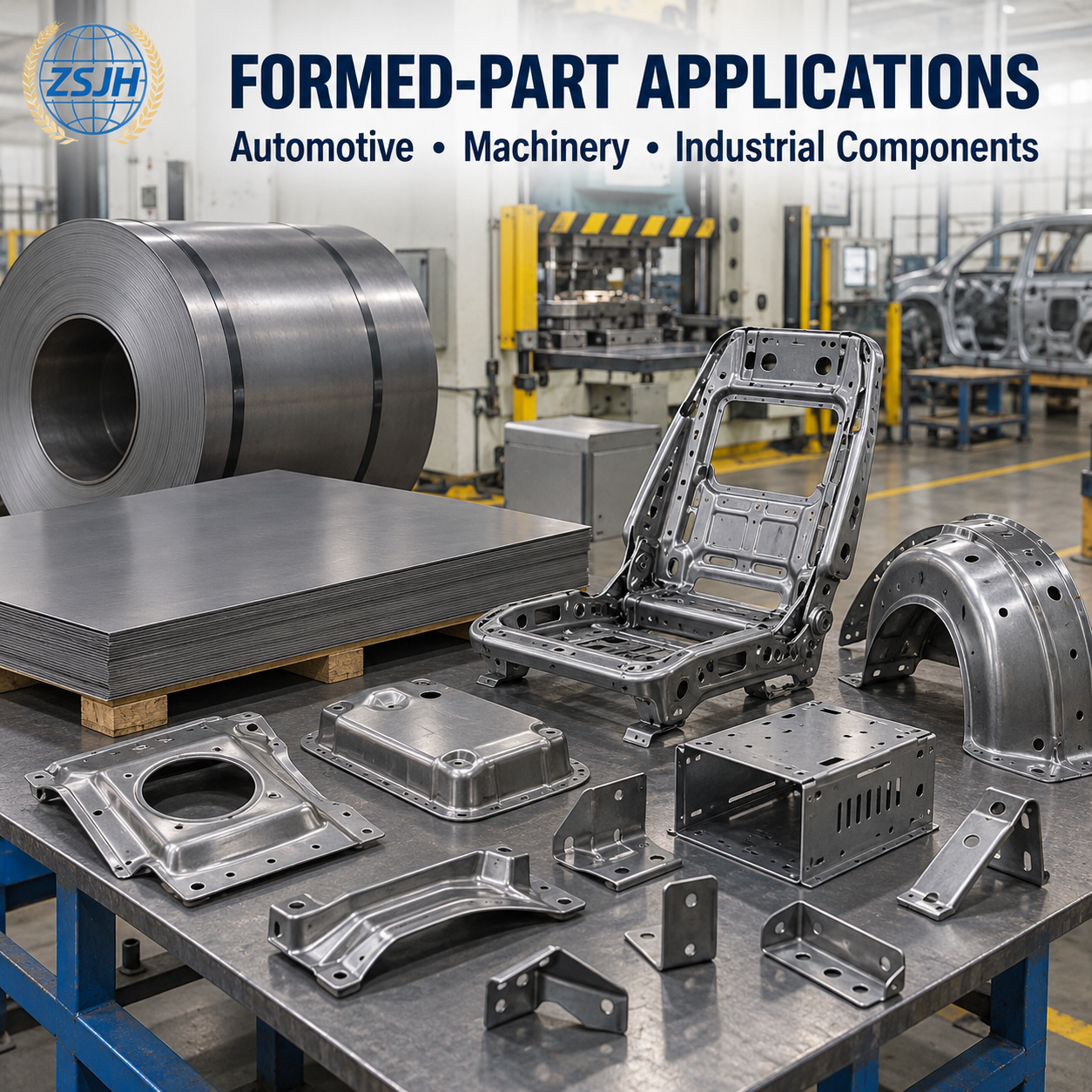
This product is commonly used for:
Automotive brackets and reinforcement parts
Seat-frame and chassis-related components
Wheel housings and protective covers
Agricultural machinery covers
Industrial equipment housings
Motor and electrical equipment shells
Appliance structural components
Metal furniture components
Ventilation-system parts
Stamped brackets and supports
Pressed trays and containers
General drawn and formed components
Roll-formed industrial parts
Fabricated parts requiring multiple forming stages
The material is suitable for manufacturers requiring better cold-forming performance than conventional structural steel.
Grade selection should consider:
Drawing depth
Component shape
Sheet thickness
Bend radius
Rolling direction
Tooling geometry
Lubrication
Press speed
Number of forming stages
Edge condition
Surface requirements
Welding and coating processes
This product should not automatically be specified for pressure vessels, safety-critical automotive parts, low-temperature structures or regulated load-bearing components without engineering approval and confirmation of the applicable product standard.
ZSJH can discuss the following options according to project requirements:
Material-grade selection
Coil or sheet supply
Customized width and length
Coil slitting
Cut-to-length processing
Customized blank preparation
Edge-condition control
Leveling
Identification marking
Protective oiling where applicable
Surface preparation
Export packaging
Processing according to supplied drawings
Availability depends on the required grade, dimensions, quantity, mill production route and processing capability.
It is a low-carbon hot-rolled steel developed for subsequent cold-forming operations. Compared with ordinary structural steel, grade selection places greater emphasis on ductility and forming behavior.
They represent different forming levels within the relevant material standard. In general, the required formability increases from basic forming applications toward more demanding deep-drawing applications. Exact properties must be checked against the selected standard.
No. A higher-formability grade is not automatically the most economical or technically necessary choice. The correct grade should match the actual part geometry and production process.
Yes. The grade, thickness, bend radius, edge condition and rolling direction should be considered before production.
Many low-carbon forming grades can be welded using suitable procedures. Welding parameters must be selected according to the exact grade, thickness, joint design and applicable fabrication requirements.
It may be laser cut when the thickness, surface condition, equipment and required edge quality are suitable. Plasma cutting, mechanical blanking and other processes can also be considered.
Uncoated hot-rolled carbon steel can rust when exposed to moisture. Suitable storage and a protective coating system are required where corrosion protection is important.
Yes. Mill scale, oil, rust and contamination must be removed through suitable surface preparation before applying the selected coating system.
Customized slitting, cut-to-length and blank-processing services may be available according to the material dimensions, order quantity and drawing requirements.
Please provide the required standard, grade, thickness, width, coil or sheet format, sheet length, quantity, surface condition, component application, forming drawing, documentation requirements and destination port.
ZSJH helps customers review forming requirements and select a suitable grade according to the component design and manufacturing process.
Coils can be processed into slit strips, cut sheets or customized blanks according to confirmed production requirements.
The material standard, grade, dimensions, surface condition, tolerance and documentation requirements are confirmed before order execution.
In addition to steel supply, ZSJH can discuss cutting, forming, welding and component-fabrication requirements according to customer drawings.
Products are packaged with appropriate supports, protective wrapping, edge protection and steel strapping according to the supply format and transportation conditions.
Our team supports technical confirmation, quotation preparation, production coordination, inspection arrangements, documentation and international shipping.
Send ZSJH your component drawing, required standard, steel grade, dimensions, product form, quantity, forming process, surface requirements and destination port. Our team will review the application and recommend a suitable hot-rolled low-carbon forming-steel solution.


